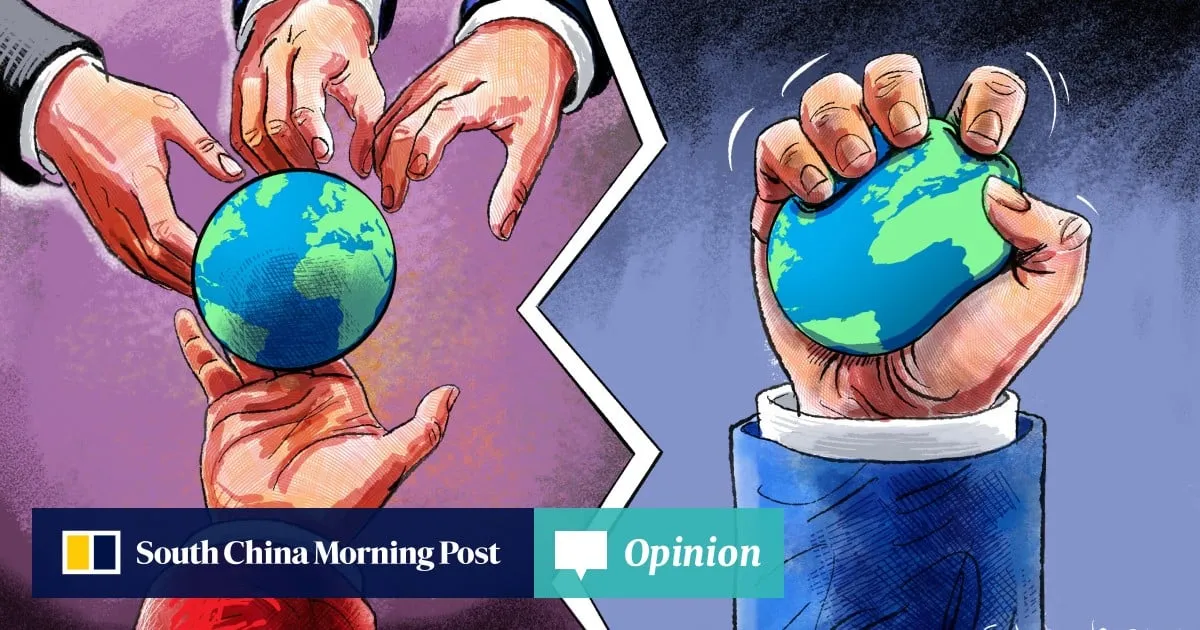
With the coming summit between Chinese President Xi Jinping and US President Donald Trump back on schedule for May, the two leaders present two starkly different paths for the world: one defined by a “community with a shared future” and the other driven by unpredictable impulses of rivalry and division.While Trump postponed the April summit to engage Xi without the distractions of the war he launched on Iran, a swift resolution before their meeting does not seem likely – despite the newly announced two-week ceasefire.Trump’s “war of choice” has already triggered a massive global energy shock – the most severe since the 1970s, with oil prices surging due to the Strait of Hormuz’s partial closure. This month also marks the one-year anniversary of Trump’s “Liberation Day” tariffs, a global trade war whose aftershocks are still destabilising the world economy.Meanwhile, China has positioned itself as a stabilising force. At this year’s World Economic Forum in Davos, in Switzerland, Beijing signalled a major pivot: moving from being the “world’s factory” to becoming the “world’s market”.This commitment was reinforced at last month’s Boao Forum, when the Hainan Free Trade Port was showcased as a model for deeper market opening. The trajectory is unmistakable: China is increasingly staking its claim as the primary defender of an open, rules-based global economy. This push is no isolated policy shift; it is the manifestation of Xi’s Global Development Initiative to advance a more equitable economic order.
SRCSouth China Morning Post
LANGEN
LEANCenter-Right
WORDS239
ENT11
FRI · 2026-04-10 · 01:30 GMTBRIEF NSR-2026-0410-61103
NSR-2026-0410-61103Analysis·EN·Political Strategy
Can a ‘community with a shared future’ prevail over zero-sum rivalry?
Ahead of a planned summit in May between Chinese President Xi Jinping and US President Donald Trump, the article contrasts China's vision of a "community with a shared future" with what it characterizes as Trump's rivalry-driven approach. The article highlights Trump's trade war and actions in Iran as destabilizing forces on the global economy, citing rising oil prices and ongoing trade tensions.
Peter T. C. ChangSouth China Morning PostFiled 2026-04-10 · 01:30 GMTLean · Center-RightRead · 1 min
South China Morning PostFIG 01
Reading time
1min
Word count
239words
Sources cited
0cited
Entities identified
11entities
Quality score
100%
§ 01
Briefing Summary
AI-generatedNEWSAR · AI
Ahead of a planned summit in May between Chinese President Xi Jinping and US President Donald Trump, the article contrasts China's vision of a "community with a shared future" with what it characterizes as Trump's rivalry-driven approach. The article highlights Trump's trade war and actions in Iran as destabilizing forces on the global economy, citing rising oil prices and ongoing trade tensions. It positions China as a stabilizing force, emphasizing its shift towards becoming the "world's market" and its commitment to an open, rules-based global economy. China's Global Development Initiative and the Hainan Free Trade Port are presented as examples of this commitment. The article suggests the summit will highlight these contrasting approaches to global leadership and economic order.
Confidence 0.90Claims 5Entities 11
§ 02
Article analysis
Model · rule-basedFraming
Political Strategy
Economic Impact
Tone
Mixed Tone
AI-assessed
CalmNeutralAlarmist
Factuality
0.60 / 1.00
Mixed
LowHigh
Sources cited
0
No named sources
FewMany
§ 03
Key claims
5 extracted01
Summit between Chinese President Xi Jinping and US President Donald Trump is back on schedule for May.
factualnull
Confidence
1.00
02
Oil prices surging due to the Strait of Hormuz’s partial closure.
factualnull
Confidence
0.90
03
China moving from being the 'world’s factory' to becoming the 'world’s market'.
factualnull
Confidence
0.80
04
Trump's 'war of choice' has triggered a massive global energy shock.
factualnull
Confidence
0.80
05
China is increasingly staking its claim as the primary defender of an open, rules-based global economy.
predictionnull
Confidence
0.70
§ 04
Full report
1 min read · 239 words§ 05
Entities
11 identifiedKey playerOppositionContextPositiveNeutralNegative
Organizations1
Locations7
Events1
§ 06
Keywords & salience
10 termsus-china relations
0.90
global economy
0.80
trade war
0.70
community with a shared future
0.70
rivalry
0.60
open market
0.60
energy shock
0.50
xi jinping
0.50
global development initiative
0.50
donald trump
0.50
§ 07
Topic connections
Interactive graph Network visualization showing 51 related topics
View Full Graph Person Organization Location Event|Click node to navigate|Edge numbers = shared articles