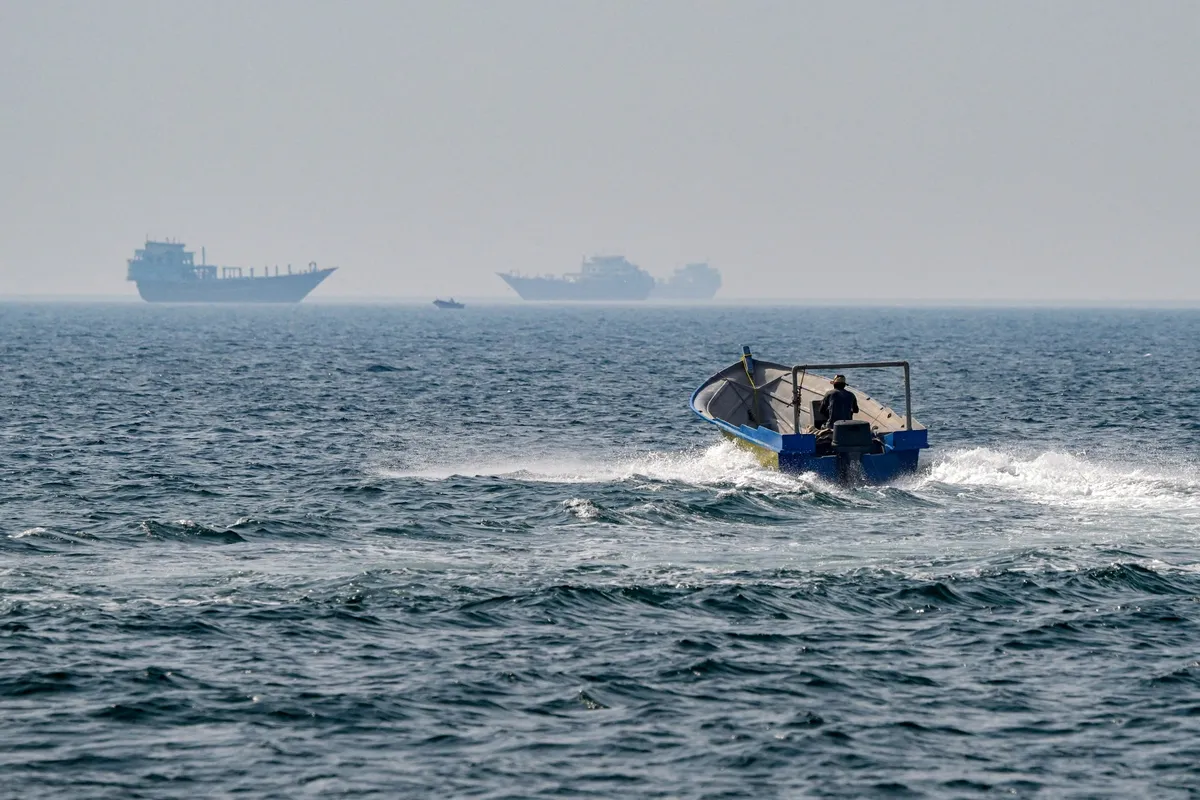
Washington and Tehran accuse each other of not honouring truce agreement.Shipping remains at a standstill in the Strait of Hormuz despite the ceasefire agreement between the United States and Iran, dampening hopes for a resolution to one of the worst global energy disruptions in history.Only a handful of vessels have transited the critical strait since Washington and Tehran on Tuesday announced a two-week pause in fighting, according to ship tracking data.Recommended Stories list of 4 itemslist 1 of 4Police in Venezuela block protesters calling for higher wages, pensionslist 2 of 4Iran’s Supreme Leader Mojtaba Khamenei says ‘we seek compensation, not war’list 3 of 4Ecuador hikes tariffs to 100-percent in feud with neighbour Colombialist 4 of 4Video shows explosion over Erbil in suspected drone interceptionend of listFive vessels crossed the strait on Wednesday, down from 11 the previous day, and seven transited on Thursday, according to data from market intelligence firm Kpler.More than 600 vessels, including 325 tankers, are still stranded in the Gulf due to the blockage of the strait, according to Lloyd’s List Intelligence.“While some vessel movement has resumed, traffic remains very limited, compliant shipowners are likely to stay cautious, and safe transit capacity is expected to remain constrained at maximum 10–15 passages a day if the ceasefire holds, without consideration of tolls applied,” Kpler trade risk analyst Ana Subasic said in an analysis on Thursday.The waterway, which usually carries about one-fifth of global oil and liquefied natural gas (LNG) supplies, typically handled about 120-140 transits before the US and Israel launched their attacks on Iran on February 28.On Thursday, US President Donald Trump accused Iran of failing to live up to its part of the ceasefire agreement, which includes a commitment to allow “safe passage” through the waterway for two weeks.“Iran is doing a very poor job, dishonorable some would say, of allowing Oil to go through the Strait of Hormuz,” Trump said in a post on Truth Social.
SRCAl Jazeera
LANGEN
LEANCenter
WORDS321
ENT8
FRI · 2026-04-10 · 02:47 GMTBRIEF NSR-2026-0410-61166
NSR-2026-0410-61166News Report·EN·Economic Impact
Shipping in Strait of Hormuz still at a trickle despite US-Iran ceasefire
Despite a ceasefire agreement between the U.S. and Iran announced on Tuesday, shipping in the Strait of Hormuz remains significantly reduced.
John PowerAl JazeeraFiled 2026-04-10 · 02:47 GMTLean · CenterRead · 2 min
Al JazeeraFIG 01
Reading time
2min
Word count
321words
Sources cited
3cited
Entities identified
8entities
Quality score
100%
§ 01
Briefing Summary
AI-generatedNEWSAR · AI
Despite a ceasefire agreement between the U.S. and Iran announced on Tuesday, shipping in the Strait of Hormuz remains significantly reduced. Only a handful of vessels have transited the strait since the agreement, a critical waterway that typically handles about one-fifth of global oil and LNG supplies. Over 600 vessels, including 325 tankers, are stranded in the Gulf due to the blockage that began after attacks on Iran on February 28. Analysts predict that even if the ceasefire holds, transit capacity will remain constrained. On Thursday, U.S. President Trump accused Iran of not honoring the agreement, which includes allowing safe passage through the strait for two weeks. Both Washington and Tehran accuse each other of not honoring the truce agreement.
Confidence 0.90Sources 3Claims 5Entities 8
§ 02
Article analysis
Model · rule-basedFraming
Economic Impact
Political Strategy
Tone
Measured
AI-assessed
CalmNeutralAlarmist
Factuality
0.70 / 1.00
Factual
LowHigh
Sources cited
3
Well sourced
FewMany
§ 03
Key claims
5 extracted01
More than 600 vessels are still stranded in the Gulf due to the blockage of the strait.
statisticLloyd’s List Intelligence
Confidence
1.00
02
Five vessels crossed the strait on Wednesday, down from 11 the previous day.
statisticKpler
Confidence
1.00
03
Iran is doing a very poor job of allowing Oil to go through the Strait of Hormuz.
quoteDonald Trump
Confidence
0.90
04
Shipping remains at a standstill in the Strait of Hormuz despite the ceasefire agreement.
factual
Confidence
0.90
05
Traffic remains very limited, compliant shipowners are likely to stay cautious.
quoteAna Subasic, Kpler trade risk analyst
Confidence
0.80
§ 04
Full report
2 min read · 321 words§ 05
Entities
8 identifiedKey playerOppositionContextPositiveNeutralNegative
§ 06
Keywords & salience
9 termsstrait of hormuz
1.00
shipping
0.80
ceasefire agreement
0.70
us-iran
0.70
vessel transit
0.60
global energy
0.50
oil
0.50
trade risk
0.40
tankers
0.40
§ 07
Topic connections
Interactive graph Network visualization showing 51 related topics
View Full Graph Person Organization Location Event|Click node to navigate|Edge numbers = shared articles