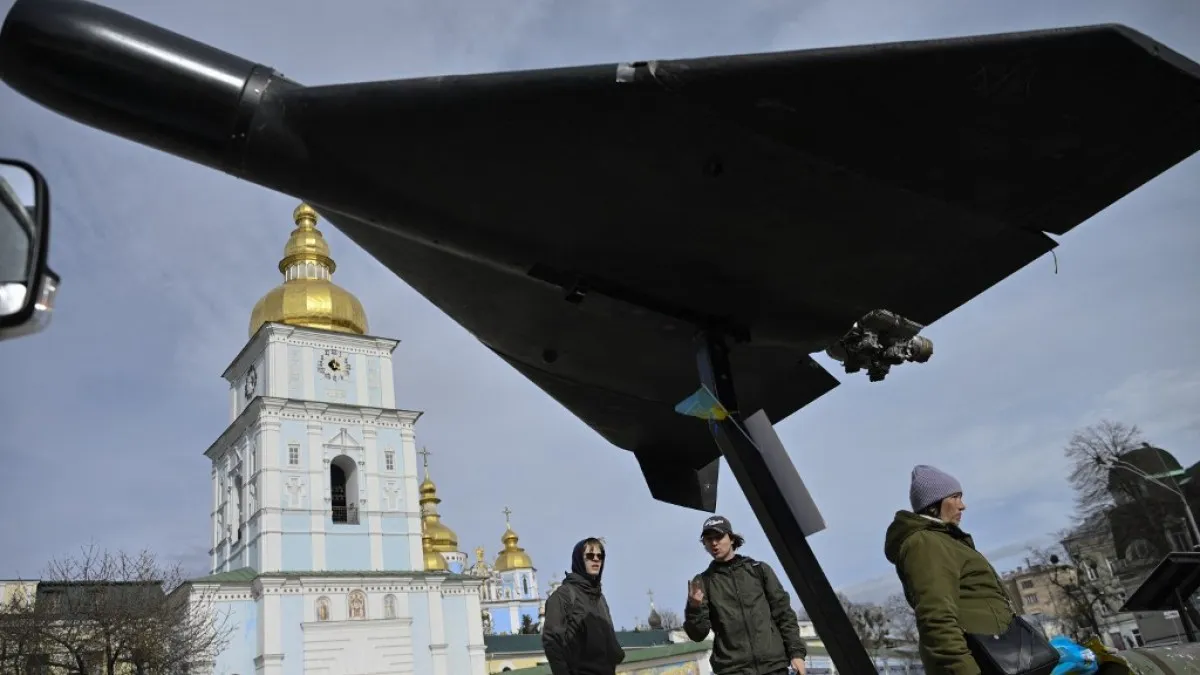
Moscow and Kyiv signal a short Easter truce as diplomacy stalls and war pressures mount.People look at a drone at an open-air exhibition of destroyed Russian military equipment on Mykhailivska Square in front of Saint Michael's Golden-Domed Cathedral, in Kyiv, on April 7, 2026, amid Russia's war in Ukraine [Genya Savilov/AFP]Published On 10 Apr 2026Russia’s President Vladimir Putin has announced a 32-hour ceasefire for Orthodox Easter, with President Volodymyr Zelenskyy confirming that Ukraine will honour it.The Kremlin said on Thursday that the pause in fighting will begin at 4pm Moscow time (13:00GMT) on Saturday and run until midnight on Sunday, covering Easter celebrations observed in both countries.Recommended Stories list of 3 itemslist 1 of 3UK says three Russian submarines tracked during ‘covert’ operationlist 2 of 3‘Not some piece of ice’: Greenland hits back at Trump insultlist 3 of 3Energy prices may take ‘months’ to normalise, despite ceasefire: Analystsend of list“We proceed on the basis that the Ukrainian side will follow the example of the Russian Federation,” the Kremlin said in a statement.It added that Defence Minister Andrei Belousov had instructed Chief of the General Staff Valery Gerasimov to halt military operations during the period. Russian forces, however, would remain ready to respond to any violations.Zelenskyy said Ukraine had already proposed a similar pause and would act in kind.“Ukraine has repeatedly stated that we are ready for reciprocal steps. We proposed a ceasefire during the Easter holiday this year and will act accordingly,” he wrote on Telegram.“People need an Easter without threats and a real move towards peace, and Russia has a chance not to return to attacks even after Easter.”Hours after the announcement, the governor of Dnipropetrovsk region said Russian artillery and aerial attacks had killed two people.“The enemy attacked three districts of the region almost 30 times with drones and artillery,” Oleksandr Ganzha said on Telegram on Friday.This weekend’s planned ceasefire echoes a similar, short-lived pause declared by Moscow last year, which both sides accused each other of breaching.The ceasefire comes as wider diplomatic efforts to end the war remain stalled, with attention in Washington shifting towards escalating tensions in the Middle East.Difficult months aheadKremlin spokesman Dmitry Peskov said Moscow had not discussed the Easter proposal in advance with the United States, nor did it signal any immediate revival of three-way peace talks.The Kremlin added that a visit by President Putin’s special investment envoy to the US does not signal a resumption of negotiations on a possible peace deal for Ukraine.Reuters reported on Thursday that envoy Kirill Dmitriev was in the US meeting members of President Donald Trump’s administration to discuss a potential peace deal for Ukraine as well as US-Russia economic cooperation.“Kirill Dmitriev is not negotiating a settlement in Ukraine, and this is not a resumption of the negotiations,” Peskov told reporters. “Kirill Dmitriev heads the group on economic issues, and he continues to work within this group.”Despite the limited pause in fighting, humanitarian channels between Russia and Ukraine remain active. Speaking from Moscow, Al Jazeera’s Yulia Shapovalova said the two sides recently carried out another exchange of soldiers’ remains.“Moscow handed over the remains of 1,000 Ukrainian soldiers to Kiev in exchange for 41 bodies of the Russians,” she said.“More than 500 bodies of Russian servicemen have been returned this year during these regular exchanges and over 19,000 bodies of Ukrainian soldiers have been returned to Kiev,” she added.These exchanges, often mediated by Turkiye, remain one of the few functioning lines of communication between the warring sides, alongside periodic prisoner swaps.Zelenskyy has repeatedly pushed for temporary ceasefires, including a halt to attacks on energy infrastructure, but said Moscow had largely rejected proposals. He added that Ukraine now faces growing pressure, both on the battlefield and from international partners.“This spring–summer period will be quite difficult politically and diplomatically. There may be pressure on Ukraine,” Zelenskyy said. “There will also be pressure on the battlefield.”He warned that the coming months could prove decisive, as Kyiv confronts both sustained Russian attacks and shifting geopolitical priorities among its allies.“I believe it will be very difficult for us until September.”
SRCAl Jazeera
LANGEN
LEANCenter
WORDS677
ENT12
FRI · 2026-04-10 · 07:54 GMTBRIEF NSR-2026-0410-61607
NSR-2026-0410-61607News Report·EN·Conflict
Russia and Ukraine agree to 32-hour Orthodox Easter ceasefire
Russia and Ukraine have agreed to a 32-hour ceasefire for Orthodox Easter, beginning Saturday at 4pm Moscow time and ending Sunday at midnight. The announcement follows stalled diplomatic efforts and increasing pressure from the ongoing war.
Al JazeeraAl JazeeraFiled 2026-04-10 · 07:54 GMTLean · CenterRead · 3 min
Al JazeeraFIG 01
Reading time
3min
Word count
677words
Sources cited
6cited
Entities identified
12entities
Quality score
100%
§ 01
Briefing Summary
AI-generatedNEWSAR · AI
Russia and Ukraine have agreed to a 32-hour ceasefire for Orthodox Easter, beginning Saturday at 4pm Moscow time and ending Sunday at midnight. The announcement follows stalled diplomatic efforts and increasing pressure from the ongoing war. Both Presidents Putin and Zelenskyy confirmed their respective countries would honor the truce, with Ukraine stating they had previously proposed a similar pause. Despite the announced ceasefire, reports emerged of continued attacks in the Dnipropetrovsk region. This ceasefire mirrors a similar attempt last year, which both sides accused each other of violating. The Kremlin stated they did not discuss the Easter proposal with the United States beforehand.
Confidence 0.90Sources 6Claims 5Entities 12
§ 02
Article analysis
Model · rule-basedFraming
Conflict
Diplomatic
Tone
Measured
AI-assessed
CalmNeutralAlarmist
Factuality
0.80 / 1.00
Factual
LowHigh
Sources cited
6
Well sourced
FewMany
§ 03
Key claims
5 extracted01
Ukraine has repeatedly stated that we are ready for reciprocal steps.
quotePresident Volodymyr Zelenskyy
Confidence
1.00
02
The pause in fighting will begin at 4pm Moscow time on Saturday and run until midnight on Sunday.
factualThe Kremlin
Confidence
1.00
03
President Zelenskyy confirmed that Ukraine will honour the 32-hour ceasefire.
factualPresident Volodymyr Zelenskyy
Confidence
1.00
04
Russia's President Vladimir Putin has announced a 32-hour ceasefire for Orthodox Easter.
factualThe Kremlin
Confidence
1.00
05
Russian artillery and aerial attacks had killed two people in Dnipropetrovsk region.
factualOleksandr Ganzha, governor of Dnipropetrovsk region
Confidence
0.90
§ 04
Full report
3 min read · 677 words§ 05
Entities
12 identifiedKey playerOppositionContextPositiveNeutralNegative
People6
§ 06
Keywords & salience
10 termsorthodox easter ceasefire
1.00
russia ukraine war
0.90
ceasefire
0.80
vladimir putin
0.60
diplomacy stalls
0.60
volodymyr zelenskyy
0.60
military operations
0.50
easter holiday
0.50
attacks
0.40
russian federation
0.40
§ 07
Topic connections
Interactive graph Network visualization showing 51 related topics
View Full Graph Person Organization Location Event|Click node to navigate|Edge numbers = shared articles