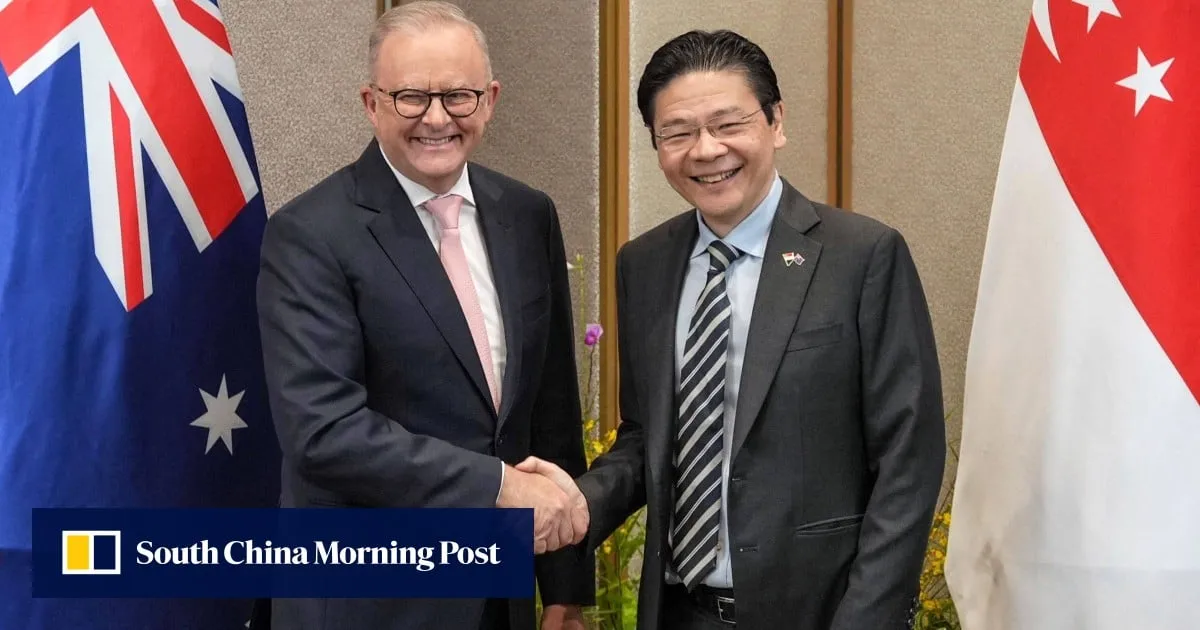
Singapore and Australia pledged on Friday to keep fuel and gas flowing between them as the Middle East conflict rattled global energy markets, with both sides also working towards a legally binding agreement on essential supplies.At a joint press conference in Singapore, Australian Prime Minister Anthony Albanese said Canberra stood ready to supply more liquefied natural gas (LNG) if the city state needed it, while Albanese’s Singaporean counterpart Lawrence Wong said his government would continue sending refined fuels to Australia.The commitments underscored how each side has become an important energy partner for the other amid mounting regional concern over supply disruptions.“Australia has been a very reliable supplier of LNG, and we will remain so … We believe, very critically, that our reputation as a reliable supplier of energy, not just to Singapore but to other nations in the region, is a critical part of the way that Australia is perceived quite rightly, and what that has done is to lead to confidence as well for investment in extraction of those goods,” Albanese said.Australian Prime Minister Anthony Albanese (centre) and Singapore Liquid Natural Gas (SLNG) CEO Leong Wei Hung (centre, left) tour the SLNG Terminal on Jurong Island in Singapore on Friday. Photo: EPAAlbanese, who arrived in Singapore on Thursday for a three-day visit, was speaking to the media alongside Wong.He said energy cooperation had taken on added importance after the US-Israel war against Iran.“The conflict in the Middle East is a long way from our region, but every nation in our region is being affected by it. By building regional cooperation on energy security and economic resilience, we strengthen our own fuel security and our own economy.”Iran has closed access to the Strait of Hormuz for more than a month, in retaliation for strikes by the US and Israel on February 28.The strait handles about a fifth of global gas and oil shipments, largely Asia-bound, leading to shortages of oil, gas and other commodities in the region.Wong hailed Albanese’s assurance as “vital” and said Singapore would continue supplying refined fuels to Canberra. The city state generates about 95 per cent of its electricity from natural gas, and Australia supplies about 32 per cent of the city state’s LNG.“The global energy market is now facing a significant disruption,” Wong said. “There is not very much individual countries can do to influence the global energy market, but what Australia and Singapore have decided to do now is to work together.”Further ReadingWong said Singapore was currently assessing the risks to its natural gas portfolio. “And certainly in the process of doing so, it will look to Australia to assess more gas on a commercial basis and, hopefully, more long-term gas as well.”Australian Prime Minister Anthony Albanese (right) and CEO and GM at Singapore Refining Company (SRC) Eso Thomas visit the SRC Facility in Singapore on Friday. Photo: EPAAnalysts welcomed the deepening of energy ties, lauding Australia – consistently among the top three LNG exporters globally – as a key partner for Singapore and the region.Kaho Yu, head of energy and resources research at risk intelligence company Verisk Maplecroft, said cooperation was crucial, given Canberra’s position as a major energy and mineral commodity exporter to Southeast Asia.“Australia also stands out as the closest and most immediate alternative when other major routes like the Strait of Hormuz are cut off,” he told This Week in Asia.Singapore’s ongoing cooperation with energy-exporting countries and regional electricity grid partners in Asean helped strengthen energy resilience by diversifying supply sources and energy types, Yu said.Mirza Huda, a senior research fellow at the climate and sustainability programme at think tank ODI Global and associate fellow at ISEAS – Yusof Ishak Institute, said Australia was playing a “very important role” in reducing the energy crisis in Southeast Asia.He also noted Australia’s ambition to be a leader in renewable energy due to its solar and wind resources.“Hopefully this crisis will also generate momentum on the Australia Asia-Power Link project,” he said, referring to a project that aims to export solar powered electricity from Australia to Singapore via subsea power cables.Oil refineries in Jurong Island, Singapore, in March. Australian Prime Minister Anthony Albanese says about one-fourth of his country’s fuel comes from Singapore’s refineries. Photo: ReutersOn Friday, Albanese said Singapore’s position as a global oil and refinery hub provided Australia with greater access to supplies.Singapore is the largest supplier of petrol and one of the main providers of diesel to Australia. According to Albanese, about one-fourth of Australia’s fuel comes from Singapore’s refineries.Wong said both countries were also working on a legally binding agreement concerning economic resilience and essential supplies, such as energy, in a bid to manage the current crisis and build strong supply chains for an uncertain future.The agreement would also include food security, education and defence cooperation, both leaders said.When asked about Singapore’s stance on the Strait of Hormuz, Wong doubled down on the position that his country would not negotiate with Iran for access to the waterway.The stance was first taken by Foreign Minister Vivian Balakrishnan on Tuesday, and invited pushback from neighbouring Malaysia. Balakrishnan had said negotiations would undermine fundamental principles of international law, and that transit through such passages was a right and not a privilege.On whether Singapore would increase reliance on alternative suppliers, given that negotiations were ruled out, Wong said the city state’s companies sourced feedstock from all over the world and were deeply connected to different energy supply flows.He also said Singapore would not be restricting exports amid fuel shortages. “We didn’t have to do so even in the darkest days of Covid-19, and we will not do so during this energy crisis.”
SRCSouth China Morning Post
LANGEN
OutletPrivately owned · Hong Kong
WORDS939
ENT11
FRI · 2026-04-10 · 12:40 GMTBRIEF NSR-2026-0410-61932
NSR-2026-0410-61932News Report·EN·Economic Impact
Singapore, Australia vow uninterrupted fuel supply amid global energy shock
Amidst global energy market volatility exacerbated by Middle East conflict, Singapore and Australia have pledged to maintain uninterrupted fuel and gas supplies to each other. During a meeting in Singapore on Friday, Australian Prime Minister Anthony Albanese assured continued LNG supply to Singapore, while Singaporean Prime Minister Lawrence Wong committed to ongoing refined fuel exports to Australia.
Kolette LimSouth China Morning PostFiled 2026-04-10 · 12:40 GMTOutlet · Privately owned · Hong KongRead · 4 min
South China Morning PostFIG 01
Reading time
4min
Word count
939words
Sources cited
3cited
Entities identified
11entities
NEWSAR · AI
Amidst global energy market volatility exacerbated by Middle East conflict, Singapore and Australia have pledged to maintain uninterrupted fuel and gas supplies to each other. During a meeting in Singapore on Friday, Australian Prime Minister Anthony Albanese assured continued LNG supply to Singapore, while Singaporean Prime Minister Lawrence Wong committed to ongoing refined fuel exports to Australia. The agreement underscores the nations' reliance on each other for energy security, with Australia supplying a significant portion of Singapore's LNG and Singapore providing refined fuels to Australia. Both leaders emphasized the importance of regional cooperation to mitigate the impact of global disruptions, particularly those stemming from the conflict in the Middle East and the closure of the Strait of Hormuz. The two countries are working towards a legally binding agreement on essential supplies.
Confidence 0.90Sources 3Claims 5Entities 11
Framing
Economic Impact
Diplomatic
Tone
Measured
AI-assessed
CalmNeutralAlarmist
Factuality
0.80 / 1.00
Factual
LowHigh
Sources cited
3
Well sourced
FewMany
01
The strait handles about a fifth of global gas and oil shipments, largely Asia-bound.
factual
Confidence
1.00
02
Australia supplies about 32 per cent of Singapore’s LNG.
statistic
Confidence
1.00
03
Singapore will continue sending refined fuels to Australia.
quoteSingaporean counterpart Lawrence Wong
Confidence
1.00
04
Australia stands ready to supply more liquefied natural gas (LNG) if Singapore needs it.
quoteAustralian Prime Minister Anthony Albanese
Confidence
1.00
05
Singapore and Australia pledged to keep fuel and gas flowing between them.
factual
Confidence
1.00
§ 04
Full report
4 min read · 939 wordsKey playerOppositionContextPositiveNeutralNegative
People3
Organizations1
fuel supply
0.90
energy security
0.80
singapore
0.70
lng
0.70
australia
0.70
supply disruptions
0.60
global energy market
0.60
middle east conflict
0.50
refined fuels
0.50
energy cooperation
0.40
§ 07
Connections
Who appears together in the newsIn this articleWider coverageLine weight = articles in common
Laying out network…
Strongest ties articles in common
- 12,267
- 6,988
- 6,840
- 3,992
- 3,563
- 2,077
Recurring context not named in this article
- LChinalinks 9
- LPakistanlinks 9
- LUnited Kingdomlinks 9
- LRussialinks 9
- LSouth Korealinks 9
- LIndialinks 9
- LJapanlinks 9
- LLebanonlinks 9