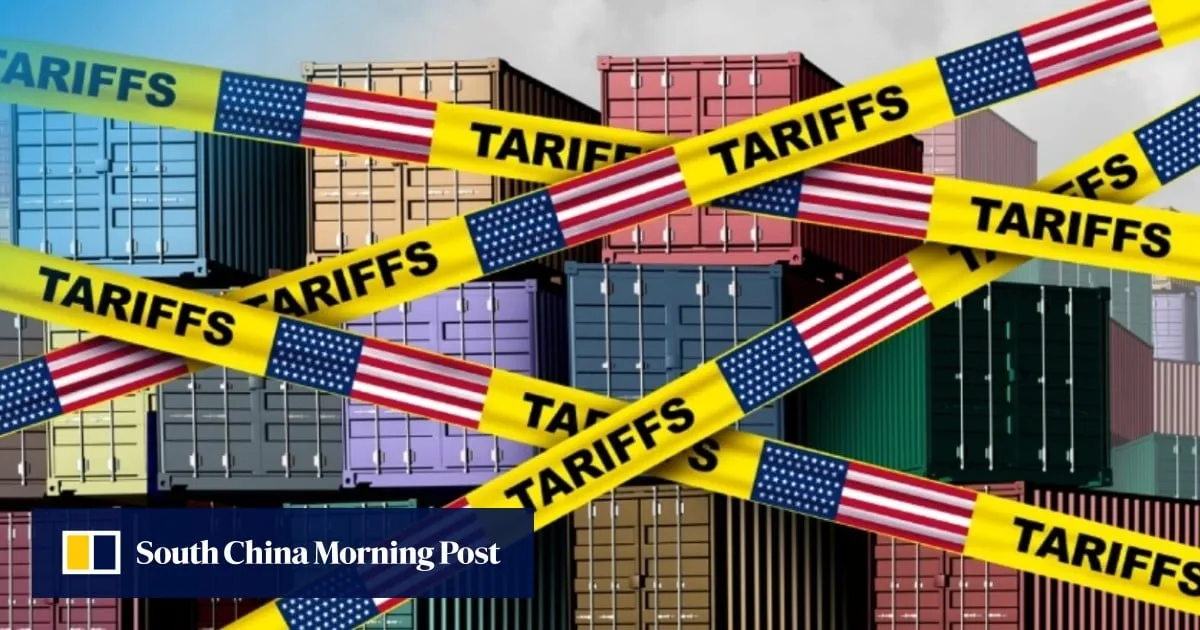
US President Donald Trump’s tariffs returned to court on Friday, as a three-judge Court of International Trade panel in New York sharply questioned both sides while weighing the legality of a new set of tariffs he imposed in February, shortly after a Supreme Court ruling declared most of his sweeping levies unlawful.While the judges offered few clues on how they might rule on the Section 122 tariffs, the court has previously rejected business challenges seeking to invalidate Section 301 tariffs dating from Trump’s first term, even as it moved to strike down tariffs imposed under the International Emergency Economic Powers Act last year.Section 122 of the Trade Act of 1974 allows temporary tariffs to address US balance-of-payments pressures, while Section 301 is used to target unfair trade practices by specific countries.The distinction turns in part on how the authorities operate: Section 301 tariffs are imposed following an investigation, while Section 122 measures are time-limited and must be referred to Congress after 150 days. By contrast, the IEEPA case centred on the president’s emergency powers to impose wide-ranging tariffs.Plaintiffs urged the court to block the tariffs before they expire to prevent the administration from cycling through different statutes to keep them in place.“It’s not like IEEPA, where they were going to go on for a while; they’re just 150 days,” observed Judge Claire Kelly.
SRCSouth China Morning Post
LANGEN
LEANCenter-Right
WORDS223
ENT10
FRI · 2026-04-10 · 21:43 GMTBRIEF NSR-2026-0410-62613
NSR-2026-0410-62613News Report·EN·Legal & Judicial
Trump’s tariff powers tested again as judges question ‘deficit’ justification
A US Court of International Trade panel is reviewing the legality of tariffs imposed by former President Donald Trump in February under Section 122 of the Trade Act of 1974. This follows a previous Supreme Court ruling that struck down many of Trump's tariffs as unlawful.
Khushboo RazdanSouth China Morning PostFiled 2026-04-10 · 21:43 GMTLean · Center-RightRead · 1 min
South China Morning PostFIG 01
Reading time
1min
Word count
223words
Sources cited
1cited
Entities identified
10entities
Quality score
100%
§ 01
Briefing Summary
AI-generatedNEWSAR · AI
A US Court of International Trade panel is reviewing the legality of tariffs imposed by former President Donald Trump in February under Section 122 of the Trade Act of 1974. This follows a previous Supreme Court ruling that struck down many of Trump's tariffs as unlawful. Section 122 allows temporary tariffs to address balance-of-payments issues. The plaintiffs are challenging the tariffs, arguing the administration may cycle through different statutes to keep tariffs in place. The judges questioned both sides, focusing on the "deficit" justification for the tariffs. The court has previously upheld Section 301 tariffs from Trump's first term, but struck down tariffs imposed under the International Emergency Economic Powers Act (IEEPA).
Confidence 0.90Sources 1Claims 5Entities 10
§ 02
Article analysis
Model · rule-basedFraming
Legal & Judicial
Economic Impact
Tone
Measured
AI-assessed
CalmNeutralAlarmist
Factuality
0.80 / 1.00
Factual
LowHigh
Sources cited
1
Limited
FewMany
§ 03
Key claims
5 extracted01
Plaintiffs urged the court to block the tariffs before they expire.
factual
Confidence
1.00
02
Section 122 measures are time-limited and must be referred to Congress after 150 days.
factual
Confidence
1.00
03
Section 122 of the Trade Act of 1974 allows temporary tariffs to address US balance-of-payments pressures.
factual
Confidence
1.00
04
The court previously rejected business challenges to Section 301 tariffs.
factual
Confidence
1.00
05
A three-judge Court of International Trade panel in New York questioned the legality of tariffs imposed in February.
factual
Confidence
1.00
§ 04
Full report
1 min read · 223 words§ 05
Entities
10 identifiedKey playerOppositionContextPositiveNeutralNegative
Organizations3
§ 06
Keywords & salience
10 termstariffs
1.00
section 122 tariffs
0.90
trade law
0.80
court of international trade
0.70
section 301 tariffs
0.70
legal challenge
0.60
balance-of-payments
0.60
ieepa
0.60
emergency powers
0.50
trade practices
0.50
§ 07
Topic connections
Interactive graph Network visualization showing 51 related topics
View Full Graph Person Organization Location Event|Click node to navigate|Edge numbers = shared articles