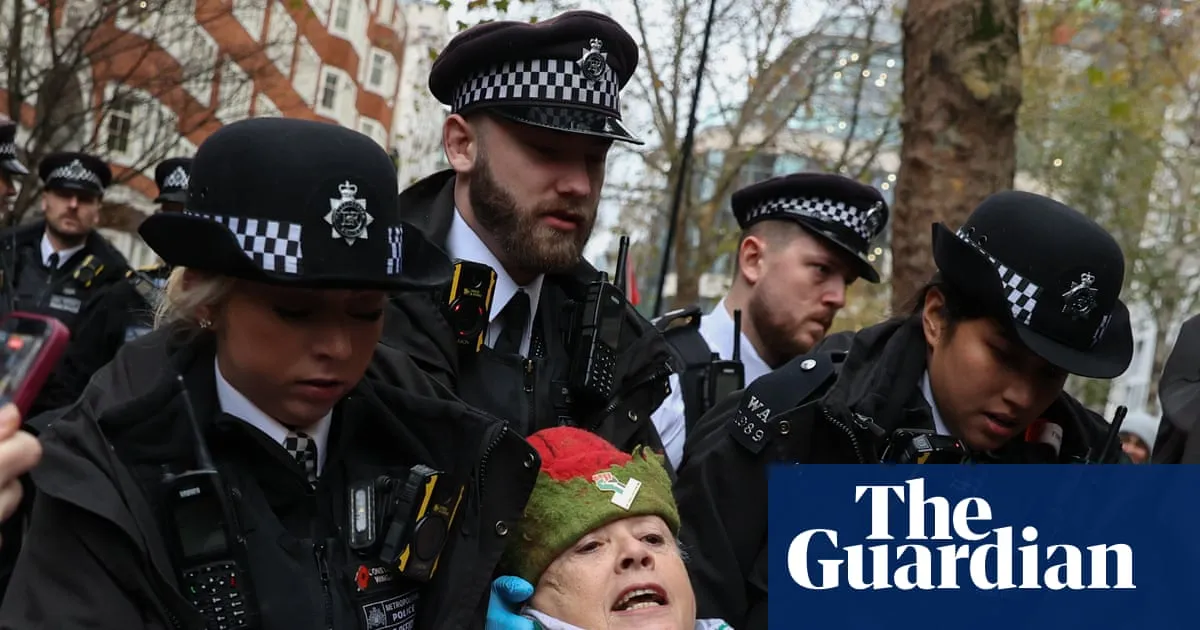
The right to protest is under attack in England and Wales with laws trampling over human rights protections and more oppressive restrictions in the pipeline, two major reports have warned.Both Human Rights Watch and the cross-party law reform organisation Justice say recent legislative changes have created a chilling effect on lawful protest and should be repealed. Their reports, simultaneously published on Thursday, also say that proposals for more curbs should be halted.They highlight the arrest of Republic anti-monarchy protesters during King Charles’s coronation, charges and arrests of pro-Palestinian demonstrators and long sentences for climate protesters as examples of the crackdown on the right to peaceful dissent.Fiona Rutherford, chief executive of Justice, said: “Year by year, we see police powers grow, as our fundamental right to protest is treated more like a privilege. The law in this area has become dangerously unbalanced, empowering the state to silence voices it should be safeguarding. Reversing this trend is essential to restoring trust, protecting rights and preserving a healthy democracy.”Police arresting a Just Stop Oil protester. Photograph: Vuk Valcic/AlamyLydia Gall, a senior Europe and Central Asia researcher at Human Rights Watch, said: “The UK is now adopting protest-control tactics imposed in countries where democratic safeguards are collapsing. The UK should oppose such measures, not replicate and endorse them.”Both reports say that the Police, Crime, Sentencing and Courts Act 2022 and the Public Order Act 2023 were watershed moments, criminalising large amounts of previously lawful protest activity and placing a greater emphasis on preemptive containment of protest through criminal law.The 2022 law granted police authority to impose conditions on public assemblies on grounds such as causing “serious unease” or being “too noisy”, described by Human Rights Watch as “vague and subjective”.Members of the public can be arrested for carrying items – described as innocuous by Justice – including cable ties, bike locks or glue, on suspicion that they may be used for “locking‑on”.Republic protesters were arrested on the day of the coronation and held for over 12 hours on suspicion of being equipped to lock-on for carrying plastic ties, despite telling officers the items would be used to secure placards. The Met subsequently apologised personally to one of the protesters and expressed regret for their arrests.Laura O’Brien, a partner at the law firm of Hodge Jones & Allen, told Human Rights Watch that the new laws had created confusion among officers and, in the context of placards at pro-Palestinian protests, the approach seemed to be “arrest first and decide later”.The NGO’s report also highlighted the case of a retired social worker, Trudi Warner, who was arrested and charged with contempt of court for quietly holding a sign outside a courthouse informing jurors of their absolute right to acquit. The high court dismissed the case as “fanciful” and confirmed that she had not attempted to influence any juror.Justice cited last-minute restrictions imposed by police on farmers’ budget day protest in November, which it said prompted allegations of “two-tier policing”.Both reports referred to the case of five Just Stop Oil activists who, in 2024, were sentenced to between two and five years in prison for joining a Zoom call to plan a protest, believed to be the longest sentences in the UK for non-violent protest. Although they were reduced on appeal the sentences were still criticised as unduly harsh.The organisations call for reviews of protest laws – which Human Rights Watch claim contravene international human rights obligations – and their policing.Proposed further laws, which include powers for police to take into account the cumulative impact of repeat protests, a ban on the wearing of face coverings and restrictions on demonstrations near places of worship, should be scrapped or paused, they say.The organisations bemoan a failure to recognise that some level of disruption is inevitable in civic protest. According to Justice, the law has been “fundamentally reshaped … from a positive duty to facilitate peaceful protest toward a system that expands state powers and emphasises controls and restriction”.A Home Office spokesperson said: “The right to protest is fundamental to our democracy, and it is a longstanding tradition in this country that people are free to demonstrate their views.“The home secretary recently announced an independent review of existing public order legislation. This will ensure police powers remain fit for purpose, consistent and strike the right balance between protecting the public and upholding the right to lawful protest.”
SRCThe Guardian - World News
LANGEN
LEANCenter-Left
WORDS728
ENT7
THU · 2026-01-08 · 06:00 GMTBRIEF NSR-2026-0108-6343
NSR-2026-0108-6343News Report·EN·Human Rights
Right to protest is under attack in England and Wales, reports warn
Two reports from Human Rights Watch and Justice warn that the right to protest in England and Wales is under attack due to recent legislative changes. The Police, Crime, Sentencing and Courts Act 2022 and the Public Order Act 2023 are identified as key laws that criminalize previously lawful protest activities.
Haroon Siddique Legal affairs correspondentThe Guardian - World NewsFiled 2026-01-08 · 06:00 GMTLean · Center-LeftRead · 3 min
The Guardian - World NewsFIG 01
Reading time
3min
Word count
728words
Sources cited
6cited
Entities identified
7entities
Quality score
100%
§ 01
Briefing Summary
AI-generatedNEWSAR · AI
Two reports from Human Rights Watch and Justice warn that the right to protest in England and Wales is under attack due to recent legislative changes. The Police, Crime, Sentencing and Courts Act 2022 and the Public Order Act 2023 are identified as key laws that criminalize previously lawful protest activities. These laws grant police greater powers to impose conditions on public assemblies, leading to arrests for carrying innocuous items and suppressing peaceful dissent. Examples cited include arrests of anti-monarchy protesters during King Charles's coronation and actions against climate and pro-Palestinian demonstrators. The reports urge the repeal of these laws and a halt to further restrictions, arguing they undermine human rights and democratic principles.
Confidence 0.90Sources 6Claims 5Entities 7
§ 02
Article analysis
Model · rule-basedFraming
Human Rights
Legal & Judicial
Tone
Measured
AI-assessed
CalmNeutralAlarmist
Factuality
0.70 / 1.00
Factual
LowHigh
Sources cited
6
Well sourced
FewMany
§ 03
Key claims
5 extracted01
Republic protesters were arrested on the day of the coronation for carrying plastic ties.
factualnull
Confidence
1.00
02
The 2022 law allows police to impose conditions on public assemblies based on causing “serious unease” or being “too noisy”.
factualHuman Rights Watch
Confidence
1.00
03
The Police, Crime, Sentencing and Courts Act 2022 and the Public Order Act 2023 criminalized previously lawful protest activity.
factualBoth reports
Confidence
0.90
04
The right to protest is under attack in England and Wales due to recent legislative changes.
factualHuman Rights Watch and Justice
Confidence
0.90
05
The UK is now adopting protest-control tactics imposed in countries where democratic safeguards are collapsing.
quoteLydia Gall, Human Rights Watch
Confidence
0.80
§ 04
Full report
3 min read · 728 words§ 05
Entities
7 identifiedKey playerOppositionContextPositiveNeutralNegative
Organizations3
§ 06
Keywords & salience
10 termsright to protest
1.00
human rights
0.80
police powers
0.70
protest laws
0.70
civil liberties
0.60
peaceful dissent
0.60
criminalising protest
0.50
public order act
0.50
england and wales
0.40
chilling effect
0.40
§ 07
Topic connections
Interactive graph Network visualization showing 43 related topics
View Full Graph Person Organization Location Event|Click node to navigate|Edge numbers = shared articles