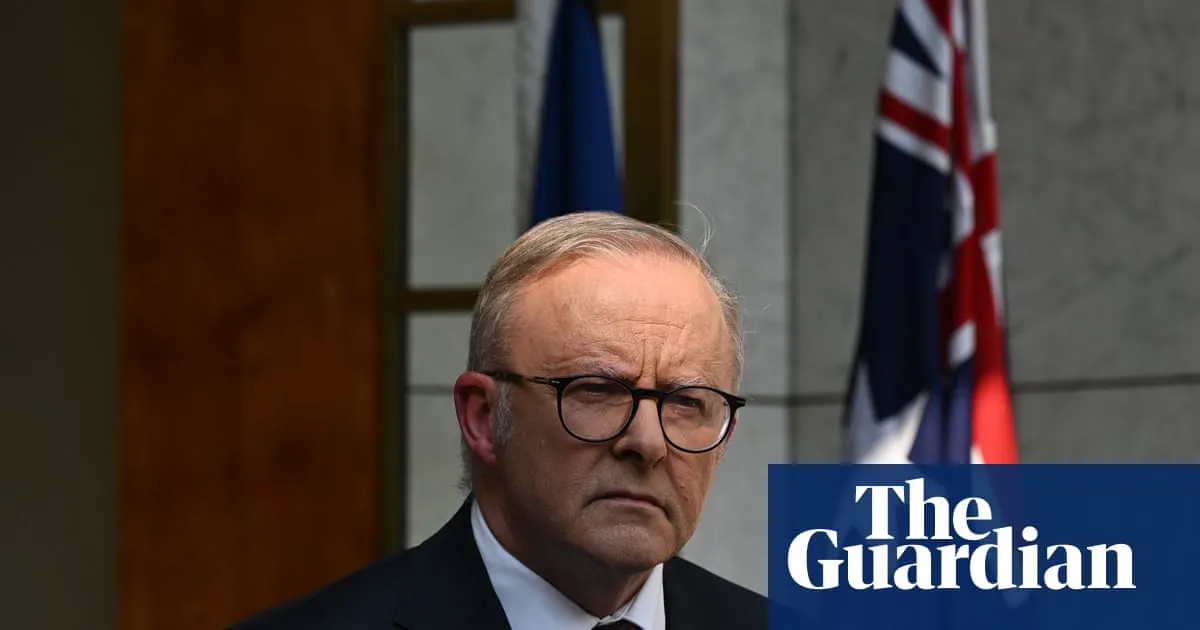
Ten days ago, Anthony Albanese fiercely argued against a royal commission into antisemitism. On Thursday, from that very same lectern, he declared such an inquiry was vital to “heal” and unite a wounded nation after its worst-ever terror attack.Which invites the obvious question: What prompted such a screeching reversal?“I respect people’s views and I listen to them,” Albanese told a press conference in the prime minister’s courtyard at Parliament House in Canberra.“I take the time to choose the right path, the course of action that will make a positive difference to our country.”The “right path” will involve a federal royal commission into antisemitism and social cohesion, to be led by the former high court justice Virginia Bell.The federal government will still be able to get quick answers, with former spy chief Dennis Richardson’s snap review of intelligence and security agencies to be folded into the broader inquiry.The royal commission won’t drag on for years, with Bell due to report no later than 14 December – exactly 12 months on from the massacre that killed 15 people and wounded 40 others.The terms of reference will require the inquiry to not prejudice current or future criminal trials and be conducted in a format that does not platform racial hatred.As Albanese calmly stepped through each of these aspects of the inquiry on Thursday afternoon, he methodically exposed the illegitimacy of the arguments he and his ministers have mounted in the past fortnight to defend not calling it.The truth is the “right path” was always visible and open – Albanese simply decided not to take it.Sources familiar with the prime minister’s thinking since the Bondi attack insist he was never hostile to a royal commission, just laser-focused on what immediate steps could be taken, including on hate speech, gun control and responding to Jillian Segal’s antisemitism review.Critics, including inside the Labor caucus, are far more cynical, adamant the prime minister made a cold political calculation that to hold a royal commission would be more damaging than to resist one.Some colleagues believe Albanese became more inclined to dig in as open letter after open letter calling for a royal commission was splashed across the front pages of national newspapers.It is true that some parts of the highly coordinated and relentless letter-writing campaign were politically motivated.But it is also true that others were not, a reality clouded – including, perhaps for Albanese – by the hyper-partisanship that has regrettably defined the political fallout to the tragedy.When relatives of 11 of the victims of the Bondi attack appealed to the prime minister for a national inquiry on 29 December, Albanese could and should have rethought his position, at least leaving open the possibility of a federal inquiry.Instead, together with the home affairs minister, Tony Burke, he mounted a new argument that a royal commission would platform anti-Jewish hate and in doing so retraumatise the community.That suggestion caused deep offence and insult to members of the Jewish community who wanted a royal commission for the very reason that it would put a spotlight on antisemitism.“It was bullshit,” one Labor MP said of the argument.As the public pressure grew over the past week, threatening to distract from Labor’s agenda for the foreseeable future, Albanese had little choice but to back down.The government’s two best communicators, Jim Chalmers and Mark Butler, separately set the scene for a change of course on Monday and Tuesday morning, expressing empathy with advocates of a royal commission while not criticising the case for one.When the prime minister declined to rule out a national inquiry at a press conference on Tuesday afternoon, it was only a matter of time.As he announced the royal commission on Thursday, he said: “I’ve said repeatedly that our government’s priority is to promote unity and social cohesion, and this is what Australia needs to heal, to learn, to come together in a spirit of national unity and to go forward knowing that, just like people who gathered that night on Bondi beach were committing to, that light will prevail over darkness.“It’s clear to me that a royal commission is essential to achieving this.”The problem for Albanese is that, for many, it was clear all along.
SRCThe Guardian - World News
LANGEN
LEANCenter-Left
WORDS695
ENT7
THU · 2026-01-08 · 09:01 GMTBRIEF NSR-2026-0108-6368
NSR-2026-0108-6368Analysis·EN·Political Strategy
Was Albanese’s royal commission refusal cynical or considered? Either way, his backdown has come too late
After initially opposing it, Prime Minister Anthony Albanese announced a federal royal commission into antisemitism and social cohesion, to be led by former High Court Justice Virginia Bell. The reversal followed public pressure after a recent terror attack.
Dan Jervis-Bardy Chief political correspondentThe Guardian - World NewsFiled 2026-01-08 · 09:01 GMTLean · Center-LeftRead · 3 min
The Guardian - World NewsFIG 01
Reading time
3min
Word count
695words
Sources cited
5cited
Entities identified
7entities
Quality score
100%
§ 01
Briefing Summary
AI-generatedNEWSAR · AI
After initially opposing it, Prime Minister Anthony Albanese announced a federal royal commission into antisemitism and social cohesion, to be led by former High Court Justice Virginia Bell. The reversal followed public pressure after a recent terror attack. Albanese stated the inquiry is vital to "heal" and unite the nation. The commission will also incorporate a review of intelligence and security agencies led by Dennis Richardson. Bell is expected to report by December 14, 2024, with terms of reference that avoid prejudicing trials or platforming racial hatred. While Albanese claims he chose the "right path" after consideration, critics suggest the initial resistance was a political calculation.
Confidence 0.90Sources 5Claims 5Entities 7
§ 02
Article analysis
Model · rule-basedFraming
Political Strategy
Human Interest
Tone
Measured
AI-assessed
CalmNeutralAlarmist
Factuality
0.40 / 1.00
Mixed
LowHigh
Sources cited
5
Well sourced
FewMany
§ 03
Key claims
5 extracted01
Relatives of 11 victims of the Bondi attack appealed for a national inquiry on 29 December.
factualArticle itself
Confidence
1.00
02
The royal commission is due to report no later than 14 December.
factualArticle itself
Confidence
1.00
03
A federal royal commission into antisemitism and social cohesion will be led by Virginia Bell.
factualArticle itself
Confidence
1.00
04
Albanese later declared an inquiry was vital to “heal” and unite the nation after its worst-ever terror attack.
quoteAlbanese
Confidence
1.00
05
Anthony Albanese initially argued against a royal commission into antisemitism.
factualArticle itself
Confidence
1.00
§ 04
Full report
3 min read · 695 words§ 05
Entities
7 identifiedKey playerOppositionContextPositiveNeutralNegative
People4
§ 06
Keywords & salience
8 termsroyal commission
1.00
antisemitism
0.90
anthony albanese
0.80
political calculation
0.60
social cohesion
0.60
hate speech
0.50
inquiry
0.50
government
0.40
§ 07
Topic connections
Interactive graph Network visualization showing 51 related topics
View Full Graph Person Organization Location Event|Click node to navigate|Edge numbers = shared articles