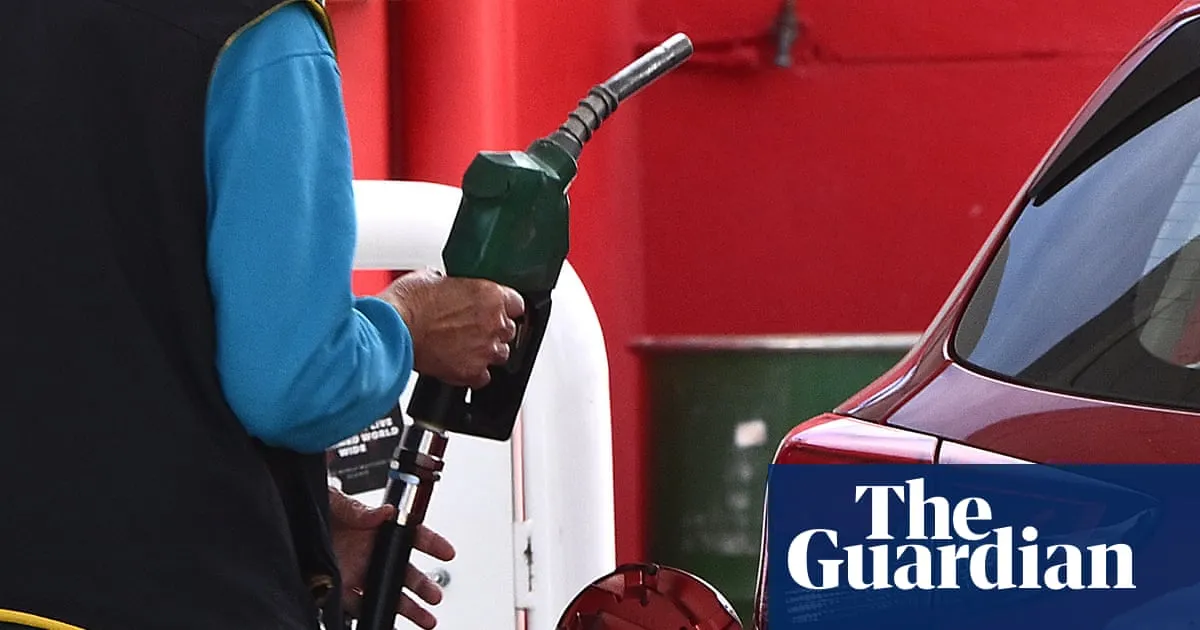
Australia’s fuel excise has already been halved until the end of June, and heavy vehicle road user charges have been suspended. Photograph: Joel Carrett/AAP View image in fullscreen Australia’s fuel excise has already been halved until the end of June, and heavy vehicle road user charges have been suspended. Photograph: Joel Carrett/AAP New relief for households being considered as Albanese government warns of ‘long tail’ from Iran war Catherine King says while peace talks were ‘best chance’ at lowering fuel prices, further help may be included in budget Follow our Australia news live blog for latest updates Track Australia’s fuel prices, service station outages and shipments in charts Get our breaking news email, free app or daily news podcast The Albanese government is contemplating further relief for struggling households and businesses in next month’s federal budget, as peace talks continue between the US and Iran amid a fragile ceasefire. The infrastructure minister, Catherine King, said the success of those talks was the “best chance” at bringing down fuel prices. But she warned there would be a “long tail” from the crisis even if the Strait of Hormuz – which was still being blocked by Iran and strangling global oil supplies – reopened imminently. Australia’s fuel excise has already been halved until the end of June, and heavy vehicle road user charges have been suspended, but the government has been looking at how events unfold in the coming weeks to see whether more relief could be included in the May budget, King said. “Whether there’s need for additional measures for household and businesses, they’re all the things that we’re contemplating as part of the budget process,” King told ABC’s Insiders on Sunday. “We’re very hopeful in terms of the ceasefire, but we’re realistic about that as well. This is a complex geopolitical area that’s not … an easy area [a] for quick and easy resolution. “So we’ve got to be prepared for that and understanding [of] what that means for businesses, for our farming communities, making sure we continue to transport goods and services and provide services for people in communities far and wide.” Treasurer Jim Chalmers told a politics in the pub event in his Queensland electorate the global energy shock and its flow on effects were front of mind for the government ahead of the budget. “The pressures on people won’t just disappear the moment the ceasefire sticks or the day the Strait of Hormuz is properly opened,” he said. “Even after the drones stop it will take some time to get the global economic show back on the road and that matters a lot for us as we put a budget together.” Chalmers said the 12 May package would focus on fuel security, supply chain resilience and economic reform. He said the budget would balance “the pressures of the here and now with our intergenerational obligations to real people in real communities”. It came as the government prepared to launch a new TV, digital and billboard campaign on Monday to encourage people to minimise their fuel use. The “every little bit helps” campaign is pitched as “a practical guide aimed at managing fuel supply chain pressures driven by the conflict in the Middle East”. But the shadow defence minister, James Paterson, criticised the campaign, which would reportedly cost around $20m, as “political propaganda”. “Frankly, I don’t think Australians want to be lectured by taxpayer-funded political propaganda about driving less,” Paterson told Sky News on Sunday. “It’s very clearly about their political interest, not about fixing the problem.” A successful ceasefire between the US and Iran could result in Iran and Oman charging fees of up to $US2m ($2.8m) a ship to pass through the strait – a move King said would be “very challenging” for economies. While Australia had little control over what happens in the negotiating rooms in Islamabad, King said the government would focus on ramping up avenues for renewable fuels and electrification, while taking a swipe at the Nationals leader, Matt Canavan, for proposing more fossil fuel use that “the world has moved on” from. “We’ve got this incredible resource here in this country that lots of other countries don’t have. We’re a secure, stable democracy [with] the capacity to generate renewables here in this country,” she said. “Actually, the fact that we basically grow canola here, then we ship it overseas, turn it into sustainable aviation fuel and then buy it back, is nuts. In our view, we should actually be having that low-carbon liquid … renewable diesel, we should be able to generate that here. “We cannot rely on the rest of the world for our energy security. We’ve got to be able to generate it here and actually then use it here as well. And electrification is a great way.” Global events have put further strain on the government’s upcoming budget as the treasurer, Jim Chalmers, balances the country’s rising inflation, stagnant productivity and pressure on the cost of living. There is debate over whether tax breaks for electric vehicle (EV) owners should continue, with the scheme forecast to blow out 10 times its original four-year budget forecasts to $5.1bn, as reported by the Australian Financial Review. King said the tax break had done a “good job” of increasing EV affordability, but she would not rule out whether it would be wound back. EV users do not pay the fuel excise, and governments have been looking to introduce a road user charge to recoup missed revenue as their market share increases. King indicated her department had done modelling of the impacts but said there wasn’t a “clear pathway” for it to pass parliament at the moment. “We’re trying to encourage as much electric vehicle uptake as we possibly can – we don’t want to disincentivise that at all. So there’s a balance to be struck here, both obviously, with the fringe benefit tax and potential of road user charging, but we’re making our way through that,” she said. Explore more on these topics Australian politics Petrol prices Cost-of-living crisis news Share Reuse this content
SRCThe Guardian - World News
LANGEN
LEANCenter-Left
WORDS1 012
ENT7
SUN · 2026-04-12 · 01:35 GMTBRIEF NSR-2026-0412-63894
NSR-2026-0412-63894News Report·EN·Economic Impact
New relief for households being considered as Albanese government warns of ‘long tail’ from Iran war
The Australian Albanese government is considering additional relief measures for households and businesses in the upcoming May budget due to the ongoing global energy crisis stemming from the conflict involving Iran. Infrastructure Minister Catherine King stated that while peace talks between the US and Iran offer the best hope for lowering fuel prices, the government anticipates a "long tail" effect even if the Strait of Hormuz reopens soon.
Sarah Basford CanalesThe Guardian - World NewsFiled 2026-04-12 · 01:35 GMTLean · Center-LeftRead · 5 min
The Guardian - World NewsFIG 01
Reading time
5min
Word count
1 012words
Sources cited
2cited
Entities identified
7entities
Quality score
75%
§ 01
Briefing Summary
AI-generatedNEWSAR · AI
The Australian Albanese government is considering additional relief measures for households and businesses in the upcoming May budget due to the ongoing global energy crisis stemming from the conflict involving Iran. Infrastructure Minister Catherine King stated that while peace talks between the US and Iran offer the best hope for lowering fuel prices, the government anticipates a "long tail" effect even if the Strait of Hormuz reopens soon. The government has already halved the fuel excise until the end of June and suspended heavy vehicle road user charges. Treasurer Jim Chalmers acknowledged the persistent pressures on Australians and emphasized that the global energy shock remains a primary concern for the government as they finalize the budget.
Confidence 0.90Sources 2Claims 5Entities 7
§ 02
Article analysis
Model · rule-basedFraming
Economic Impact
Political Strategy
Tone
Measured
AI-assessed
CalmNeutralAlarmist
Factuality
0.70 / 1.00
Factual
LowHigh
Sources cited
2
Limited
FewMany
§ 03
Key claims
5 extracted01
Australia’s fuel excise has already been halved until the end of June, and heavy vehicle road user charges have been suspended.
factualArticle
Confidence
1.00
02
The 12 May package would focus on fuel security, supply chain resilience and economic reform.
quoteJim Chalmers
Confidence
0.90
03
The Albanese government is contemplating further relief for struggling households and businesses in next month’s federal budget.
factualArticle
Confidence
0.90
04
The success of peace talks between the US and Iran was the “best chance” at bringing down fuel prices.
quoteCatherine King
Confidence
0.80
05
There would be a “long tail” from the crisis even if the strait of Hormuz reopened imminently.
quoteCatherine King
Confidence
0.70
§ 04
Full report
5 min read · 1 012 words§ 05
Entities
7 identifiedKey playerOppositionContextPositiveNeutralNegative
Organizations1