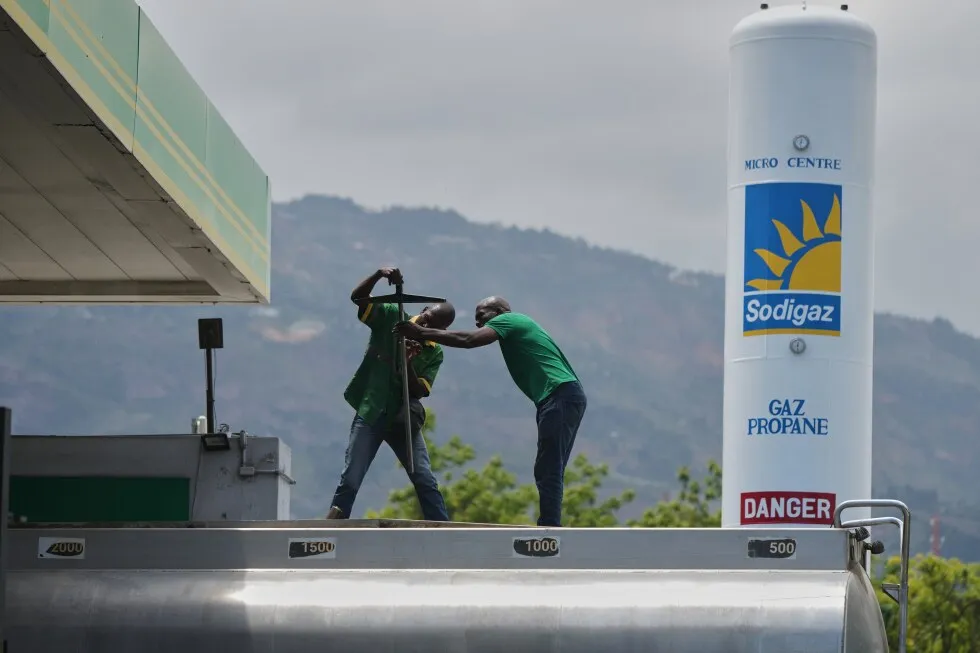
Gas station employees prepare to fill a tank with gas in Port-au-Prince, Haiti, Tuesday, April 7, 2026. (AP Photo/Odelyn Joseph) 2026-04-12T06:23:35Z Port-au-Prince, Haiti (AP) — For a factory worker in Haiti, the war in distant Iran means he now has to walk two hours to work and the same distance home each day, because he can no longer afford public transportation. On a recent morning, Alexandre Joseph, 35, fretted about his family’s future in a loud voice, attracting the attention of passersby in Port-au-Prince, Haiti’s capital. “The government raised the prices of gasoline, diesel and kerosene, hitting my family. I now am unable to feed my two children on the salary I have,” he said. The conflict in Iran has caused oil prices in Haiti to surge, disrupting critical supply chains, doubling transportation costs and forcing millions of undernourished people to cut back on already scarce meals. Haiti, the most impoverished country in the Western Hemisphere, has been hit the hardest by rising oil prices that experts warn will deepen a spiraling humanitarian crisis . ‘One of the most fragile countries in the world’ On April 2, Haiti’s government announced a 37% increase in the cost of diesel and a 29% increase in the cost of gasoline. “The consequences are huge,” said Erwan Rumen, deputy country director for the United Nations World Food Program in Haiti. “It’s one of the most fragile countries in the world.” Almost half of Haiti’s nearly 12 million inhabitants already face high levels of acute food insecurity. In recent months, Rumen noted, about 200,000 people dropped from the emergency phase to the acute one, a significant milestone. “What is a bit frightening is to see that so many efforts could be basically wiped out by things that are completely out of our control,” he said. “This part of the population is extremely fragile. They’re on the verge of collapsing completely.” (
SRCAssociated Press (AP)
LANGEN
LEANCenter
WORDS316
ENT6
SUN · 2026-04-12 · 10:53 GMTBRIEF NSR-2026-0412-64407
NSR-2026-0412-64407News Report·EN·Economic Impact
Haitians cut back on already scarce food and ask how they’ll survive rising fuel prices
Haiti is facing a worsening humanitarian crisis due to rising fuel prices, triggered by conflict in Iran. In April 2026, the Haitian government announced significant increases in the cost of diesel and gasoline.
Associated Press (AP)Filed 2026-04-12 · 10:53 GMTLean · CenterRead · 2 min
Associated Press (AP)FIG 01
Reading time
2min
Word count
316words
Sources cited
2cited
Entities identified
6entities
Quality score
75%
§ 01
Briefing Summary
AI-generatedNEWSAR · AI
Haiti is facing a worsening humanitarian crisis due to rising fuel prices, triggered by conflict in Iran. In April 2026, the Haitian government announced significant increases in the cost of diesel and gasoline. These price hikes are disrupting supply chains, doubling transportation costs, and forcing Haitians to further reduce their already limited food consumption. The situation is particularly dire as nearly half of Haiti's population already experiences acute food insecurity. The United Nations World Food Program warns that these rising costs could erase recent progress in addressing food insecurity, pushing a fragile population closer to collapse. The increased fuel costs are impacting daily life, as exemplified by factory workers who can no longer afford transportation to work.
Confidence 0.90Sources 2Claims 5Entities 6
§ 02
Article analysis
Model · rule-basedFraming
Economic Impact
Human Interest
Tone
Measured
AI-assessed
CalmNeutralAlarmist
Factuality
0.70 / 1.00
Factual
LowHigh
Sources cited
2
Limited
FewMany
§ 03
Key claims
5 extracted01
The government raised the prices of gasoline, diesel and kerosene, hitting my family.
quoteAlexandre Joseph, factory worker
Confidence
1.00
02
Haiti’s government announced a 37% increase in the cost of diesel and a 29% increase in the cost of gasoline on April 2.
factualAP
Confidence
1.00
03
Almost half of Haiti’s nearly 12 million inhabitants already face high levels of acute food insecurity.
statisticAP
Confidence
0.90
04
The war in distant Iran has caused oil prices in Haiti to surge.
factualAP
Confidence
0.90
05
The conflict in Iran has caused oil prices in Haiti to surge, disrupting critical supply chains, doubling transportation costs.
factualAP
Confidence
0.80
§ 04
Full report
2 min read · 316 words§ 05
Entities
6 identifiedKey playerOppositionContextPositiveNeutralNegative