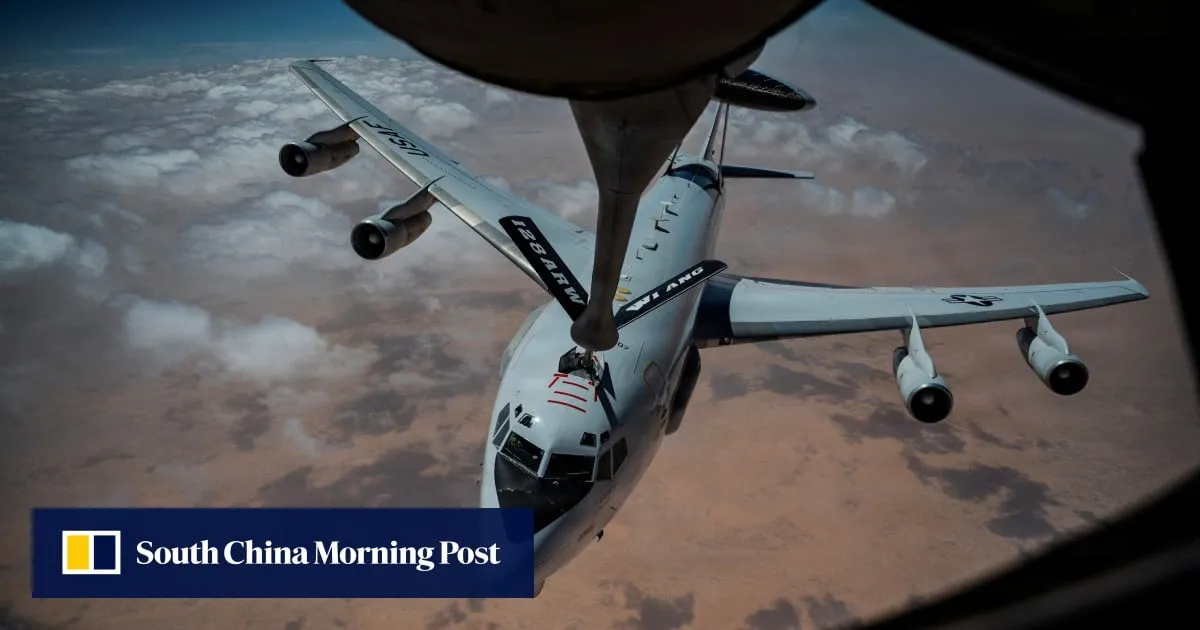
A Chinese company has tried to use AI analysis to track US aerial refuelling missions to detect the strike patterns of bombers over Iran.MizarVision, a private geospatial intelligence firm, published a report earlier this month analysing the activities of US KC-135 and KC-46 tanker aircraft during Operation Epic Fury.The report detailed critical links between known tanker movements and strikes against Iranian targets.Analysts said the tankers could be tracked through Automatic Dependent Surveillance-Broadcast signals, which are used to locate aircraft. Tankers are the most commonly tracked type of military aircraft.However, bombers are highly unlikely to broadcast ADS-B signals during operational flights so the firm then tried to match the location of the tankers with known or suspected bomber movements – something that is difficult to track. It was not clear what role artificial intelligence played in the process.The firm had previously conducted a month-long monitoring effort, which also used satellite imagery documenting the deployment of various US military assets across the Middle East.
SRCSouth China Morning Post
LANGEN
LEANCenter-Right
WORDS162
ENT8
SUN · 2026-04-12 · 14:00 GMTBRIEF NSR-2026-0412-64665
NSR-2026-0412-64665News Report·EN·National Security
How a Chinese company said it used AI to track US bomber movements over Iran
A Chinese geospatial intelligence firm, MizarVision, published a report this month detailing its attempt to track US bomber activity over Iran using AI analysis. The company analyzed Automatic Dependent Surveillance-Broadcast signals from US KC-135 and KC-46 tanker aircraft during Operation Epic Fury.
Amber WangSouth China Morning PostFiled 2026-04-12 · 14:00 GMTLean · Center-RightRead · 1 min
South China Morning PostFIG 01
Reading time
1min
Word count
162words
Sources cited
0cited
Entities identified
8entities
Quality score
100%
§ 01
Briefing Summary
AI-generatedNEWSAR · AI
A Chinese geospatial intelligence firm, MizarVision, published a report this month detailing its attempt to track US bomber activity over Iran using AI analysis. The company analyzed Automatic Dependent Surveillance-Broadcast signals from US KC-135 and KC-46 tanker aircraft during Operation Epic Fury. MizarVision aimed to link tanker movements to known or suspected bomber locations, which are difficult to track as bombers typically do not broadcast ADS-B signals during operations. The report suggested a correlation between tanker activity and strikes against Iranian targets. MizarVision previously conducted a month-long monitoring effort using satellite imagery to document US military asset deployments in the Middle East. The extent of AI's role in the analysis remains unclear.
Confidence 0.90Claims 5Entities 8
§ 02
Article analysis
Model · rule-basedFraming
National Security
Technology
Tone
Measured
AI-assessed
CalmNeutralAlarmist
Factuality
0.80 / 1.00
Factual
LowHigh
Sources cited
0
No named sources
FewMany
§ 03
Key claims
5 extracted01
The firm tried to match the location of the tankers with known or suspected bomber movements.
factual
Confidence
1.00
02
Bombers are highly unlikely to broadcast ADS-B signals during operational flights.
factual
Confidence
1.00
03
Tankers could be tracked through Automatic Dependent Surveillance-Broadcast signals.
factual
Confidence
1.00
04
MizarVision published a report analyzing the activities of US KC-135 and KC-46 tanker aircraft during Operation Epic Fury.
factual
Confidence
1.00
05
A Chinese company tried to use AI analysis to track US aerial refuelling missions.
factual
Confidence
1.00
§ 04
Full report
1 min read · 162 words§ 05
Entities
8 identifiedKey playerOppositionContextPositiveNeutralNegative
Locations4
§ 06
Keywords & salience
10 termsus bomber movements
0.90
ai analysis
0.90
aerial refuelling
0.80
iran
0.70
tanker aircraft
0.70
ads-b signals
0.60
geospatial intelligence
0.60
mizarvision
0.50
military assets
0.50
operation epic fury
0.40
§ 07
Topic connections
Interactive graph No topic relationship data available yet. This graph will appear once topic relationships have been computed.