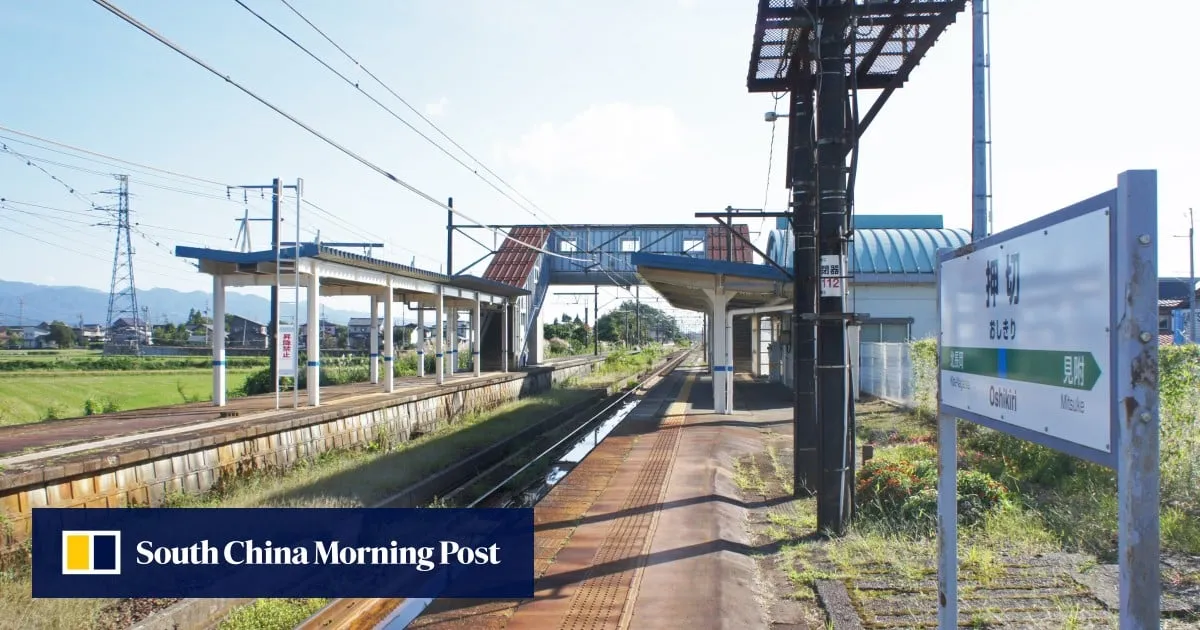
Cost-cutting on Japan’s already depleted railway network has hit a new low, with one of the nation’s largest network operators no longer providing toilet paper in a growing number of unmanned stations.JR East’s decision has been met with a mix of annoyance and resignation online, while underscoring the financial pressures bearing down on rural rail services.A social media post from February 2 highlighted the growing frustration with JR East’s failure to provide toilet paper, condemning a message in the lavatories at Niigata Prefecture’s Oshikiri station that said “no paper available”.One reply said, “This isn’t a decline in service – it’s JR East’s final notice saying ‘You’re no longer profitable customers’.” The real message, it added, was that people needed to bring their own paper and the station might get shut down entirely soon anyway.That is a legitimate concern. Railway firms have scrapped 1,366km of track, or 5 per cent, of the entire national network, in the last three decades. Citing transport ministry statistics, Kyodo News reported that scrapping routes had become more pronounced in the last decade, with 534km of track ripped up.“The main reason for these tracks being decommissioned is that the population in many rural areas around the country is declining and these routes are not being used enough,” said Yoshitsugu Hayashi, a professor of train transport policy and systems at Chubu University in Aichi prefecture.“The railway firms cannot keep unprofitable lines and in many areas they are being replaced by BRT [bus rapid transport] routes with lower infrastructure costs,” he told This Week in Asia.JR East says no toilet paper will be provided at some unmanned stations in its service areas after taking into consideration usage patterns and other factors. Photo: ShutterstockTrain operators are also looking to cut costs by shifting to stations that are unmanned or only have staff at the busiest times of the day. But the decision to remove toilet paper did take Hayashi aback.“That is quite shocking,” he admitted. “But I do feel that JR East has become very sensitive about costs in recent years and is doing everything it can to cut expenditures as much as possible.”JR East has sought to explain its stance.“At some unmanned stations within our service areas, we do not provide toilet paper after taking into consideration usage patterns and other factors,” the company said in a statement issued to the Bengoshi.com News site.Further Reading“At stations where toilet paper is not provided, we kindly ask that customers bring their own flushable paper or similar items.”Despite the inconvenience of not having toilet paper in stations, the Japanese public seems phlegmatic about the news, even going as far as being understanding.“These are probably cost-cutting measures, such as reducing labour costs and the cost of toilet paper itself, but toilet paper theft has been rampant lately,” read one message linked to the Bengoshi.com website.“Japanese people used to have high levels of civility, but today – with toilet paper theft and vandalism rampant due to declining morals and the rapid increase in foreigners – it is hard to criticise the decision not to provide it,” said another comment.Others pointed out that operators never used to provide paper in decades gone by and people simply got into the habit of making sure they had an adequate supply with them at all times. The answer to the present situation, they said, was to adopt the same attitude.
SRCSouth China Morning Post
LANGEN
LEANCenter-Right
WORDS563
ENT9
MON · 2026-04-13 · 09:55 GMTBRIEF NSR-2026-0413-65502
NSR-2026-0413-65502News Report·EN·Economic Impact
Japan’s rural rail crisis hits new low as JR East cuts toilet paper service
JR East, one of Japan's largest railway operators, is cutting costs by no longer providing toilet paper at a growing number of unmanned stations. This decision has sparked concern and frustration, highlighting the financial difficulties faced by rural rail services in Japan.
Julian RyallSouth China Morning PostFiled 2026-04-13 · 09:55 GMTLean · Center-RightRead · 3 min
South China Morning PostFIG 01
Reading time
3min
Word count
563words
Sources cited
3cited
Entities identified
9entities
Quality score
100%
§ 01
Briefing Summary
AI-generatedNEWSAR · AI
JR East, one of Japan's largest railway operators, is cutting costs by no longer providing toilet paper at a growing number of unmanned stations. This decision has sparked concern and frustration, highlighting the financial difficulties faced by rural rail services in Japan. Over the past three decades, 1,366 km of track have been decommissioned due to declining rural populations and low usage. Railway firms are seeking to reduce expenses by shifting to unmanned stations and exploring alternative transportation methods like bus rapid transit. JR East stated the decision to remove toilet paper was based on usage patterns and other factors, reflecting a broader effort to cut expenditures amid financial pressures.
Confidence 0.90Sources 3Claims 5Entities 9
§ 02
Article analysis
Model · rule-basedFraming
Economic Impact
Human Interest
Tone
Measured
AI-assessed
CalmNeutralAlarmist
Factuality
0.70 / 1.00
Factual
LowHigh
Sources cited
3
Well sourced
FewMany
§ 03
Key claims
5 extracted01
Scrapping routes had become more pronounced in the last decade, with 534km of track ripped up.
statisticKyodo News citing transport ministry statistics
Confidence
1.00
02
At some unmanned stations within our service areas, we do not provide toilet paper after taking into consideration usage patterns and other factors.
quoteJR East
Confidence
1.00
03
Railway firms have scrapped 1,366km of track, or 5 per cent, of the entire national network, in the last three decades.
statisticArticle citing transport ministry statistics and Kyodo News
Confidence
1.00
04
JR East is no longer providing toilet paper in a growing number of unmanned stations.
factualArticle
Confidence
1.00
05
The main reason for these tracks being decommissioned is declining population and underuse.
quoteYoshitsugu Hayashi, professor at Chubu University
Confidence
0.90
§ 04
Full report
3 min read · 563 words§ 05
Entities
9 identifiedKey playerOppositionContextPositiveNeutralNegative
Organizations4
§ 06
Keywords & salience
9 termsrural rail crisis
0.90
jr east
0.90
cost-cutting
0.80
unmanned stations
0.70
toilet paper
0.70
declining population
0.60
unprofitable lines
0.60
railway network
0.50
transport policy
0.40
§ 07
Topic connections
Interactive graph No topic relationship data available yet. This graph will appear once topic relationships have been computed.