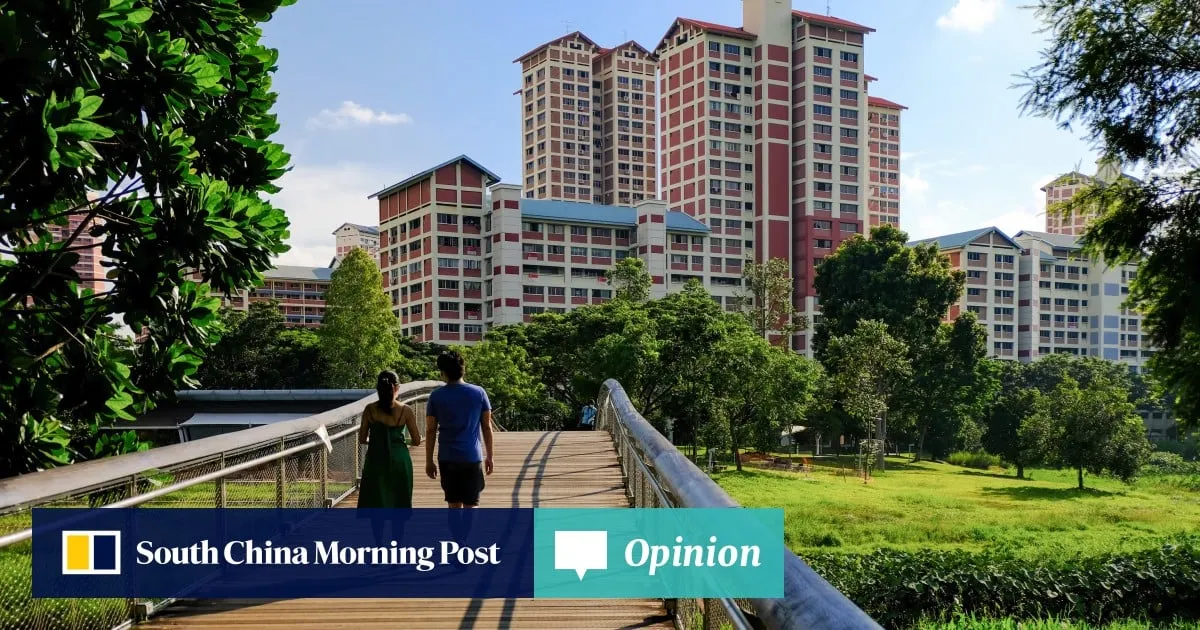
Singapore is at the sharp end of the energy crisis. Imported natural gas accounts for an estimated 95 per cent of the city state’s electricity generation. According to Nomura, Singapore is the fourth most vulnerable Asian economy to the energy shock emanating from the war in Iran, based on a set of criteria that includes the share of fossil fuels in energy consumption and the proportion of energy imports from the Gulf.Last month, Singapore’s Foreign Affairs Minister Vivian Balakrishnan said the unprecedented disruption to energy flows was, “in a sense, an Asian crisis”. On April 7, the government announced a package of measures worth S$1 billion (US$783.7 million) to help support the economy, including an increase in a cost-of-living payment for eligible Singaporeans and a one-off payment to taxi drivers to help offset the rise in fuel costs.Yet a cursory glance at the city state’s housing market shows that one of Asia’s best-performing residential real estate sectors continues to show remarkable resilience. Prices for private properties and second-hand flats built by the Housing and Development Board (HDB), Singapore’s public housing authority, rose in annualised terms in the first quarter of this year.
SRCSouth China Morning Post
LANGEN
LEANCenter-Right
WORDS192
ENT7
MON · 2026-04-13 · 08:30 GMTBRIEF NSR-2026-0413-65508
NSR-2026-0413-65508News Report·EN·Economic Impact
Why Singapore’s property slowdown is the envy of the rest of Asia
Singapore faces an energy crisis due to its heavy reliance on imported natural gas, making it vulnerable to global energy shocks. In response, the government announced a S$1 billion support package in April to alleviate economic pressures, including cost-of-living payments and fuel subsidies.
Nicholas SpiroSouth China Morning PostFiled 2026-04-13 · 08:30 GMTLean · Center-RightRead · 1 min
South China Morning PostFIG 01
Reading time
1min
Word count
192words
Sources cited
2cited
Entities identified
7entities
Quality score
100%
§ 01
Briefing Summary
AI-generatedNEWSAR · AI
Singapore faces an energy crisis due to its heavy reliance on imported natural gas, making it vulnerable to global energy shocks. In response, the government announced a S$1 billion support package in April to alleviate economic pressures, including cost-of-living payments and fuel subsidies. Despite these challenges, Singapore's housing market remains resilient, with prices for private properties and public housing continuing to rise in the first quarter of the year. This performance contrasts with other Asian economies struggling with similar energy-related economic pressures. The situation highlights Singapore's unique position in navigating the energy crisis while maintaining stability in its property sector.
Confidence 0.90Sources 2Claims 5Entities 7
§ 02
Article analysis
Model · rule-basedFraming
Economic Impact
Political Strategy
Tone
Measured
AI-assessed
CalmNeutralAlarmist
Factuality
0.70 / 1.00
Factual
LowHigh
Sources cited
2
Limited
FewMany
§ 03
Key claims
5 extracted01
The unprecedented disruption to energy flows was, “in a sense, an Asian crisis”.
quoteVivian Balakrishnan
Confidence
1.00
02
Prices for private properties and second-hand HDB flats rose in annualised terms in the first quarter of this year.
factual
Confidence
1.00
03
The government announced a package of measures worth S$1 billion to help support the economy.
factual
Confidence
1.00
04
Imported natural gas accounts for an estimated 95 per cent of Singapore’s electricity generation.
statistic
Confidence
0.90
05
Singapore is the fourth most vulnerable Asian economy to the energy shock emanating from the war in Iran.
statisticNomura
Confidence
0.80
§ 04
Full report
1 min read · 192 words§ 05
Entities
7 identifiedKey playerOppositionContextPositiveNeutralNegative
§ 06
Keywords & salience
9 termssingapore
1.00
property market
0.90
energy crisis
0.80
housing market
0.70
residential real estate
0.60
natural gas
0.50
cost of living
0.50
energy shock
0.40
hdb flats
0.40
§ 07
Topic connections
Interactive graph Network visualization showing 51 related topics
View Full Graph Person Organization Location Event|Click node to navigate|Edge numbers = shared articles