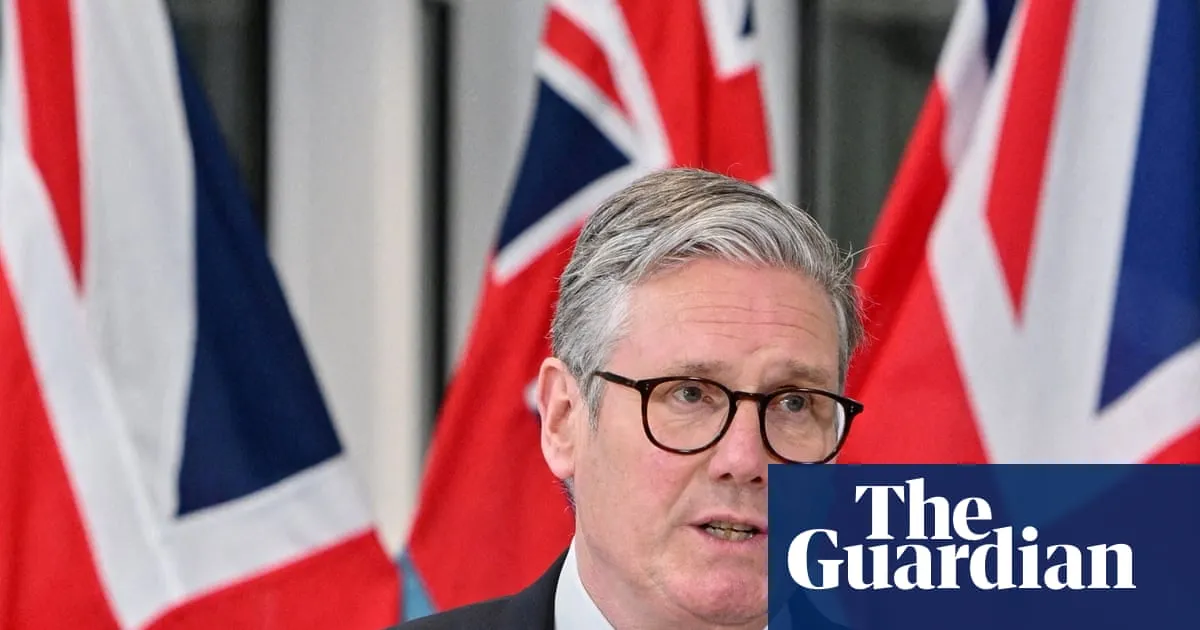
Keir Starmer has defended plans for the UK to align more closely with some EU rules without parliamentary votes, saying a closer relationship with Europe “is in the UK’s best interest”, particularly given the international turmoil over the Iran war.Speaking to the BBC after the Guardian revealed that ministers were planning to use so-called Henry VIII powers to dynamically align with EU rules by default, Starmer argued that, nearly 10 years after the Brexit referendum, it was time to “look forward”.A new bill on a food and drink trade deal with the EU will contain powers enabling the government to dynamically align with Europe where it has already made agreements. But it will also allow the UK to quickly implement evolving single market rules if it determines it is in the national interest, without having to face full parliamentary scrutiny each time.Asked if this was “integration with the EU by stealth”, the prime minister denied that MPs would be excluded, saying the changes would happen only “if parliament passes the legislation”.He also defended the idea of leaning closer into Europe, given the global situation, saying: “We’re in a world where there’s massive conflict, great uncertainty, and I strongly believe the UK’s best interests are in a stronger, closer relationship with Europe, whether that’s defence and security, of course; energy, I think, inevitably; and also our economy.”The planned legislation was “trying to make trade easier so there are less burdens for businesses”, Starmer said, adding: “That, of course, translates into lower prices, particularly with the deal we’ve got with the EU. This is predominantly food and agricultural prices – which I think most people would say, whatever we could do to get those prices down is a step in the right direction.”The Conservatives have condemned the plans, with the shadow business secretary, Andrew Griffith, saying Starmer was unable to accept the decision of the 2016 referendum, with parliament “reduced to a spectator while Brussels sets the terms”.But building on recently more open pro-European comments by the government, Starmer argued that opponents of the plans needed to recognise that the world had changed.“I think it’s also a sense, 10 years on from the Brexit referendum, that we’ve got to look forward now, not backwards,” the prime minister said. “Let’s not just have all the old arguments of the last decade.“Let’s go forward and recognise that a stronger, closer relationship with Europe is in the UK’s best interest, particularly in a world that is as volatile as it is.”Speaking at a press conference in Westminster, Nigel Farage, the Reform UK leader, said Starmer wanted to create closer links with “a declining part of the global economy”.Asked about the plans, Farage said: “To tie ourselves ever closer to it makes no sense in economic terms. In democratic terms, it is a total betrayal of the Brexit vote 10 years ago, and it is also a complete breach of the Labour manifesto and a further devaluation of parliament.”Under the proposed bill, ministers are planning to argue that the move will add billions to the UK economy, temper the cost of the Iran conflict and boost sluggish productivity.The Guardian understands that if the bill – expected to be introduced before the summer – is passed, negotiators could seek to adopt EU rules on everything from cars to farming using secondary legislation.Parliament can either approve or reject secondary legislation but cannot amend it, which would probably mean MPs will “rubber-stamp” new deals rather than debate and vote on every one. Any blocking votes would be likely to cause issues with the EU, and could spark retaliatory action. A source said: “We are clear parliament will have a role for new deals and on new EU laws applying under those deals.”A government insider said: “We expect a fight in this area from those who were in favour of leaving the EU on the harshest terms. They will scream treason but the reality is that all international agreements involve shared rules.“The boldest free traders and Conservatives have always been pragmatists. But Nigel Farage is too cowardly to take it on; you can’t picture him doing any deal-making with the EU at all.”
SRCThe Guardian - World News
LANGEN
LEANCenter-Left
WORDS693
ENT8
MON · 2026-04-13 · 08:43 GMTBRIEF NSR-2026-0413-65524
NSR-2026-0413-65524News Report·EN·Political Strategy
Keir Starmer defends plan for closer alignment with EU rules
Keir Starmer is advocating for closer alignment with EU rules, arguing it's in the UK's best interest amid global instability. The government plans to use "Henry VIII powers" in a new food and drink trade bill to dynamically align with evolving EU single market rules, potentially bypassing full parliamentary scrutiny.
Peter Walker and Alexandra ToppingThe Guardian - World NewsFiled 2026-04-13 · 08:43 GMTLean · Center-LeftRead · 3 min
The Guardian - World NewsFIG 01
Reading time
3min
Word count
693words
Sources cited
4cited
Entities identified
8entities
Quality score
100%
§ 01
Briefing Summary
AI-generatedNEWSAR · AI
Keir Starmer is advocating for closer alignment with EU rules, arguing it's in the UK's best interest amid global instability. The government plans to use "Henry VIII powers" in a new food and drink trade bill to dynamically align with evolving EU single market rules, potentially bypassing full parliamentary scrutiny. Starmer defends this approach as a way to ease trade, lower prices, and strengthen the UK's relationship with Europe, particularly in areas like defense, security, and energy. He emphasizes moving forward from Brexit debates, while the Conservative party criticizes the plan as undermining parliamentary sovereignty and ignoring the referendum result. The legislation aims to reduce burdens for businesses and address rising food and agricultural prices.
Confidence 0.90Sources 4Claims 5Entities 8
§ 02
Article analysis
Model · rule-basedFraming
Political Strategy
Economic Impact
Tone
Measured
AI-assessed
CalmNeutralAlarmist
Factuality
0.70 / 1.00
Factual
LowHigh
Sources cited
4
Well sourced
FewMany
§ 03
Key claims
5 extracted01
Starmer wants to create closer links with “a declining part of the global economy”.
quoteNigel Farage
Confidence
1.00
02
The planned legislation was “trying to make trade easier so there are less burdens for businesses”.
quoteKeir Starmer
Confidence
1.00
03
A new bill on a food and drink trade deal with the EU will contain powers enabling the government to dynamically align with Europe.
factual
Confidence
1.00
04
A closer relationship with Europe “is in the UK’s best interest”.
quoteKeir Starmer
Confidence
1.00
05
UK ministers are planning to use Henry VIII powers to dynamically align with EU rules by default.
factualthe Guardian
Confidence
1.00
§ 04
Full report
3 min read · 693 words§ 05
Entities
8 identifiedKey playerOppositionContextPositiveNeutralNegative
Organizations3
§ 06
Keywords & salience
8 termseu alignment
0.90
keir starmer
0.80
uk-eu relationship
0.80
brexit
0.70
trade deal
0.60
food prices
0.50
parliamentary scrutiny
0.50
henry viii powers
0.40
§ 07
Topic connections
Interactive graph Network visualization showing 51 related topics
View Full Graph Person Organization Location Event|Click node to navigate|Edge numbers = shared articles