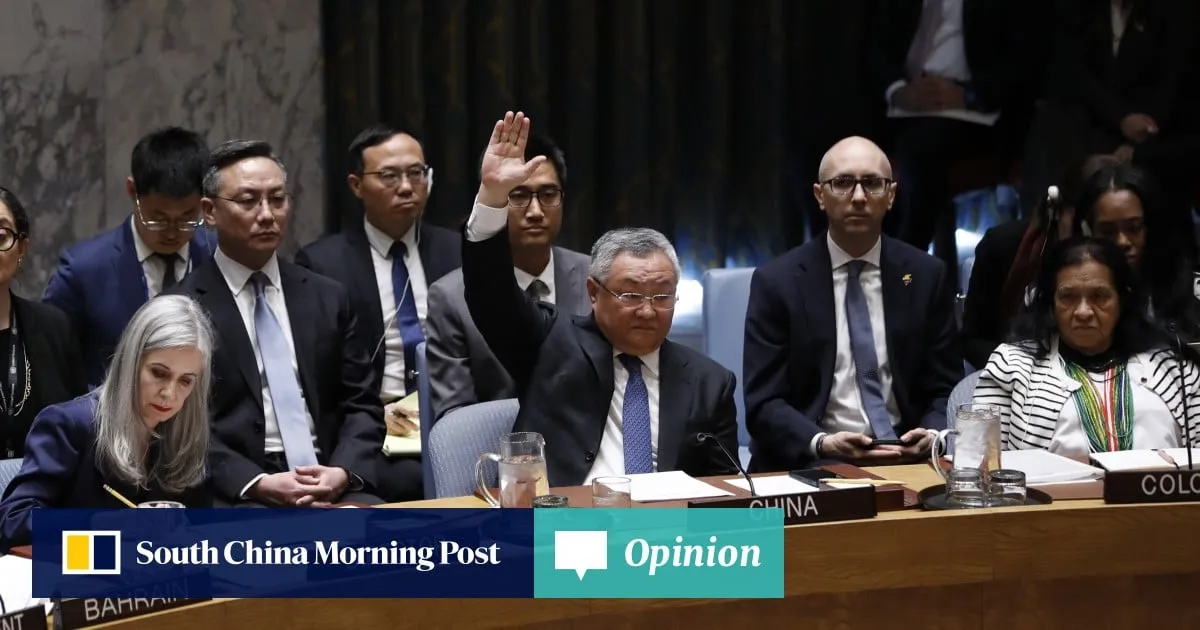
In Beijing, strategic elites have started to see world politics as sliding from the Spring and Autumn period to the Warring States era. However, if China believes the old order is falling apart, its future will depend less on economic power and more on presenting a reliable political vision.For much of the past decade, the dominant framework for understanding China-US relations has been the Thucydides Trap. Since Graham Allison popularised the term, the relationship has been cast as an inevitable contest between a rising power and an established one.The idea of inevitable conflict has shaped Washington’s anxiety over China’s rise and hardened Beijing’s belief that the United States seeks to contain it. In turn, Washington has raised defence spending, tightened technology exports and strengthened its alliances; Beijing has prioritised industrial security, indigenous innovation and military strength.Yet from Beijing’s vantage point, that metaphor is losing its explanatory power.Since Donald Trump returned to the White House, Washington’s posture towards trade, alliances and multilateral institutions has grown more opportunistic and erratic. The interventions in Venezuela and then Iran came as fresh shocks in Beijing, which sees the US as willing to act with little regard for the existing international rules.In the Middle East, US allies are engaging with Iran regardless of how Washington feels about it. Across Europe and North America, governments are accelerating efforts to rearm and build greater strategic autonomy. Many, including China, now question the stability of the global order established after the second world war.
SRCSouth China Morning Post
LANGEN
LEANCenter-Right
WORDS246
ENT11
MON · 2026-04-13 · 12:30 GMTBRIEF NSR-2026-0413-65791
NSR-2026-0413-65791Analysis·EN·Political Strategy
As a global Warring States era begins, China must plan for the future
Strategic thinkers in Beijing are increasingly viewing global politics as entering a "Warring States era," moving away from the established post-World War II order. This perspective contrasts with the previously dominant "Thucydides Trap" framework, which emphasized inevitable conflict between a rising China and the established United States.
Marshall LiSouth China Morning PostFiled 2026-04-13 · 12:30 GMTLean · Center-RightRead · 1 min
South China Morning PostFIG 01
Reading time
1min
Word count
246words
Sources cited
1cited
Entities identified
11entities
Quality score
75%
§ 01
Briefing Summary
AI-generatedNEWSAR · AI
Strategic thinkers in Beijing are increasingly viewing global politics as entering a "Warring States era," moving away from the established post-World War II order. This perspective contrasts with the previously dominant "Thucydides Trap" framework, which emphasized inevitable conflict between a rising China and the established United States. Beijing perceives the U.S. as acting more opportunistically and disregarding international rules, particularly under the Trump administration. This shift is evidenced by U.S. actions in Venezuela and Iran, and the increasing strategic autonomy sought by countries in Europe, North America, and the Middle East. Consequently, China believes its future success will depend more on presenting a reliable political vision than solely on economic power.
Confidence 0.90Sources 1Claims 5Entities 11
§ 02
Article analysis
Model · rule-basedFraming
Political Strategy
National Security
Tone
Measured
AI-assessed
CalmNeutralAlarmist
Factuality
0.60 / 1.00
Mixed
LowHigh
Sources cited
1
Limited
FewMany
§ 03
Key claims
5 extracted01
Graham Allison popularized the term Thucydides Trap.
factualArticle's claim based on common knowledge
Confidence
1.00
02
The Thucydides Trap has been a dominant framework for understanding China-US relations for much of the past decade.
factualArticle's claim based on observation
Confidence
0.90
03
Strategic elites in Beijing see world politics as sliding from the Spring and Autumn period to the Warring States era.
factualArticle's claim based on observation
Confidence
0.80
04
Many, including China, now question the stability of the global order established after the second world war.
factualArticle's claim based on observation
Confidence
0.70
05
Washington's posture towards trade, alliances and multilateral institutions has grown more opportunistic and erratic.
factualArticle's claim based on observation
Confidence
0.70
§ 04
Full report
1 min read · 246 words§ 05
Entities
11 identifiedKey playerOppositionContextPositiveNeutralNegative