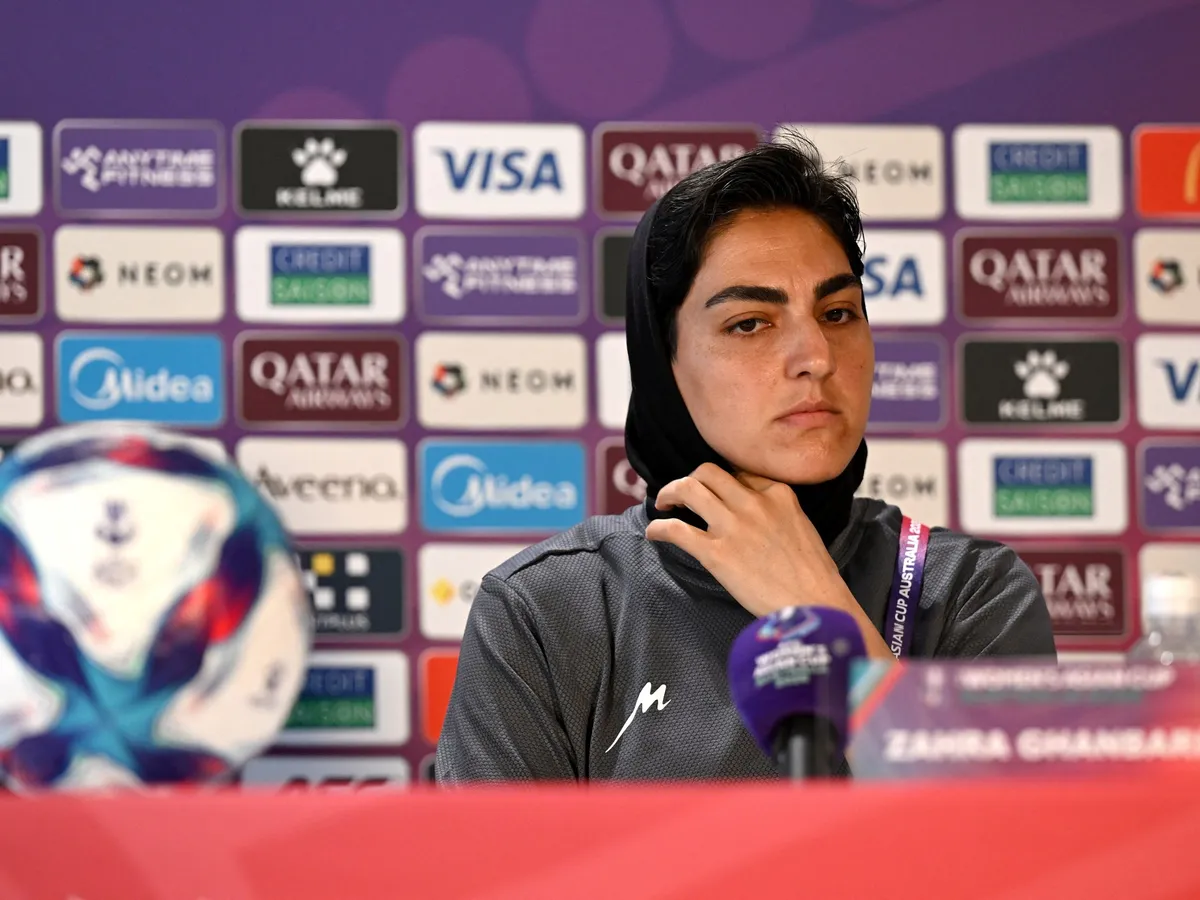
Zahra Ghanbari, one of the six players who sought asylum in Australia, reversed her decision and returned to Iran.Zahra Ghanbari was among a group of Iranian football players and backroom staff who sought asylum in Australia but later reversed their decision [File: Dave Hunt/AAP via Reuters]Published On 13 Apr 2026Iran’s judiciary says the assets of the country’s women’s football team captain have been released by local authorities, reversing an earlier decision to seize them after the player sought and then withdrew an asylum claim in Australia last month.“The assets of Zahra Ghanbari, a footballer for the Iranian women’s national team, which had been seized, were released by court decision,” Iran’s Mizan News Agency said on Monday.Recommended Stories list of 3 itemslist 1 of 3Iran says captain of women’s football team withdraws Australia asylum bidlist 2 of 3Iran women’s football team feted in Tehran after asylum battle at Asian Cuplist 3 of 3Iranian women footballers reveal ‘enormous pressure’ of the Asian Cup sagaend of listIt added that the move was taken after “a declaration of innocence following her change in behaviour”.Ghanbari was among a group of six players and one backroom staff member who sought asylum in Australia in March after playing in the Women’s Asian Cup at the start of the US-Israel war on Iran.At that time, Australia’s Home Affairs Minister Tony Burke said his country had offered asylum to all players and support staff members before their departure to Iran over fears they might be punished upon their return home after the team refused to sing Iran’s national anthem at the tournament.But five of them, including Ghanbari, later changed their minds and returned to Iran along with the rest of the team. They were given a hero’s welcome at a special ceremony in central Tehran on March 19.The announcement came two days after Iranian media published a list of people they termed “traitors”, whose assets had been frozen by court order following the outbreak of the war on February 28.Ghanbari’s name appeared on the list, although it was not immediately clear when the decision to freeze her assets had been taken.Earlier this month, two players who sought asylum in Australia before changing their minds told Al Jazeera they faced “enormous pressure” over their decision.“I felt that any mistake could become a huge problem,” said Mona Hamoudi, one of the players who returned to Iran. “Every step had to be thought about twice before being taken.”Amid the stifling pressure and the escalating war in Iran, a question consumed her: should she return home or seek asylum?“This dilemma caused me constant anxiety,” she said, “because every choice carried consequences – for my life, for my family, and for my sporting future.”Initial anthem snub draws criticismIran played their three group games of the Asian Cup at the Gold Coast Stadium in Queensland on March 2, 5 and 8, shortly after the US and Israel launched their war on Iran.The initial attacks killed 168 schoolgirls and teachers, Iran’s Supreme Leader Ayatollah Ali Khamenei, and other leaders. Overall, more than 2,000 Iranians have been killed since the war began six weeks ago.After refusing to sing the Iranian national anthem at their first match, players on the Iranian women’s football team were branded “traitors” by a presenter of the Iranian state broadcaster IRIB.When Iran played their second game of the tournament against Australia three days later, not only did the players sing the national anthem, but they also saluted it, prompting fears that they may have been forced to change their stance after receiving backlash in Iranian media.Players from Iran’s women’s football team salute and sing the country’s national anthem before their Asian Cup match against Australia after choosing to remain silent during it in their opening game earlier in the tournament [File: Izhar Khan/AFP]While neither the players nor the team management explained why they refrained from singing before the first match, fans and rights activists speculated that it may have been an act of defiance against the Iranian government.Rights groups have repeatedly accused Iranian authorities of pressuring athletes who compete abroad by threatening relatives or seizing property if they defect or make statements against Iran.In this case, campaigners accused Tehran of pressuring the women’s families, including summoning their parents for interrogations by intelligence agents. Iranian authorities, however, alleged that Australia sought to force the athletes to defect.Just two of the Iranian women’s footballers remained in Australia and have been training with the club Brisbane Roar.
SRCAl Jazeera
LANGEN
LEANCenter
WORDS741
ENT11
MON · 2026-04-13 · 16:23 GMTBRIEF NSR-2026-0413-66240
NSR-2026-0413-66240News Report·EN·Political Strategy
Iran releases assets of women’s football captain in Australia asylum row
In April 2026, Iranian authorities released the assets of Zahra Ghanbari, captain of the women's national football team, after initially seizing them. Ghanbari was among a group of players and staff who sought asylum in Australia during the Women’s Asian Cup in March, following the start of the US-Israel war on Iran.
Al Jazeera StaffAl JazeeraFiled 2026-04-13 · 16:23 GMTLean · CenterRead · 3 min
Al JazeeraFIG 01
Reading time
3min
Word count
741words
Sources cited
3cited
Entities identified
11entities
Quality score
100%
§ 01
Briefing Summary
AI-generatedNEWSAR · AI
In April 2026, Iranian authorities released the assets of Zahra Ghanbari, captain of the women's national football team, after initially seizing them. Ghanbari was among a group of players and staff who sought asylum in Australia during the Women’s Asian Cup in March, following the start of the US-Israel war on Iran. Australia offered asylum due to fears of punishment for the team's refusal to sing the national anthem. However, Ghanbari and four others reversed their decision and returned to Iran, where they received a hero's welcome. The asset release followed a "declaration of innocence" and came after Ghanbari's name appeared on a list of "traitors" whose assets were frozen.
Confidence 0.90Sources 3Claims 5Entities 11
§ 02
Article analysis
Model · rule-basedFraming
Political Strategy
Human Rights
Tone
Mixed Tone
AI-assessed
CalmNeutralAlarmist
Factuality
0.80 / 1.00
Factual
LowHigh
Sources cited
3
Well sourced
FewMany
§ 03
Key claims
5 extracted01
Two players said they faced 'enormous pressure' over their decision to return to Iran.
quoteMona Hamoudi
Confidence
1.00
02
Five players, including Ghanbari, changed their minds and returned to Iran.
factual
Confidence
1.00
03
Australia offered asylum to all players and staff fearing punishment for refusing to sing Iran's national anthem.
factualAustralia’s Home Affairs Minister Tony Burke
Confidence
1.00
04
Ghanbari was among a group of Iranian football players who sought asylum in Australia.
factual
Confidence
1.00
05
Iran released the assets of women’s football team captain Zahra Ghanbari after initially seizing them.
factualIran’s Mizan news agency
Confidence
1.00
§ 04
Full report
3 min read · 741 words§ 05
Entities
11 identifiedKey playerOppositionContextPositiveNeutralNegative
People3
Organizations2
Locations5
§ 06
Keywords & salience
9 termszahra ghanbari
1.00
iran
0.90
asylum
0.90
women's football
0.80
asset release
0.70
australia
0.70
pressure
0.60
court decision
0.50
national team
0.50
§ 07
Topic connections
Interactive graph No topic relationship data available yet. This graph will appear once topic relationships have been computed.