In Brussels, the relief was palpable after the defeat of Viktor Orbán, the EU leader who recently declared himself at Vladimir Putin’s service. For the EU, Péter Magyar’s victory was all the sweeter, as voters decisively rejected Orbán’s fear-mongering campaign that sought to portray him in cahoots with the “dangerous” European Commission leader, Ursula von der Leyen, and the Ukrainian president, Volodymyr Zelenskyy.In 16 years as Hungary’s prime minister, Orbán has slowed, opposed, mocked or blocked numerous EU decisions – above all on European support for Ukraine.One of the most urgent questions now for the EU will be how quickly Magyar will lift Hungary’s block on a critical €90bn loan for Ukraine and the union’s 20th round of sanctions against Russia.Magyar said on Monday he was ready to support the €90bn EU loan for Ukraine as long as Hungary did not take part – the same terms agreed by Orbán last December. But his lukewarm support for Ukraine’s EU accession (“not in the next 10 years”) and sanctions on Russia is likely to raise concerns, especially for Kyiv’s staunchest supporters, such as Poland and the Baltics. Magyar told reporters he hoped Russia’s aggression on Ukraine would end soon and then Europe would “immediately” lift sanctions. “I understand the moral issues … but let’s not shoot ourselves in the leg,” he said, raising concerns about the economic cost.His views recall the Belgian prime minister, Bart De Wever, who was heavily criticised for saying Europe needed to regain access to cheap Russian energy. Privately, some western EU member states also share anxieties about a rapid timetable for Ukraine’s EU accession.Speaking on Monday, von der Leyen did not dwell on these details. She compared the magnitude of Sunday’s result to the 1956 Hungarian uprising against the Soviet Union and to 1989, when Hungarians became the first in the eastern bloc to dismantle the barbed wire fences that divided Europe. “We will start working with the government as soon as possible,” she told reporters when asked about the €90bn loan and Hungary’s frozen funds.Energy also remains a sensitive subject. While Magyar’s Tisza party has promised to phase out Russian energy imports by 2035, the EU wants to move much faster – it hopes to end all Russian oil and gas by the end of 2027. Analysts suggest a central role will be played by Magyar’s probable pick for foreign minister, Anita Orbán, a former diplomat, unrelated to the current prime minister, who has written books on how the Kremlin uses energy as a foreign policy tool.Despite these tensions, Hungary under Magyar looks likely to be a “normal” EU member state, which argues for its own interests, rather than seeking to weaponise vetoes and EU processes to promote those of Russia. “He’s a national conservative EPP guy,” said Daniel Hegedüs, senior visiting fellow at the German Marshall Fund, referring to Magyar’s membership of the centre-right European People’s party. “I think he understands that his political future and success is in some way tied to the redemocratisation of Hungary.”For Magyar, a diplomat in Brussels during the Orbán years, the most urgent priority is to fulfil his campaign vow “to bring home” Hungary’s EU funds. Currently, €17bn in funds for Hungary’s economic development remain frozen, over failures to meet EU standards on fighting corruption, ensuring judicial independence, as well as disputes over academic freedom and Hungary’s anti-LGBTQ law. About €2.12bn has been lost permanently. But the clock is ticking: Hungary and the commission need to agree on the use of nearly €10bn in grants and loans by the end of August. Any extension would require unanimous agreement by the 27 member states.Hegedüs sees a need for “constructive diplomacy” on both sides. “This is a sort of transactional standoff, but in a good sense,” he said. “The main output legitimacy for the new Hungarian government will be how fast and what amount of the frozen EU funding they can bring back home.” The EU, he said, should “trust but verify”.Asylum and migration policy may also raise tensions. Hungary is being fined €1m a day for flouting EU asylum rules, an early headache for a new government that wants public finances on a more stable footing. Magyar said on Monday that Europe had “mismanaged” migration, referring to events of 2015 when more than 1 million people sought refugee status. He said “most countries” had “rather late” realised their initial stance was not good.But Magyar’s views go with the prevailing wind. Since 2015 EU policies have moved in a more hardline direction, for example with growing support for offshore migration centres and tougher deportation orders. Meanwhile, it is unclear how Magyar will handle issues such as Orbán’s anti-LGBTQ law.EU leaders will soon get the measure of Magyar the prime minister. His first foreign policy visits will be Warsaw, then Vienna. For some analysts the omission of Berlin – Hungary’s main economic partner – from the list looks like a downgrade.László Andor, a Hungarian former EU commissioner, said: “I think it’s just inevitable that Hungary starts this new chapter of reintegrating in European policies and values, which is demanded especially by the young generation.”Andor, a Social Democrat economist, said generation Z played a decisive, but underappreciated role in Magyar’s landslide, naming them as “the young people who have meagre economic opportunities and have been excluded from Erasmus”, as a result of economic stagnation and disputes with the EU that hit Hungarian participation in the student exchange programme.“They quietly waited for the moment when this could change electorally.”Additional reporting by Jakub Krupa
SRCThe Guardian - World News
LANGEN
LEANCenter-Left
WORDS920
ENT12
MON · 2026-04-13 · 16:38 GMTBRIEF NSR-2026-0413-66331
NSR-2026-0413-66331News Report·EN·Political Strategy
EU relieved to see back of Orbán but Magyar’s Hungary may still present problems
The EU is relieved by Viktor Orbán's defeat in Hungary, hoping it will lead to a shift in the country's stance on key EU policies. Péter Magyar's victory raises questions about Hungary's future support for Ukraine, particularly regarding a €90 billion loan and sanctions against Russia.
Jennifer Rankin in BrusselsThe Guardian - World NewsFiled 2026-04-13 · 16:38 GMTLean · Center-LeftRead · 4 min
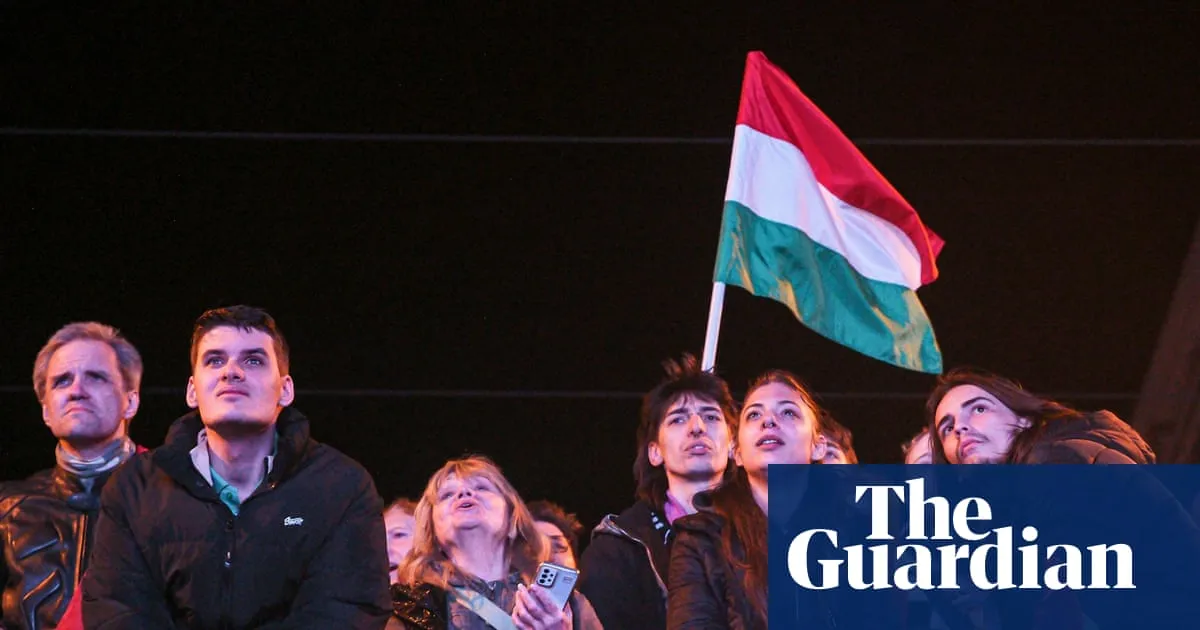
The Guardian - World NewsFIG 01
Reading time
4min
Word count
920words
Sources cited
3cited
Entities identified
12entities
Quality score
100%
§ 01
Briefing Summary
AI-generatedNEWSAR · AI
The EU is relieved by Viktor Orbán's defeat in Hungary, hoping it will lead to a shift in the country's stance on key EU policies. Péter Magyar's victory raises questions about Hungary's future support for Ukraine, particularly regarding a €90 billion loan and sanctions against Russia. While Magyar has expressed willingness to support the loan under certain conditions, his views on Ukraine's EU accession and the long-term impact of sanctions are causing concern, especially among countries like Poland and the Baltics. The EU aims to work with the new Hungarian government to address these issues, including energy dependence on Russia, with the goal of phasing out Russian energy imports by 2035. The appointment of Anita Orbán as foreign minister is expected to play a central role in shaping Hungary's foreign policy.
Confidence 0.90Sources 3Claims 5Entities 12
§ 02
Article analysis
Model · rule-basedFraming
Political Strategy
Diplomatic
Tone
Measured
AI-assessed
CalmNeutralAlarmist
Factuality
0.70 / 1.00
Factual
LowHigh
Sources cited
3
Well sourced
FewMany
§ 03
Key claims
5 extracted01
Magyar hopes Russia’s aggression on Ukraine would end soon and then Europe would “immediately” lift sanctions.
quotePéter Magyar
Confidence
1.00
02
Magyar said he was ready to support the €90bn EU loan for Ukraine as long as Hungary did not take part.
quotePéter Magyar
Confidence
1.00
03
Magyar's Tisza party has promised to phase out Russian energy imports by 2035.
factualArticle's own claim
Confidence
0.90
04
Péter Magyar's victory was all the sweeter, as voters decisively rejected Orbán’s fear-mongering campaign.
factualArticle's own claim
Confidence
0.80
05
Hungary under Magyar looks likely to be a “normal” EU member state.
predictionArticle's own claim
Confidence
0.60
§ 04
Full report
4 min read · 920 words§ 05
Entities
12 identifiedKey playerOppositionContextPositiveNeutralNegative
People7
Organizations1
§ 06
Keywords & salience
10 termshungary
0.90
eu
0.90
viktor orbán
0.80
péter magyar
0.70
ukraine
0.70
sanctions on russia
0.60
energy imports
0.50
eu loan
0.50
eu accession
0.50
european politics
0.40
§ 07
Topic connections
Interactive graph Network visualization showing 51 related topics
View Full Graph Person Organization Location Event|Click node to navigate|Edge numbers = shared articles