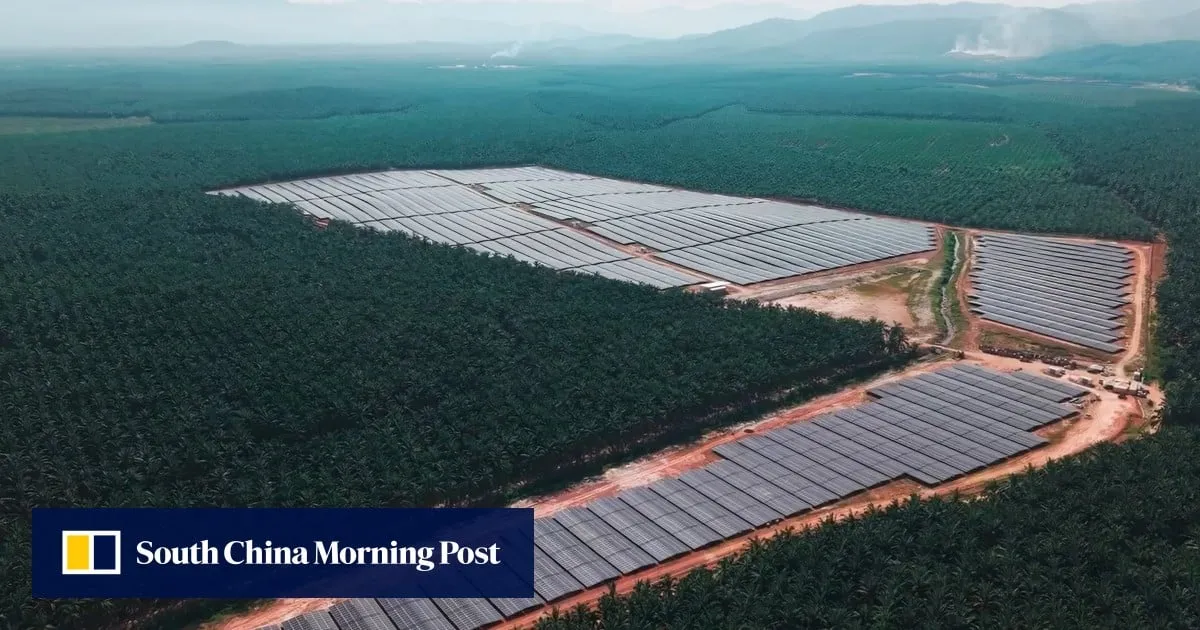
Malaysia is doubling down on renewables to secure its energy future, its deputy prime minister has said, as the government scrambles to mitigate the fallout from an escalating energy crisis triggered by the Iran war.Tehran all but shut access to the Strait of Hormuz last month in retaliation for the US and Israel’s attacks, disrupting a key energy chokepoint through which about 25 per cent of global seaborne oil trade and nearly a fifth of global liquefied natural gas exports pass – much of which is destined for Asia.The conflict sent Brent crude prices soaring to as high as US$120 a barrel, with prices averaging above US$100 over the past month as Asian economies raced to find alternative sources to shore up rapidly dwindling supply to feed their energy-intensive industries and hundreds of millions of consumers.In such an environment, energy security is no longer optional“In such an environment, energy security is no longer optional – it is a strategic national priority,” Malaysian Deputy Prime Minister Fadillah Yusof said on Tuesday while launching a solar energy project supplying power to US semiconductor firm Micron.“Therefore, we must continue to strengthen our position by developing stable, domestic and sustainable energy sources to ensure long-term resilience.”Malaysia’s government earlier said it had sufficient crude oil supply to last through May, but warned the country would enter a “very critical period” afterwards, with industries already reporting shortages in oil-derived raw materials used in everything from plastics to medicines and medical devices.Solar panels are seen at the Malaysia" class="entity-link entity-organization" data-entity-id="118501" data-entity-type="organization">University of Technology Malaysia’s campus in Kuala Lumpur. Photo: ShutterstockFadillah, who also oversees the country’s energy transition portfolio, said the crisis showed the need for Malaysia to ramp up green energy generation and develop large-scale battery storage systems to boost renewable energy supply into the national grid.Malaysia had 12 gigawatts of installed renewable energy capacity as of last year, driven primarily by solar installations, he said.The minister called for more joint-venture projects between public and private corporations, such as the two newly completed solar farms, to speed up renewable energy adoption.Engineers walk along a rooftop with solar panel arrays installed in this still from a video shared by Solarvest Group. Photo: Instagram/solarvestgroupThe farms were jointly developed by Solarvest Holdings, the country’s largest solar power company, and national grid operator Tenaga Nasional at a combined cost of 300 million ringgit (US$75.4 million). Together, they represent Malaysia’s largest public-private renewable energy project to date.The two facilities are set to provide a combined 60 megawatts of power to Micron’s two facilities in Penang and Johor state via the national grid, as well as to stock exchange operator Bursa Malaysia, Texas Instruments’ semiconductor facilities and NTT Global Data Centres in Selangor.A solar farm in Selangor state. Malaysia’s government aims to raise renewables to 40 per cent of power generation within the next decade. Photo: ShutterstockFadillah said growing renewables’ share of the energy mix would also give Malaysia a decisive edge in attracting hi-tech foreign investment, in line with the government’s target of raising renewables to 40 per cent of power generation by 2035, and 70 per cent by 2050.Further Reading“Malaysia is laying the foundation for a future where energy is cleaner, more secure and more competitive,” he said.
SRCSouth China Morning Post
LANGEN
LEANCenter-Right
WORDS534
ENT9
TUE · 2026-04-14 · 08:13 GMTBRIEF NSR-2026-0414-67075
NSR-2026-0414-67075News Report·EN·Economic Impact
Malaysia races to go green as Iran war squeezes oil supply
Malaysia is accelerating its transition to renewable energy sources in response to an energy crisis triggered by the Iran war, which has disrupted global oil supplies through the Strait of Hormuz. With Brent crude prices rising and concerns about dwindling oil-derived raw materials, the Malaysian Deputy Prime Minister emphasized energy security as a national priority.
Joseph SipalanSouth China Morning PostFiled 2026-04-14 · 08:13 GMTLean · Center-RightRead · 3 min
South China Morning PostFIG 01
Reading time
3min
Word count
534words
Sources cited
1cited
Entities identified
9entities
Quality score
100%
§ 01
Briefing Summary
AI-generatedNEWSAR · AI
Malaysia is accelerating its transition to renewable energy sources in response to an energy crisis triggered by the Iran war, which has disrupted global oil supplies through the Strait of Hormuz. With Brent crude prices rising and concerns about dwindling oil-derived raw materials, the Malaysian Deputy Prime Minister emphasized energy security as a national priority. The country aims to bolster its renewable energy capacity, currently at 12 gigawatts, primarily through solar installations, and develop large-scale battery storage. The government is encouraging joint ventures between public and private entities to expedite the adoption of green energy and ensure long-term energy resilience. Malaysia had enough oil to last through May, but is preparing for a critical period afterwards.
Confidence 0.90Sources 1Claims 5Entities 9
§ 02
Article analysis
Model · rule-basedFraming
Economic Impact
National Security
Tone
Mixed Tone
AI-assessed
CalmNeutralAlarmist
Factuality
0.70 / 1.00
Factual
LowHigh
Sources cited
1
Limited
FewMany
§ 03
Key claims
5 extracted01
Malaysia had 12 gigawatts of installed renewable energy capacity as of last year.
statisticFadillah Yusof
Confidence
1.00
02
Malaysia’s government earlier said it had sufficient crude oil supply to last through May.
factualMalaysia’s government
Confidence
1.00
03
About 25 per cent of global seaborne oil trade passes through the Strait of Hormuz.
statisticnull
Confidence
1.00
04
Malaysia is doubling down on renewables to secure its energy future.
quoteMalaysian Deputy Prime Minister
Confidence
1.00
05
Tehran all but shut access to the Strait of Hormuz last month.
factualnull
Confidence
0.90
§ 04
Full report
3 min read · 534 words§ 05
Entities
9 identifiedKey playerOppositionContextPositiveNeutralNegative
Organizations3
§ 06
Keywords & salience
10 termsrenewable energy
0.90
energy crisis
0.90
oil supply
0.80
iran war
0.70
energy security
0.70
strait of hormuz
0.60
solar energy
0.60
green energy
0.50
battery storage
0.50
malaysia
0.40
§ 07
Topic connections
Interactive graph Network visualization showing 51 related topics
View Full Graph Person Organization Location Event|Click node to navigate|Edge numbers = shared articles