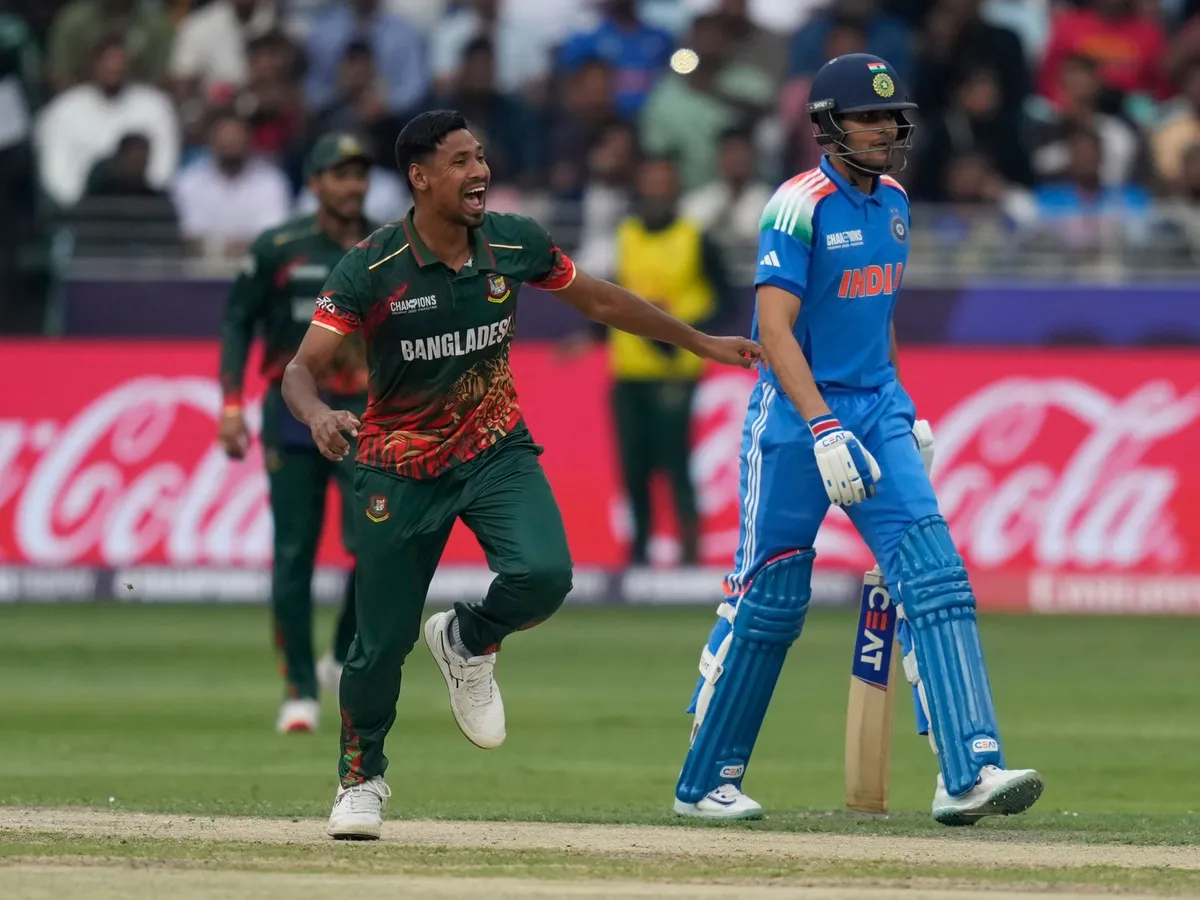
Indian league dumps Bangladeshi bowler amid bilateral tensions, prompting cricket’s latest political crisis.Bangladesh's Mustafizur Rahman reacts after bowling a delivery during the ICC Champions Trophy cricket match between India and Bangladesh at Dubai International Cricket Stadium in Dubai, United Arab Emirates, February 20, 2025 [Altaf Qadri/AP Photo]Published On 10 Jan 2026New Delhi, India – On January 3, 2026, a single directive from the Board of Control for Cricket in India (BCCI) quietly ended the Indian Premier League (IPL) season of Bangladesh’s only cricketer in the tournament, Mustafizur Rahman, before it could even begin.The Kolkata Knight Riders (KKR), a professional Twenty20 franchise based in Kolkata that competes in the IPL and is owned by Red Chillies Entertainment, associated with Bollywood actor Shah Rukh Khan, were instructed by India’s cricket board to release the Bangladesh fast bowler.Not because of injury, form, or contract disputes, but due to “developments all around” – an apparent reference to soaring tensions between India and Bangladesh that have been high since ousted former Bangladesh Prime Minister Sheikh Hasina received exile in New Delhi in August 2024.Within days, Mustafizur signed up for the Pakistan Super League (PSL), the Bangladesh Cricket Board (BCB) protested sharply, the IPL broadcast was banned in Bangladesh, and the International Cricket Council (ICC) – the body that governs the sport globally – was pulled into a diplomatic standoff.What should have been a routine player transaction instead became a symbol of how cricket in South Asia has shifted from a tool of diplomacy to an instrument of political pressure.Cricket has long been the subcontinent’s soft-power language, a shared obsession that survived wars, border closures, and diplomatic freezes. Today, that language is being rewritten, say observers and analysts.India, the financial and political centre of world cricket, is increasingly using its dominance of the sport to signal, punish, and coerce its neighbours, particularly Pakistan and Bangladesh, they say.The Mustafizur affair: When politics entered the dressing roomRahman was signed by KKR for 9.2 million Indian rupees ($1m) before the IPL 2026 season.Yet the BCCI instructed the franchise to release him, citing vague external developments widely understood to be linked to political tensions between India and Bangladesh.The consequences were immediate.Mustafizur, unlikely to receive compensation because the termination was not injury-related, accepted an offer from the PSL – picking the Pakistani league after an Indian snub – returning to the tournament after eight years.The PSL confirmed his participation before its January 21 draft. The BCB, meanwhile, called the BCCI’s intervention “discriminatory and insulting”.Dhaka escalated the matter beyond cricket, asking the ICC to move Bangladesh’s matches from the upcoming T20 World Cup, which India is primarily hosting, to Sri Lanka over security concerns.The Bangladeshi government went further, banning the broadcast of the IPL nationwide, a rare step that underlined how deeply cricket intersects with politics and public sentiment in South Asia.The BCB on January 7 said the International Cricket Council (ICC) has assured it of Bangladesh’s full and uninterrupted participation in the ICC Men’s T20 World Cup 2026, dismissing media reports of any ultimatum.The BCB said the ICC responded to its concerns over the safety and security of the national team in India, including a request to relocate matches, and reaffirmed its commitment to safeguarding Bangladesh’s participation while expressing willingness to work closely with the Board during detailed security planning.Yet for now, Bangladesh’s matches remain scheduled for the Indian megacities of Kolkata and Mumbai from February 7, 2026, even as tensions simmer.Navneet Rana, a BJP leader said that no Bangladeshi cricketer or celebrity should be “entertained in India” while Hindus and minorities are being targeted in Bangladesh.Meanwhile, Indian Congress leader Shashi Tharoor questioned the decision to release Mustafizur Rahman, warning against politicising sport and punishing individual players for developments in another country.A pattern, not an exceptionThe Mustafizur controversy fits into a broader trajectory.While all cricket boards operate within political realities, the BCCI’s unique financial power gives it leverage unmatched by any other body in the sport, say analysts.The ICC, the sport’s global body, is headed by Jay Shah, the son of India’s powerful home minister Amit Shah – widely seen as the second-most influential man in India after Prime Minister Narendra Modi. The IPL, meanwhile, is by far the richest franchise league in the world.India, with 1.5 billion people, is cricket’s biggest market and generates an estimated 80 percent of the sport’s revenue.All of that, say analysts, gives India the ability to shape scheduling of events and matches, venues, and revenue-sharing arrangements. This, in turn, has made cricket a strategic asset for the Indian government.When political relations sour, cricket is no longer insulated.Nowhere is this clearer than in India’s relationship with Bangladesh at the moment. India has historically been viewed as close to Hasina, whose ouster in 2024 followed weeks of popular protests that her security forces attempted to crush using brutal force. An estimated 1,400 people were killed in that crackdown, according to the United Nations.India has so far refused to send Hasina back to Bangladesh from exile, even though a tribunal in Dhaka sentenced her to death in late 2025 over the killings of protesters during the uprising that led to her removal. That has spurred sentiments against India on the streets of Bangladesh, which escalated after the assassination of an anti-India protest leader in December.Meanwhile, attacks on Hindus and other religious minorities in Bangladesh since August 2024 – a Hindu Bangladeshi man was lynched last month – have caused anger in India.Against that backdrop, the BCCI’s move to kick Rahman out of the IPL has drawn criticism from Indian commentators. Senior journalist Vir Sanghvi wrote in a column that the cricket board “panicked” and surrendered to communal pressure instead of standing by its own player-selection process, turning a sporting issue into a diplomatic embarrassment.He argued Bangladesh did not warrant a sport boycott and warned that mixing communal politics with cricket risks damaging India’s credibility and regional ties.Echoing the concern, Suhasini Haidar, diplomatic editor of The Hindu, one of India’s largest dailies, said on X that the government was allowing social media campaigns to overpower diplomacy. She referred to how Indian Foreign Minister S Jaishankar had travelled recently to Dhaka to attend the funeral of former Bangladesh PM Khaleda Zia, and wondered why Bangladeshi cricketers couldn’t then play in India.Cricket analyst Darminder Joshi said the episode reflected how cricket, once a bridge between India and its neighbours, was increasingly widening divisions.That was particularly visible late last year, when India and Pakistan faced off in cricket matches months after an intense four-day aerial war.The Asia Cup standoffThe 2025 Asia Cup, hosted by Pakistan in September, was meant to be a celebration of regional cricket.But citing government advice, the BCCI informed the ICC and the Asian Cricket Council (ACC) – the sport’s continental governing body – that India would not travel to Pakistan.After months of wrangling, the tournament was held under a hybrid model, with India playing its matches in the United Arab Emirates while the rest were hosted in Pakistan.But in three matches that the South Asian rivals played against each other during the competition – India won all three – the Indian team refused to publicly shake hands with their Pakistani counterparts.“There is no rule in cricket that mandates a handshake. Yet players often tie each other’s shoelaces or help opponents on the field, that is the spirit of the game,” Joshi, the cricket analyst, told Al Jazeera. “If countries are in conflict, will players now refuse even these gestures? Such incidents only spread hate and strip the game of what makes it special.“Sporting exchanges once softened bilateral tensions; this decision does exactly the opposite, making the game more hostile instead of more interesting.”The controversy did not end with the final. India won the tournament, defeating Pakistan, but refused to accept the trophy from ACC President Mohsin Naqvi, who is also the Pakistan Cricket Board chairman and Pakistan’s interior minister.The trophy remains at the ACC headquarters in Dubai, creating an unprecedented limbo that has defied resolution despite multiple ICC and ACC meetings. The BCCI requested that the trophy be sent to India. Naqvi has refused.From bridge to dividerUnlike Pakistan, Bangladesh has historically enjoyed smoother cricketing ties with India. Bilateral series continued even during political disagreements, and Bangladeshi players became familiar faces in the IPL.The Mustafizur episode marks a turning point. The current moment stands in stark contrast to earlier eras when cricket was deliberately used to soften political hostilities.The most celebrated example remains India’s 2004 tour of Pakistan, the so-called “Friendship Series”.That tour took place after years of frozen ties following the Kargil War, an armed conflict between India and Pakistan that took place from May to July 1999.The then-Prime Minister Atal Bihari Vajpayee personally met the Indian team before departure, handing captain Sourav Ganguly a bat inscribed with the Hindi words: “Khel hi nahi, dil bhi jeetiye” which translates to “don’t just win matches, win hearts too”.Special cricket visas allowed thousands of Indian fans to travel across the border. Pakistani then-President Pervez Musharraf followed the games and publicly lauded Indian cricketers who developed followings of their own in Pakistan.The 2008 Mumbai attacks, carried out by fighters that Pakistan acknowledged had come from its territory, froze cricketing ties.But in 2011, when India and Pakistan faced off in the World Cup semifinal in Mohali, Indian then-Prime Minister Manmohan Singh invited his Pakistani counterpart, Yousuf Raza Gilani, over – the two premiers watched the match together in what was widely seen as an act of “cricket diplomacy”.By intervening in a franchise-level contract and linking it, however obliquely, to geopolitical tensions as has happened with the Mustafizur case, the BCCI sent a clear message, say analysts: Access to Indian cricket is conditional.Sport journalist Nishant Kapoor told Al Jazeera that releasing a contracted player purely on political grounds was “absolutely wrong” and warned it would widen mistrust in the cricketing ecosystem.“He is a cricketer. What wrong has he done?” Kapoor said.
SRCAl Jazeera
LANGEN
LEANCenter
WORDS1 648
ENT11
SAT · 2026-01-10 · 06:17 GMTBRIEF NSR-2026-0110-6714
NSR-2026-0110-6714News Report·EN·Political Strategy
India-Bangladesh tensions rock cricket, as sport turns diplomatic weapon
In January 2026, the Board of Control for Cricket in India (BCCI) directed the Kolkata Knight Riders (KKR) to release Bangladeshi bowler Mustafizur Rahman before the Indian Premier League (IPL) season began. This decision, attributed to rising tensions between India and Bangladesh following the exile of former Prime Minister Sheikh Hasina, prompted a diplomatic standoff.
Tauseef Ahmad,Sajid RainaAl JazeeraFiled 2026-01-10 · 06:17 GMTLean · CenterRead · 7 min
Al JazeeraFIG 01
Reading time
7min
Word count
1 648words
Sources cited
0cited
Entities identified
11entities
Quality score
100%
§ 01
Briefing Summary
AI-generatedNEWSAR · AI
In January 2026, the Board of Control for Cricket in India (BCCI) directed the Kolkata Knight Riders (KKR) to release Bangladeshi bowler Mustafizur Rahman before the Indian Premier League (IPL) season began. This decision, attributed to rising tensions between India and Bangladesh following the exile of former Prime Minister Sheikh Hasina, prompted a diplomatic standoff. Mustafizur subsequently joined the Pakistan Super League (PSL), leading to protests from the Bangladesh Cricket Board (BCB) and a ban on IPL broadcasts in Bangladesh. The incident highlights concerns that India is using its dominance in cricket to exert political pressure on neighboring countries, particularly Bangladesh and Pakistan, shifting the sport from a tool of diplomacy to one of political coercion.
Confidence 0.90Claims 5Entities 11
§ 02
Article analysis
Model · rule-basedFraming
Political Strategy
Conflict
Tone
Mixed Tone
AI-assessed
CalmNeutralAlarmist
Factuality
0.70 / 1.00
Factual
LowHigh
Sources cited
0
No named sources
FewMany
§ 03
Key claims
5 extracted01
Dhaka asked the ICC to move Bangladesh’s matches from the upcoming T20 World Cup.
factualArticle
Confidence
1.00
02
Bangladesh Cricket Board (BCB) protested the BCCI's intervention.
factualArticle
Confidence
1.00
03
Mustafizur signed up for the Pakistan Super League (PSL) after being released.
factualArticle
Confidence
1.00
04
BCCI instructed Kolkata Knight Riders to release Bangladeshi bowler Mustafizur Rahman.
factualArticle
Confidence
1.00
05
The release was due to soaring tensions between India and Bangladesh.
factualArticle
Confidence
0.80
§ 04
Full report
7 min read · 1 648 words§ 05
Entities
11 identifiedKey playerOppositionContextPositiveNeutralNegative
Organizations5
§ 06
Keywords & salience
10 termscricket
1.00
mustafizur rahman
0.90
india-bangladesh tensions
0.90
diplomatic weapon
0.80
indian premier league
0.80
political pressure
0.70
political crisis
0.70
bcci
0.70
soft power
0.60
pakistan super league
0.50
§ 07
Topic connections
Interactive graph No topic relationship data available yet. This graph will appear once topic relationships have been computed.