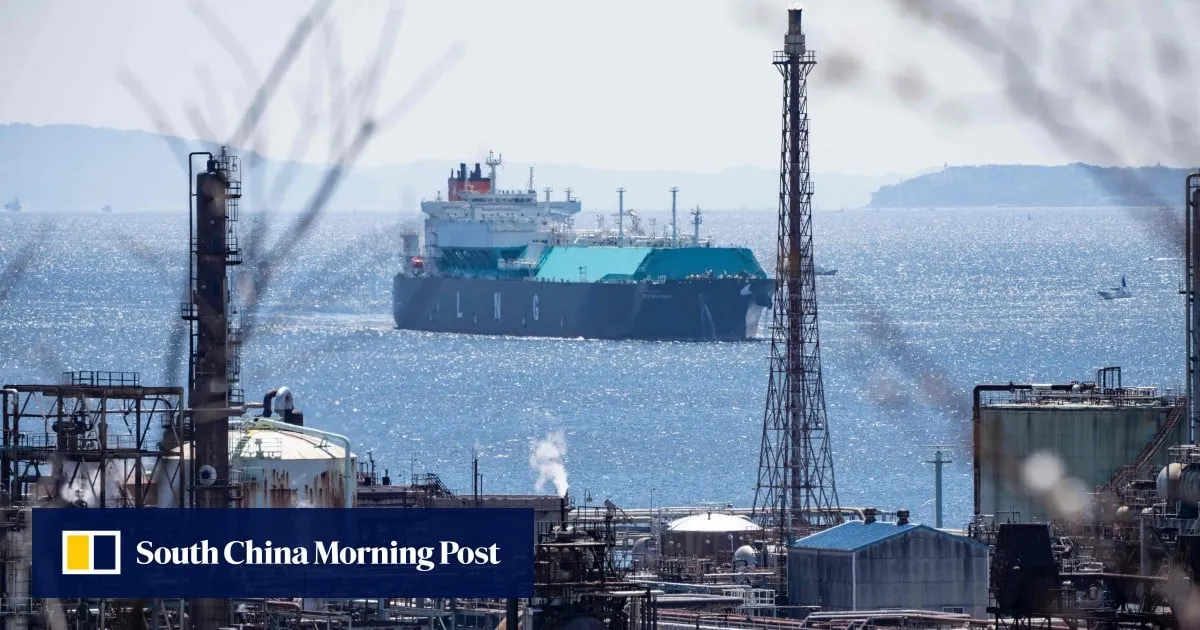
Washington’s naval blockade of the Strait of Hormuz is threatening to tip Asia into its worst energy crisis in living memory, with peace talks on the Iran war stalled and no clear timeline for when oil flows might resume.The United States moved to seize control of the flashpoint waterway on Monday night, with US President Donald Trump framing the move as a way to force Iran to open the strait and accept a deal to end the war.Iran responded by threatening all ports in the Persian Gulf and the Gulf of Oman, with the country’s military and Revolutionary Guards issuing a statement saying “no ports in the region will be safe”.The strait carries roughly a quarter of global seaborne crude oil and one-fifth of all LNG shipments. But for Asia, it is even more vital: nearly 90 per cent of the region’s crude oil passes through Hormuz, with China, India, Japan and South Korea alone accounting for three-quarters of that flow.
SRCSouth China Morning Post
LANGEN
LEANCenter-Right
WORDS161
ENT11
TUE · 2026-04-14 · 10:09 GMTBRIEF NSR-2026-0414-67308
NSR-2026-0414-67308News Report·EN·Economic Impact
Asia’s energy supply at breaking point as US blockades Hormuz
A US naval blockade of the Strait of Hormuz is raising the specter of a major energy crisis in Asia. The blockade, initiated by the US to pressure Iran into peace talks and reopening the strait, has prompted Iranian threats against all ports in the Persian Gulf and Gulf of Oman.
Biman MukherjiSouth China Morning PostFiled 2026-04-14 · 10:09 GMTLean · Center-RightRead · 1 min
South China Morning PostFIG 01
Reading time
1min
Word count
161words
Sources cited
0cited
Entities identified
11entities
Quality score
100%
§ 01
Briefing Summary
AI-generatedNEWSAR · AI
A US naval blockade of the Strait of Hormuz is raising the specter of a major energy crisis in Asia. The blockade, initiated by the US to pressure Iran into peace talks and reopening the strait, has prompted Iranian threats against all ports in the Persian Gulf and Gulf of Oman. The Strait of Hormuz is a critical chokepoint for global energy supplies, particularly for Asia, through which nearly 90% of the region's crude oil transits. China, India, Japan, and South Korea are especially vulnerable, relying on the strait for a large majority of their oil imports. With peace talks stalled, the timeline for resuming oil flows remains uncertain, threatening significant economic disruption in Asia.
Confidence 0.85Claims 5Entities 11
§ 02
Article analysis
Model · rule-basedFraming
Economic Impact
National Security
Tone
Mixed Tone
AI-assessed
CalmNeutralAlarmist
Factuality
0.70 / 1.00
Factual
LowHigh
Sources cited
0
No named sources
FewMany
§ 03
Key claims
5 extracted01
Nearly 90 per cent of Asia’s crude oil passes through Hormuz.
statistic
Confidence
1.00
02
The strait carries roughly a quarter of global seaborne crude oil.
statistic
Confidence
1.00
03
Iran responded by threatening all ports in the Persian Gulf and the Gulf of Oman.
factual
Confidence
1.00
04
The United States moved to seize control of the flashpoint waterway on Monday night.
factual
Confidence
1.00
05
Washington’s naval blockade of the Strait of Hormuz is threatening to tip Asia into its worst energy crisis.
prediction
Confidence
0.80
§ 04
Full report
1 min read · 161 words§ 05
Entities
11 identifiedKey playerOppositionContextPositiveNeutralNegative
Organizations1
§ 06
Keywords & salience
9 termsstrait of hormuz
1.00
energy crisis
0.90
oil supply
0.80
naval blockade
0.70
asia
0.70
crude oil
0.60
iran war
0.50
lng shipments
0.50
persian gulf
0.40
§ 07
Topic connections
Interactive graph Network visualization showing 51 related topics
View Full Graph Person Organization Location Event|Click node to navigate|Edge numbers = shared articles