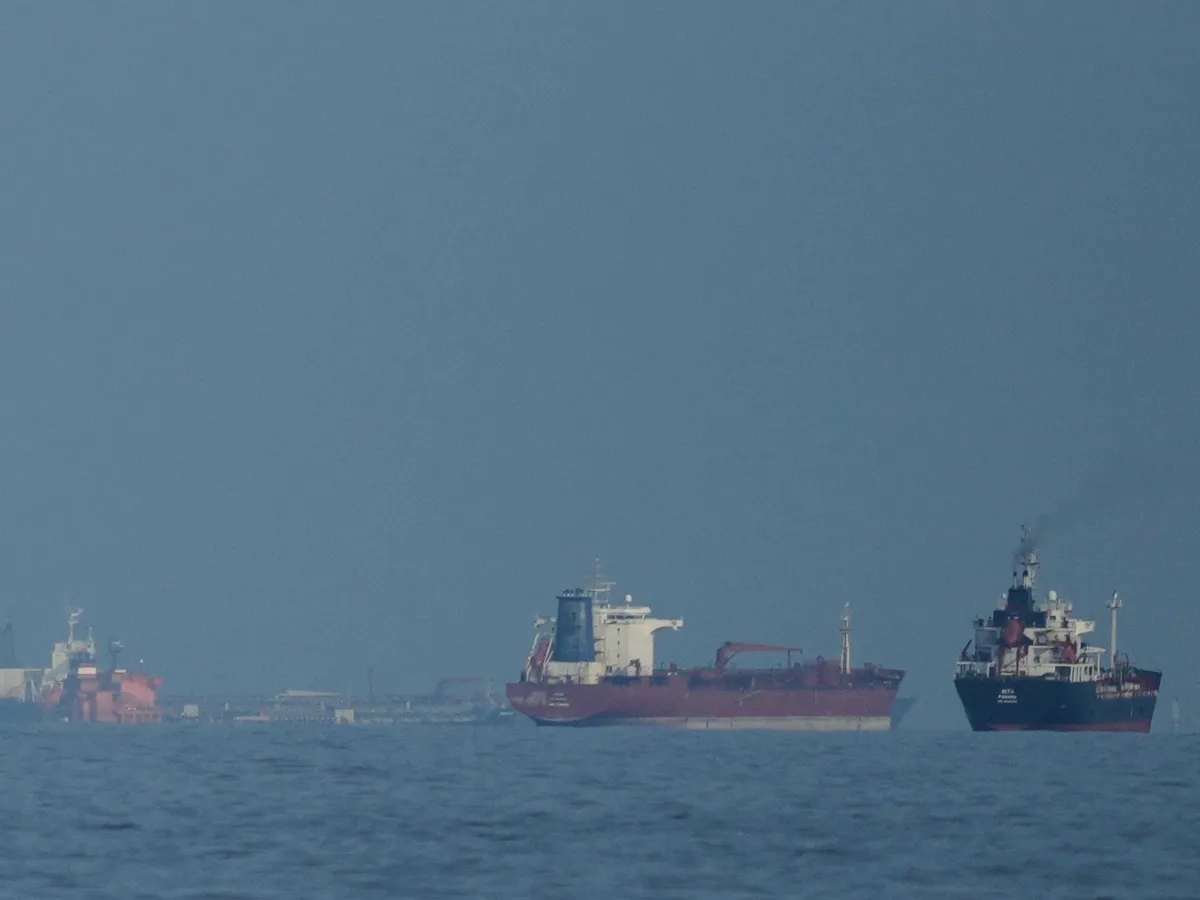
CENTCOM contradicts reports on ships breaking blockade as Trump says US-Iran talks could resume in the next two days.The Pentagon says no ships “made it past” the United States military blockade in the Strait of Hormuz in its first 24 hours and six merchant ships followed orders to turn around.The statement on Tuesday from the US military’s Central Command (CENTCOM) was the first update since US President Donald Trump announced the blockade of the waterway after US-Iran talks over the weekend in Pakistan failed to yield an agreement on ending the war the US and Israel launched on February 28.Recommended Stories list of 3 itemslist 1 of 3How much will US Hormuz blockade hurt Iran, and does Tehran have an escape?list 2 of 3Global oil demand to plunge amid disruptions caused by war on Iran: IEAlist 3 of 3Who controls the Strait of Hormuz?end of listCENTCOM said the blockade applies only to vessels “entering and exiting Iranian ports” and other vessels remain free to transit the waterway.It added: “US forces are supporting freedom of navigation for vessels transiting the Strait of Hormuz to and from non-Iranian ports.”The Reuters news agency reported at least three vessels transited the strait during the first 24 hours of the blockade, citing shipping data. They included two tankers sanctioned by the US. The three ships were not heading to Iranian ports, according to Reuters.However, the AFP news agency and several US media outlets, citing data from the maritime tracker Kpler, reported two ships had transited the waterway after leaving Iranian ports on Monday.CENTCOM said 10,000 US sailors, Marines and airmen were involved in the operation, along with more than a dozen US warships and dozens of aircraft.Military observers have widely said US forces have the capability to maintain the blockade for the foreseeable future but the continued pressure increases the likelihood of Iranian attacks. That in turn could see a two-week ceasefire that began on Wednesday collapse.Meanwhile, any efforts to intercept vessels from strategic foes, including China, could create new escalations. The strategy is also likely to continue to roil global oil markets.
SRCAl Jazeera
LANGEN
LEANCenter
WORDS348
ENT11
TUE · 2026-04-14 · 17:53 GMTBRIEF NSR-2026-0414-68082
NSR-2026-0414-68082News Report·EN·National Security
No ships ‘make it past US blockade’ in Hormuz strait in first day: Pentagon
The US military's Central Command (CENTCOM) reported that in the first 24 hours of the US blockade in the Strait of Hormuz, no ships entered or exited Iranian ports, and six merchant ships turned around. This blockade, announced by President Trump after failed US-Iran talks, aims to restrict vessels entering and exiting Iranian ports, while allowing free passage to other ships.
Joseph StepanskyAl JazeeraFiled 2026-04-14 · 17:53 GMTLean · CenterRead · 2 min
Al JazeeraFIG 01
Reading time
2min
Word count
348words
Sources cited
4cited
Entities identified
11entities
Quality score
100%
§ 01
Briefing Summary
AI-generatedNEWSAR · AI
The US military's Central Command (CENTCOM) reported that in the first 24 hours of the US blockade in the Strait of Hormuz, no ships entered or exited Iranian ports, and six merchant ships turned around. This blockade, announced by President Trump after failed US-Iran talks, aims to restrict vessels entering and exiting Iranian ports, while allowing free passage to other ships. CENTCOM stated that 10,000 US personnel, warships, and aircraft are involved in enforcing the blockade. Conflicting reports emerged, with some outlets claiming ships transited the strait after leaving Iranian ports, while Reuters reported vessels transiting but not heading to Iran. Military observers suggest the blockade is sustainable but increases the risk of Iranian attacks and broader escalations, potentially impacting global oil markets.
Confidence 0.90Sources 4Claims 5Entities 11
§ 02
Article analysis
Model · rule-basedFraming
National Security
Economic Impact
Tone
Measured
AI-assessed
CalmNeutralAlarmist
Factuality
0.80 / 1.00
Factual
LowHigh
Sources cited
4
Well sourced
FewMany
§ 03
Key claims
5 extracted01
10,000 US sailors, Marines and airmen were involved in the operation.
statisticCENTCOM
Confidence
1.00
02
Reuters reported at least three vessels transited the strait during the first 24 hours of the blockade.
factualReuters
Confidence
1.00
03
The blockade applies only to vessels “entering and exiting Iranian ports”.
quoteCENTCOM
Confidence
1.00
04
Six merchant ships followed orders to turn around.
factualPentagon
Confidence
1.00
05
The Pentagon says no ships “made it past” the United States military blockade in the Strait of Hormuz in its first 24 hours.
factualPentagon
Confidence
1.00
§ 04
Full report
2 min read · 348 words§ 05
Entities
11 identifiedKey playerOppositionContextPositiveNeutralNegative
Organizations4
§ 06
Keywords & salience
9 termsstrait of hormuz
1.00
us blockade
0.90
iran
0.80
us-iran talks
0.70
freedom of navigation
0.60
centcom
0.50
oil markets
0.50
warships
0.40
iranian ports
0.40
§ 07
Topic connections
Interactive graph Network visualization showing 51 related topics
View Full Graph Person Organization Location Event|Click node to navigate|Edge numbers = shared articles