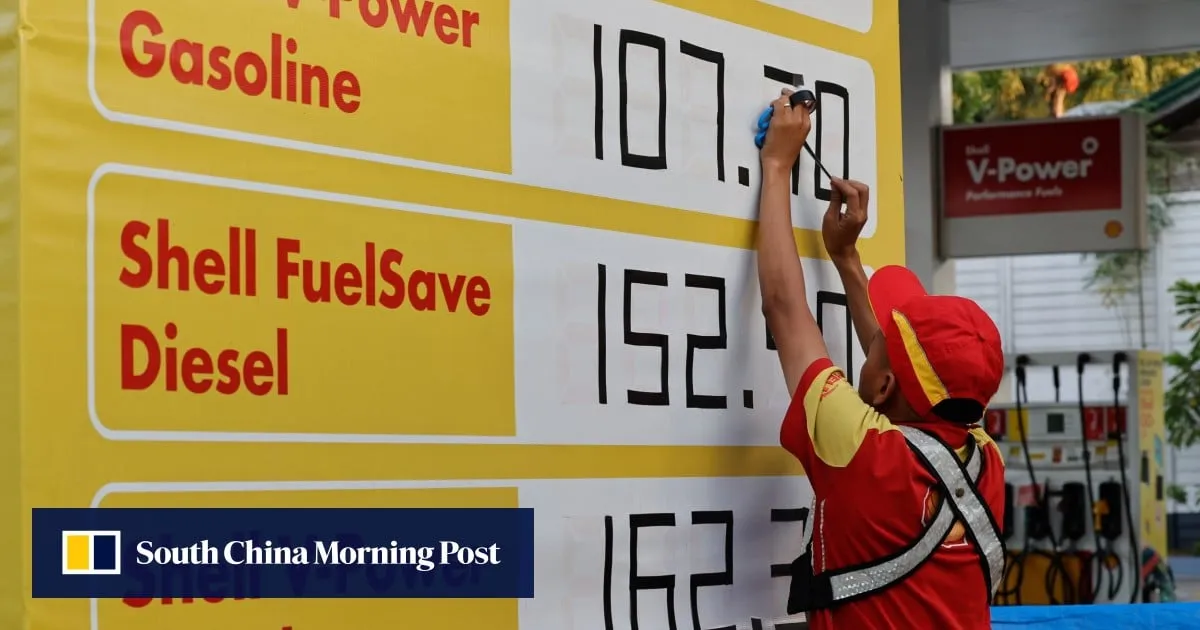
With fuel prices in the Philippines among the world’s hardest hit by the Iran war, consumer groups are urging the government to take bolder action, including tighter control over pump prices.Economists say the more realistic options are tax relief, targeted subsidies and transport support rather than direct price controls.Sharon Garin, secretary of the Philippines’ Department of Energy, said on a radio programme on Sunday that the country might no longer see diesel at 60 pesos (US$1) per litre because of structural damage to Gulf oil facilities during the conflict.“If the war had only lasted for two weeks, prices would have gone down. But the structural damage has already been done. It will take a long time to fix the facilities,” the energy secretary told Super Radyo dzBB.“Even if the prices go down, it won’t be as fast as its increase. We may never get to reach 60 pesos per litre for diesel.”Commuters wait for public transport along a main thoroughfare in Quezon City on Wednesday. Photo: EPAHer remarks underlined a growing concern: that what began as a wartime price shock may turn into a longer-term energy problem for one of Asia’s most import-dependent economies.
SRCSouth China Morning Post
LANGEN
LEANCenter-Right
WORDS194
ENT7
THU · 2026-04-16 · 01:30 GMTBRIEF NSR-2026-0416-69866
NSR-2026-0416-69866News Report·EN·Economic Impact
Would more drastic measures help Philippines bring down fuel prices?
The Philippines is facing high fuel prices exacerbated by the Iran war, prompting calls for government intervention. Consumer groups want price controls, but economists suggest tax relief, subsidies, and transport support are more viable.
Sam BeltranSouth China Morning PostFiled 2026-04-16 · 01:30 GMTLean · Center-RightRead · 1 min
South China Morning PostFIG 01
Reading time
1min
Word count
194words
Sources cited
1cited
Entities identified
7entities
Quality score
100%
§ 01
Briefing Summary
AI-generatedNEWSAR · AI
The Philippines is facing high fuel prices exacerbated by the Iran war, prompting calls for government intervention. Consumer groups want price controls, but economists suggest tax relief, subsidies, and transport support are more viable. The Department of Energy anticipates that diesel prices may not return to previous levels due to structural damage to Gulf oil facilities caused by the conflict. The energy secretary stated that repair times will be lengthy, preventing a quick price decrease. This situation raises concerns about a potentially long-term energy problem for the import-dependent Philippine economy.
Confidence 0.90Sources 1Claims 5Entities 7
§ 02
Article analysis
Model · rule-basedFraming
Economic Impact
Conflict
Tone
Measured
AI-assessed
CalmNeutralAlarmist
Factuality
0.70 / 1.00
Factual
LowHigh
Sources cited
1
Limited
FewMany
§ 03
Key claims
5 extracted01
Economists say the more realistic options are tax relief, targeted subsidies and transport support rather than direct price controls.
factualeconomists
Confidence
1.00
02
Consumer groups are urging the government to take bolder action, including tighter control over pump prices.
factualconsumer groups
Confidence
1.00
03
It will take a long time to fix the facilities.
predictionSharon Garin, secretary of the Philippines’ Department of Energy
Confidence
0.90
04
The country might no longer see diesel at 60 pesos (US$1) per litre because of structural damage to Gulf oil facilities during the conflict.
predictionSharon Garin, secretary of the Philippines’ Department of Energy
Confidence
0.80
05
What began as a wartime price shock may turn into a longer-term energy problem.
prediction
Confidence
0.70
§ 04
Full report
1 min read · 194 words§ 05
Entities
7 identifiedKey playerOppositionContextPositiveNeutralNegative
Organizations1
§ 06
Keywords & salience
10 termsfuel prices
1.00
philippines
0.90
iran war
0.80
price controls
0.70
energy problem
0.70
subsidies
0.60
tax relief
0.60
diesel
0.50
department of energy
0.50
structural damage
0.40
§ 07
Topic connections
Interactive graph Network visualization showing 51 related topics
View Full Graph Person Organization Location Event|Click node to navigate|Edge numbers = shared articles