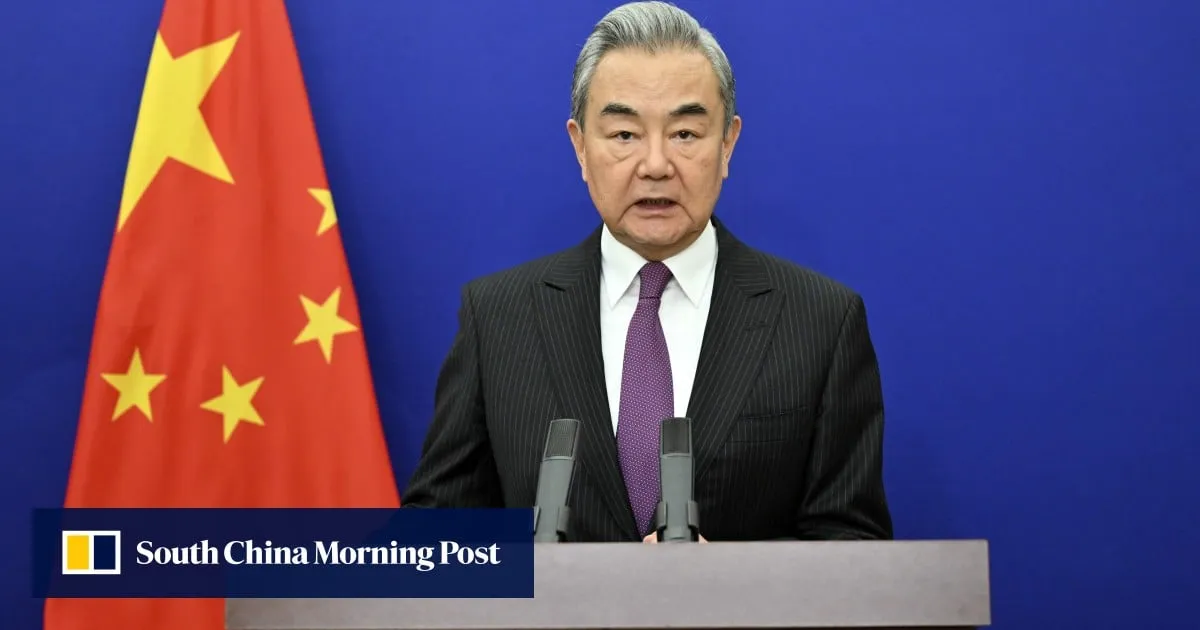
In phone call with Iran’s top envoy, China’s foreign minister says situation is at ‘critical stage of transition between conflict and peace’2-MIN READ2-MIN9ListenPublished: 1:18pm, 16 Apr 2026Updated: 2:52pm, 16 Apr 2026China’s top diplomat Wang Yi sought guarantees of freedom and safety of international navigation through the Strait of Hormuz, in a phone call with his Iranian counterpart, Abbas Araghchi, on Wednesday.The call is Beijing’s latest diplomacy effort on the Iran war as a US naval blockade of Iranian ports intensifies global energy disruptions and adds uncertainty in the Strait of Hormuz, a critical waterway off Iran’s coast that Tehran effectively closed in response to US-Israeli strikes.“The current situation has reached a critical stage of transition between conflict and peace, and a window for peace is opening,” Wang said, according to a statement by the Chinese foreign ministry. Iranians dismiss Trump threats to block Hormuz StraitIranians dismiss Trump threats to block Hormuz StraitWang said Iran, as a coastal state of the Strait of Hormuz, should have its sovereignty, security and legitimate rights and interests respected and safeguarded.“At the same time, the freedom and safety of international navigation through the strait should also be ensured, and efforts to restore normal transit through the strait are a shared call of the international community.”According to the Chinese statement, Araghchi said Tehran expected Beijing to play an active role in promoting peace and ending the conflict, and that Iran was willing to continue seeking a rational and realistic solution through peaceful negotiations.The US blockade followed an initial round of talks in Islamabad over the weekend that were aimed at permanently ending the conflict but failed to produce an agreement, with divisions remaining over Iran’s nuclear programme and the Strait of Hormuz.
SRCSouth China Morning Post
LANGEN
LEANCenter-Right
WORDS286
ENT10
THU · 2026-04-16 · 05:18 GMTBRIEF NSR-2026-0416-69890
NSR-2026-0416-69890News Report·EN·Diplomatic
China’s Wang Yi calls on Iran to ensure freedom and safe passage through Strait of Hormuz
In a phone call on April 16, 2026, Chinese Foreign Minister Wang Yi urged Iran to guarantee freedom and safety of navigation through the Strait of Hormuz amid escalating tensions. The call with Iranian envoy Abbas Araghchi comes as a US naval blockade intensifies energy disruptions and uncertainty in the critical waterway, which Iran has effectively closed in response to US-Israeli strikes.
Meredith ChenSouth China Morning PostFiled 2026-04-16 · 05:18 GMTLean · Center-RightRead · 2 min
South China Morning PostFIG 01
Reading time
2min
Word count
286words
Sources cited
2cited
Entities identified
10entities
Quality score
100%
§ 01
Briefing Summary
AI-generatedNEWSAR · AI
In a phone call on April 16, 2026, Chinese Foreign Minister Wang Yi urged Iran to guarantee freedom and safety of navigation through the Strait of Hormuz amid escalating tensions. The call with Iranian envoy Abbas Araghchi comes as a US naval blockade intensifies energy disruptions and uncertainty in the critical waterway, which Iran has effectively closed in response to US-Israeli strikes. Wang emphasized the need to respect Iran's rights while ensuring international navigation through the strait. Araghchi expressed Iran's desire for China to play an active role in promoting peace and resolving the conflict through peaceful negotiations. The call follows unsuccessful talks in Islamabad aimed at ending the conflict, with disagreements remaining over Iran's nuclear program and the Strait of Hormuz.
Confidence 0.90Sources 2Claims 5Entities 10
§ 02
Article analysis
Model · rule-basedFraming
Diplomatic
National Security
Tone
Measured
AI-assessed
CalmNeutralAlarmist
Factuality
0.80 / 1.00
Factual
LowHigh
Sources cited
2
Limited
FewMany
§ 03
Key claims
5 extracted01
Araghchi said Tehran expected Beijing to play an active role in promoting peace and ending the conflict.
quoteAraghchi
Confidence
1.00
02
The current situation has reached a critical stage of transition between conflict and peace, and a window for peace is opening.
quoteWang Yi
Confidence
1.00
03
China’s top diplomat Wang Yi sought guarantees of freedom and safety of international navigation through the Strait of Hormuz.
factualnull
Confidence
1.00
04
A US blockade followed an initial round of talks in Islamabad that were aimed at permanently ending the conflict but failed to produce an agreement.
factualnull
Confidence
0.90
05
The call is Beijing’s latest diplomacy effort on the Iran war as a US naval blockade of Iranian ports intensifies global energy disruptions.
factualnull
Confidence
0.90
§ 04
Full report
2 min read · 286 words§ 05
Entities
10 identifiedKey playerOppositionContextPositiveNeutralNegative
Locations7
§ 06
Keywords & salience
9 termsstrait of hormuz
1.00
international navigation
0.80
china iran relations
0.70
peace negotiations
0.60
us blockade
0.60
energy disruptions
0.50
iran war
0.50
abbas araghchi
0.40
wang yi
0.40
§ 07
Topic connections
Interactive graph Network visualization showing 51 related topics
View Full Graph Person Organization Location Event|Click node to navigate|Edge numbers = shared articles