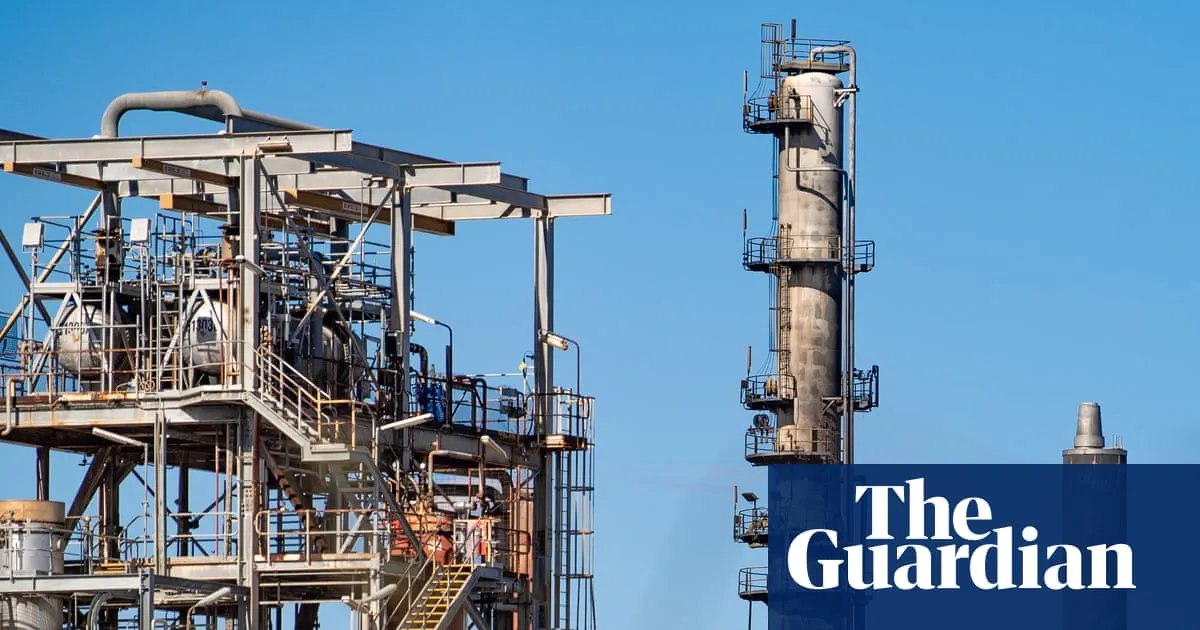
A fire broke out at Viva Energy’s oil facility near Geelong and burned for about 13 hours, with potential effects on Victoria’s fuel prices and supply. Photograph: Jay Kogler/AAP View image in fullscreen A fire broke out at Viva Energy’s oil facility near Geelong and burned for about 13 hours, with potential effects on Victoria’s fuel prices and supply. Photograph: Jay Kogler/AAP Albanese cuts fuel diplomacy mission short to rush to Geelong as Bowen calls oil refinery fire ‘a setback’ Some petrol stations may see short-term outages and energy experts warn Victorian fuel prices could spike up to 20 cents a litre Track Australia’s fuel prices, service station outages and shipments in charts Get our breaking news email, free app or daily news podcast The prime minister, Anthony Albanese, will fly home early from his fuel diplomacy mission in south-east Asia, travelling overnight to Victoria after a huge blaze at one of Australia’s two oil refineries. Albanese was set to leave Malaysia early on Thursday night and was expected to visit Viva Energy’s Geelong refinery on Friday morning, when he will receive a briefing on the damage. A fire broke out at the plant late on Wednesday and burned for about 13 hours before being extinguished, significantly limiting its production of petrol, diesel and jet fuel. Albanese will be accompanied by the energy minister, Chris Bowen, and defence minister, Richard Marles, who represents the local area in parliament. 0:50 Geelong fire: major blaze breaks out at Australia's Viva oil refinery – video Albanese had not been due to return to Australia after a visit to Brunei and Malaysia until Friday night. The fire is expected to make Australia more dependent on imports for its petrol needs as Viva looks overseas to fill the gap left by the incident. Energy experts have warned more fuel restrictions could be needed and Victorian motorists should brace for a short-lived petrol price spike of up to 20 cents a litre. The refinery had produced 7m litres of petrol a day but that had been reduced after the fire, Bowen said on Thursday. “But [production] won’t come to an end in Geelong and Viva is confident that they will be able to replace the impacted petrol production with imports.” Fuel companies have started to secure extra imports with the federal government’s support, with an extra 100m litres in diesel secured from Brunei and South Korea on Thursday. Bowen said the refinery blaze would not force the government to authorise fuel companies to release more of their minimum stockholding, as it did in March, nor move to stage 3 of its national fuel security plan. “This in and of itself won’t lead to a change in the status of the four-point fuel plan,” he said. “We’ll continue to monitor the situation.” Viva’s executive general manager for energy and infrastructure, Bill Patterson, said the company would maintain petrol supply from its stocks in storage, arrangements with other suppliers and imports. The refinery was operating at reduced production rates as a safety precaution on Thursday while damage was being assessed. Patterson said diesel and jet fuel facilities had not been impacted and were expected to ramp up quickly. A petrol unit had been caught in the blaze, forcing the refinery to find workarounds. The Geelong refinery can turn crude oil into petrol, diesel, jet fuel and some speciality products that are piped or shipped to storage terminals before being sent to service stations or businesses such as airlines and road transport companies. The blaze has come at a sensitive time for Australia as it faces a huge increase in oil prices and enduring concerns over supplies amid a fragile ceasefire in the conflict between the US and Iran. Petrol shortages and prices have eased in April but the freight import cost of 91 unleaded has doubled since the US began bombing Tehran in late February. Vlado Vivoda, an honorary fellow at the University of Queensland’s Sustainable Minerals Institute, said Victoria could see unleaded prices rise as much as 20 cents a litre and more service stations facing temporary fuel outages as it waits for new imports to arrive. “I don’t think there’s going to be an actual shortage, but [oil and fuel] tankers move very slowly … it takes time to bring extra cargos,” Vivoda said. He said national prices and supply should not be affected as other states were already importing fuel to meet their needs. Most of the fuel refined in Geelong stays in Victoria, providing about 50% of the state’s petrol supply, according to David Leaney, a supply chain specialist at the Australian National University. “It’s going to impact Victorian petrol supply, but we are talking about weeks not months, subject to the repair and re-establishment of supply from the refinery,” Leaney said. Qantas, Virgin Airlines and Melbourne airport had been advised their jet fuel supply would not be impacted, spokespeople said. Australia’s only other refinery has continued to operate at full capacity, its operator, Ampol, said on Thursday. “Ampol will provide assistance to Viva if requested and where it is practical to help ensure the continuity of Australia’s fuel supply,” a spokesperson said. The two refineries produce about one-third of Australia’s petrol requirements. Experts warned the blaze could still have national consequences. Tom Woodlock, a senior analyst at Argus Media, said the fire could force Viva to source additional imports on top of its existing orders. “Fuel imports have not increased meaningfully since the conflict began,” Woodlock said. Viva secured two additional shipments of diesel through the federal government’s program to underwrite fuel purchases on Thursday, unrelated to the blaze. Bowen said the extra 100m litres would arrive from Brunei and South Korea in May and would be the “first of many” to receive financial backing from the government agency Export Finance Australia. He said similar support has been offered to Ampol, Park Fuels and iOR, foreshadowing further announcements, and confirmed companies had supply contracts up to the end of May. Tony Wood, an energy expert at the Grattan Institute, said the government would still likely be weighing releasing its stockholding. “That’s why you have reserves in some sense, so if you get a hiccup, you draw them down, then you build it up again,” Wood said. “It would be surprising if already they hadn’t done the numbers on that.” Explore more on these topics Petrol prices Australian politics Business Geelong Victoria Oil and gas companies news Share Reuse this content
SRCThe Guardian - World News
LANGEN
LEANCenter-Left
WORDS1 077
ENT9
THU · 2026-04-16 · 03:59 GMTBRIEF NSR-2026-0416-69898
NSR-2026-0416-69898News Report·EN·Economic Impact
Victorian fuel prices could spike by 20c a litre due to Geelong refinery fire, experts warn
A fire at Viva Energy's Geelong oil refinery in Victoria, Australia, burned for 13 hours, significantly impacting petrol, diesel, and jet fuel production. The incident prompted Prime Minister Anthony Albanese to cut short his fuel diplomacy mission in Southeast Asia to visit the site and assess the damage.
Luca Ittimani and Jonathan BarrettThe Guardian - World NewsFiled 2026-04-16 · 03:59 GMTLean · Center-LeftRead · 5 min
The Guardian - World NewsFIG 01
Reading time
5min
Word count
1 077words
Sources cited
4cited
Entities identified
9entities
Quality score
100%
§ 01
Briefing Summary
AI-generatedNEWSAR · AI
A fire at Viva Energy's Geelong oil refinery in Victoria, Australia, burned for 13 hours, significantly impacting petrol, diesel, and jet fuel production. The incident prompted Prime Minister Anthony Albanese to cut short his fuel diplomacy mission in Southeast Asia to visit the site and assess the damage. Energy experts warn that the fire could lead to a temporary fuel price spike of up to 20 cents per litre in Victoria and potential short-term outages at petrol stations. The refinery's reduced output will increase Australia's reliance on fuel imports, with the government securing additional diesel from Brunei and South Korea to mitigate supply concerns. While production is reduced, Viva Energy is confident that they will be able to replace the impacted petrol production with imports.
Confidence 0.90Sources 4Claims 5Entities 9
§ 02
Article analysis
Model · rule-basedFraming
Economic Impact
Political Strategy
Tone
Measured
AI-assessed
CalmNeutralAlarmist
Factuality
0.80 / 1.00
Factual
LowHigh
Sources cited
4
Well sourced
FewMany
§ 03
Key claims
5 extracted01
An extra 100m litres in diesel secured from Brunei and South Korea on Thursday.
factualnull
Confidence
1.00
02
Fuel companies have started to secure extra imports with the federal government’s support.
factualnull
Confidence
1.00
03
The refinery had produced 7m litres of petrol a day but that had been reduced after the fire.
factualChris Bowen
Confidence
1.00
04
A fire broke out at Viva Energy’s oil facility near Geelong and burned for about 13 hours.
factualnull
Confidence
1.00
05
Victorian fuel prices could spike up to 20 cents a litre.
predictionenergy experts
Confidence
0.70
§ 04
Full report
5 min read · 1 077 words§ 05
Entities
9 identifiedKey playerOppositionContextPositiveNeutralNegative
Organizations1
§ 06
Keywords & salience
9 termsoil refinery fire
1.00
fuel prices
0.90
viva energy
0.80
fuel supply
0.70
geelong
0.70
petrol
0.60
imports
0.60
diesel
0.50
fuel restrictions
0.40
§ 07
Topic connections
Interactive graph No topic relationship data available yet. This graph will appear once topic relationships have been computed.