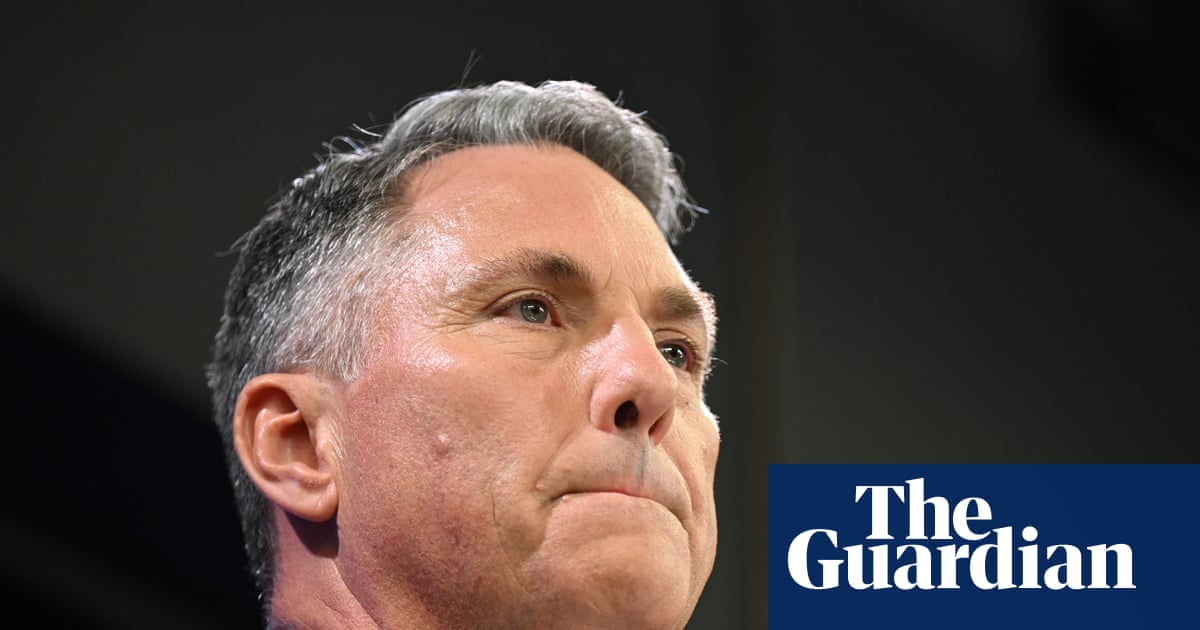
‘We’ve not received a specific request in relation to the Strait of Hormuz,’ Australia’s defence minister and deputy prime minister, Richard Marles, said on Friday. Photograph: Lukas Coch/AAP View image in fullscreen ‘We’ve not received a specific request in relation to the Strait of Hormuz,’ Australia’s defence minister and deputy prime minister, Richard Marles, said on Friday. Photograph: Lukas Coch/AAP No ‘specific request’ to help US in Strait of Hormuz, Marles says, as Trump repeats criticism of Australia US president told reporters he was ‘not happy with Australia because they were not there when we asked them to be there’ Follow our Australia news live blog for latest updates Get our breaking news email, free app or daily news podcast Donald Trump has again accused Australia of not doing enough to help him in the Middle East war, claiming the US “asked them to be there” despite Australia’s defence minister saying there had been no “specific request”. The US president made the comments while taking questions from reporters, including Australian correspondents, as he left the White House on Thursday. Footage showed Trump saying: “Well, I’m not happy with Australia because they were not there when we asked them to be there.” Pressed by a journalist on what he had asked Australia for, Trump did not answer directly but said: “They were not there having to do with Hormuz. So I’m not happy, I’m not happy with them.” Asked on Friday morning what Trump meant, Australia’s prime minister, Anthony Albanese, said it was a question for the president. “There’s been no new requests at all,” Albanese told reporters in Geelong. Trump has repeatedly claimed, without offering further detail, that Australia, among other countries, had rejected or ignored requests to assist the US in the Middle East. Australian government ministers in turn declined to comment, or said they do not know what Trump is referring to, and that there have been no requests from the US beyond a general request to help assist in the defence of Gulf allies – to which Australia deployed a Wedgetail surveillance aircraft, with its initial four-week deployment extended for another month. Trump has previously claimed “Australia was not great. I was a little surprised by Australia”; that “they should get involved, and I was a little bit surprised that they said no, because we always say yes to them”; and dismissed Australia, Japan, South Korea and NATO allies in a social media post, saying “we no longer ‘need,’ or desire” their help. The defence minister and deputy prime minister, Richard Marles, told ABC Radio National on Friday that Trump had not made any “specific request” of Australia regarding the Strait of Hormuz. “We’ve not received a specific request in relation to the Strait of Hormuz, but we’ll work with all partners, our allies, and that very much includes the US in terms of whatever needs to be done in relation to the Strait of Hormuz,” Marles said. Marles said Australia needed the crucial shipping channel to reopen and suggested it would “contribute” to an operation to make that happen when the time was right. He said Australia had been working with the US, UK and France. World leaders, including a representative from Australia, were due to gather at a summit in Paris on Friday to discuss the strait. “The planning that is being done in respect of any particular operation there is obviously one which is dependent on when circumstances allow such an operation to happen and that’s not the circumstances we’ve got right now,” Marles said on Friday morning. “We need to wait for that, but we will be seeking to contribute in whatever is the best way that we can. And we’ve made that clear.” Earlier he told ABC TV he would not “get into a running commentary on what the US president says”, when asked if Australia was getting tired of Trump’s repeated criticisms. James Paterson, the shadow defence minister, told ABC radio on Friday that it was “very unfortunate that we have this contradiction between what the Australian government is saying and what the US government is saying”. On Thursday, speaking at the National Press Club in Canberra, Marles had again downplayed the idea of any requests to Australia from the US president. “All I can say is that there was a request from the United States to assist in the defence of the nations of the Gulf. And right now we have an E‑7 Wedgetail operating above the skies of the Gulf states, providing for the defence, specifically, of the UAE. And it was in response to a specific request from the UAE,” he said. He said it was “not surprising … that we wouldn’t have a specific request in respect of the Strait of Hormuz from anyone” as planning conversations involving allies such as the US, UK and France were dependent on developing circumstances. “We are involved in conversations now. But given the uncertainty that exists in respect of the Strait of Hormuz, it would be impossible for anyone to make specific requests,” he said. The Trump exchange on Thursday began when a journalist asked Trump if he was satisfied with Australia’s increased defence expenditure. Labor announced this week it would spend an extra $53bn on defence over the next decade, using the nation’s latest military blueprint to create special investment programs to fund increases in capability using private capital. Existing budget settings have Australia’s spending on track to be about 2.03% of GDP, rising to about 2.3 to 2.4% by 2033 under the new plans. Trump had demanded American allies spend as much as 3.5% of GDP on their own defence to reduce reliance on the US. Explore more on these topics Australian foreign policy Richard Marles Australian politics Australian military Donald Trump Strait of Hormuz US-Israel war on Iran news Share Reuse this content
SRCThe Guardian - World News
LANGEN
LEANCenter-Left
WORDS976
ENT11
THU · 2026-04-16 · 22:13 GMTBRIEF NSR-2026-0417-70166
NSR-2026-0417-70166News Report·EN·National Security
No ‘specific request’ to help US in strait of Hormuz, Marles says, as Trump repeats criticism of Australia
Donald Trump has criticized Australia for allegedly failing to assist the U.S. in the Strait of Hormuz.
Josh Butler and Catie McLeodThe Guardian - World NewsFiled 2026-04-16 · 22:13 GMTLean · Center-LeftRead · 4 min
The Guardian - World NewsFIG 01
Reading time
4min
Word count
976words
Sources cited
2cited
Entities identified
11entities
Quality score
100%
§ 01
Briefing Summary
AI-generatedNEWSAR · AI
Donald Trump has criticized Australia for allegedly failing to assist the U.S. in the Strait of Hormuz. Trump claimed the U.S. "asked them to be there," but Australia's Defence Minister Richard Marles stated that Australia has received no "specific request" related to the Strait of Hormuz. Australian Prime Minister Anthony Albanese said the question should be directed to President Trump, noting "there's been no new requests at all." Trump has repeatedly asserted that Australia and other countries have rejected requests for assistance in the Middle East. Australia previously deployed a Wedgetail surveillance aircraft to the Gulf in response to a general request to assist in the defence of Gulf allies.
Confidence 0.90Sources 2Claims 3Entities 11
§ 02
Article analysis
Model · rule-basedFraming
National Security
Tone
Measured
AI-assessed
CalmNeutralAlarmist
Factuality
0.70 / 1.00
Factual
LowHigh
Sources cited
2
Limited
FewMany
§ 03
Key claims
3 extracted01
Australia deployed a Wedgetail surveillance aircraft to help defend Gulf allies, with its initial four-week deployment extended for another month.
factualAustralian government ministers
Confidence
1.00
02
Australia has not received a specific request from the US to help in the Middle East war regarding the strait of Hormuz.
factualRichard Marles, Australia's defence minister and deputy prime minister
Confidence
1.00
03
Donald Trump has repeatedly claimed that Australia had rejected or ignored requests to assist the US in the Middle East.
quoteTrump
Confidence
0.60
§ 04
Full report
4 min read · 976 words§ 05
Entities
11 identifiedKey playerOppositionContext
DT
Donald Trump person · Opposition
100
A
Australia location · Key Player
100
US
United States location · Key Player
90
RM
Richard Marles person · Key Player
90
SO
Strait of Hormuz location · Context
80
AA
Anthony Albanese person · Key Player
70
ME
Middle East location · Context
60
WH
White House location · Context
40
J
Japan location · Context
30
N
NATO organization · Context
30
SK
South Korea location · Context
30
§ 06
Keywords & salience
9 termsaustralia
0.90
strait of hormuz
0.90
us request
0.80
donald trump
0.70
middle east
0.60
anthony albanese
0.50
richard marles
0.50
gulf allies
0.40
defence minister
0.40
§ 07
Topic connections
Interactive graph Network visualization showing 51 related topics
View Full Graph Person Organization Location Event|Click node to navigate|Edge numbers = shared articles