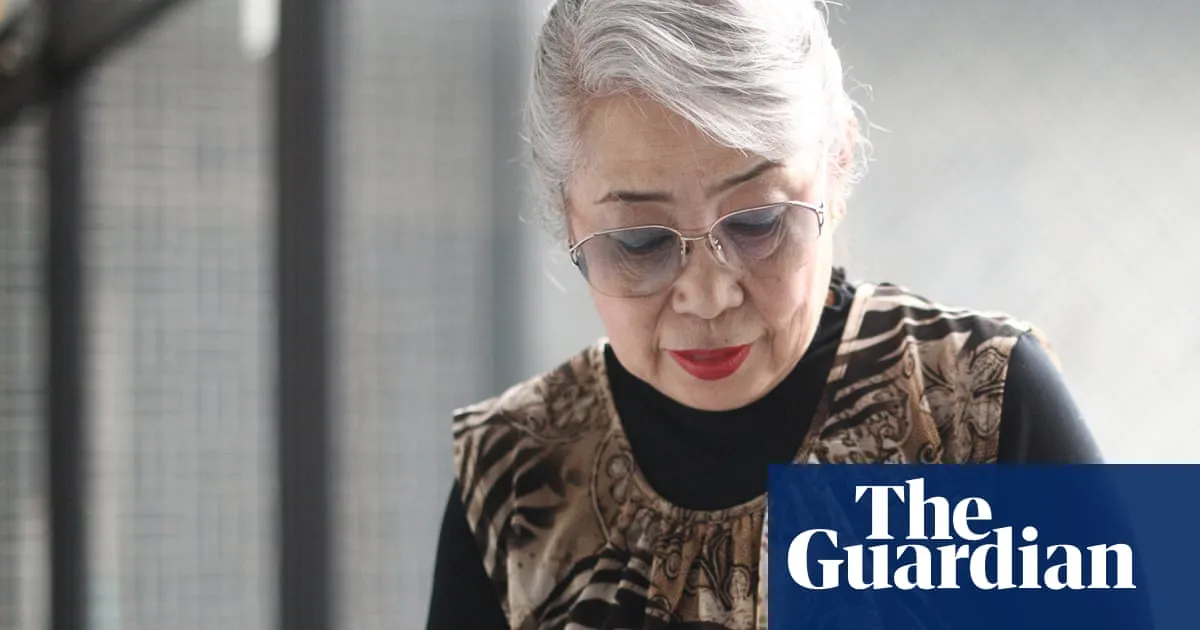
It’s not only young people whose gaze is fixed on tiny screens. But for these users in Tokyo, clicking and scrolling is anything but second nature.“I can’t deal with all of the apps that jump out at me,” says one. “How do I know if I’ve definitely ended a call?” asks another.They are common concerns among the four women and one man attending a beginner’s smartphone class at a public facility for older residents in Nerima in the Japanese capital’s north-west suburbs.In Yasushi Nishioka, they have a patient guide to navigating the myriad functions and settings that can make the smartphone a portal into a new world of hyper-connectivity, but also a vortex for digital dystopia.“Please don’t feel like you need to remember everything,” says Nishioka, a retired programmer for an IT company. “It’s just a question of holding it in your hand and getting used to it.”Yasushi Nishioka guides his students, most of them in their 70s, at the smartphone training session in Nerima, Tokyo. Photograph: Justin McCurry/The GuardianThe participants, most of whom are in their 70s, say they are intimidated by their devices – three iPhones and two Android handsets. But they are determined not to spend their later years in analogue isolation after the closure of Japan’s 3G network.The country’s telecom companies have gradually plunged older networks into darkness. The 2G service had completely shut down by 2012 and by 2022 au, a popular carrier, no longer offered 3G, with rival SoftBank following suit in 2024. At the end of March, NTT Docomo became the last to pull the 3G plug, citing the need to retire inefficient base stations to reduce electricity consumption.While some flip phones are still compatible with 4G, the move affected an estimated half a million people and more than 400 phone models, as well as early car navigation systems, vending machines that rely on 3G for cashless payment systems and unstaffed car parks that use the network for remote management, according to the Mainichi Shimbun news site.The smartphone beginners were taken through the functions and settings of their devices, including volume control and online payments. Photograph: Justin McCurry/The GuardianDocomo and other carriers are helping subscribers – a mixture of stubborn flip phone users and the smartphone anxious – by offering classes that include sessions on taking photos and video and shopping safely online.Unless they embrace the smartphone, which works only on 4G and 5G networks, flip phone loyalists will lose their voice-call and email functions and have their contracts cancelled along with their phone numbers.Japan’s garakei phones – a combination of Galápagos, in reference to their availability only for the domestic market, and keitai denwa, meaning mobile phone – were ubiquitous before the first iPhone was released here in 2008.Yasushi Nishioka’s mature students were especially interested in how to use health trackers and weather forecasts. Photograph: Justin McCurry/The GuardianToday, over the course of two hours, Nishioka guides his students through the basics: how to turn their phones on and off and control the volume, along with tips on scrolling and pinching in and out. He then turns to cashless payments and QR codes and – two subjects of common interest among the participants – health trackers and weather forecasts.“If you use your phone only for admin it will quickly get boring,” he says, promising that next week’s session will delve into entertainment, social media and photo and video content.All of the participants raise concerns about security – a growing problem in Japan, whose large population of over-65s are often the target of online scams. “If you have any doubts at all, just ignore the message or call,” Nishioka suggests, before sharing an app that filters out suspicious contacts.“When I bought my smartphone I turned it on and the number of icons was so confusing I had no idea what to do,” says Hiroko Kanda, a class participant. “It’s taking me a while to get used to it.”Another, who preferred not to give her name, reluctantly bought her first smartphone three months ago. “I didn’t have the confidence to make the switch,” she says, her flip phone resting next to her iPhone. “I still use my garakei on 4G … but I really like the weather and travel planner apps on my new phone.”Their reasons for taking the plunge aren’t wildly different to those that keep younger people umbilically attached to their devices: reserving tickets for musicals, joining WhatsApp groups, learning a foreign language and making travel plans.“Of all the things that annoy people about smartphones and often makes them quit, one really stands out,” says Nishioka, before revealing a grievance that unites users, novice and experienced, across the generations: “Managing their passwords.”
SRCThe Guardian - World News
LANGEN
LEANCenter-Left
WORDS779
ENT9
FRI · 2026-04-17 · 04:00 GMTBRIEF NSR-2026-0417-70204
NSR-2026-0417-70204News Report·EN·Human Interest
‘How do I end a call?’: the elderly Japanese people determined to master smartphones
In Tokyo, Japan, elderly residents are attending smartphone classes to overcome their digital anxieties and adapt to the phasing out of older 3G networks. Telecom companies have shut down 2G and 3G services, impacting an estimated half a million people and various devices.
Justin McCurry TokyoThe Guardian - World NewsFiled 2026-04-17 · 04:00 GMTLean · Center-LeftRead · 4 min
The Guardian - World NewsFIG 01
Reading time
4min
Word count
779words
Sources cited
3cited
Entities identified
9entities
Quality score
100%
§ 01
Briefing Summary
AI-generatedNEWSAR · AI
In Tokyo, Japan, elderly residents are attending smartphone classes to overcome their digital anxieties and adapt to the phasing out of older 3G networks. Telecom companies have shut down 2G and 3G services, impacting an estimated half a million people and various devices. These classes, often offered by carriers like Docomo, aim to teach basic smartphone functions, online safety, and digital literacy to those who previously relied on flip phones. Participants, mostly in their 70s, are motivated to learn to avoid isolation and navigate the modern digital landscape. A retired IT programmer, Yasushi Nishioka, guides the students in these sessions. The shift to 4G and 5G networks necessitates embracing smartphones, leaving many elderly users struggling to adapt.
Confidence 0.90Sources 3Claims 4Entities 9
§ 02
Article analysis
Model · rule-basedFraming
Human Interest
Technology
Tone
Measured
AI-assessed
CalmNeutralAlarmist
Factuality
0.80 / 1.00
Factual
LowHigh
Sources cited
3
Well sourced
FewMany
§ 03
Key claims
4 extracted01
I can’t deal with all of the apps that jump out at me.
quoteOne attendee of the smartphone class
Confidence
1.00
02
Unless they embrace the smartphone, flip phone users will lose voice-call and email functions and have contracts cancelled.
factual
Confidence
1.00
03
The closure of Japan's 3G network affected an estimated half a million people and more than 400 phone models.
statisticMainichi Shimbun news site
Confidence
1.00
04
Japan's telecom companies have gradually shut down older networks, with NTT Docomo being the last to pull the 3G plug in March.
factual
Confidence
1.00
§ 04
Full report
4 min read · 779 words§ 05
Entities
9 identifiedKey playerOppositionContextPositiveNeutralNegative
Organizations4
§ 06
Keywords & salience
10 termssmartphones
1.00
elderly
0.90
digital literacy
0.80
japan
0.70
3g network
0.70
digital divide
0.60
smartphone classes
0.60
flip phones
0.50
4g
0.50
telecom companies
0.40
§ 07
Topic connections
Interactive graph No topic relationship data available yet. This graph will appear once topic relationships have been computed.