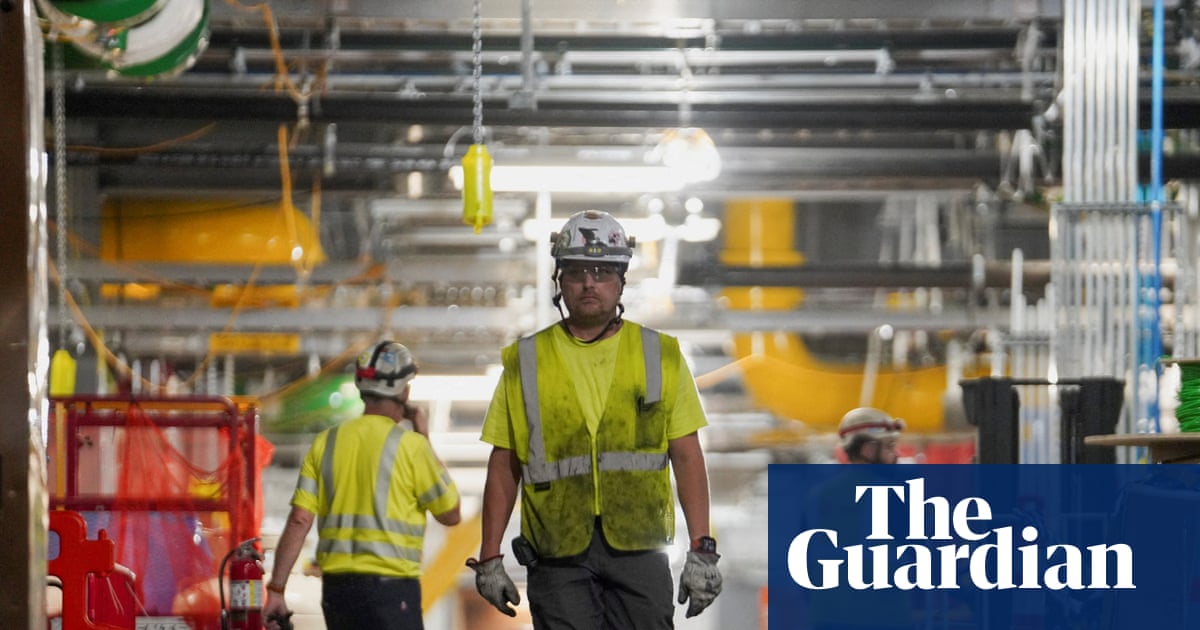
Microsoft and other US tech companies successfully lobbied the EU to hide the environmental toll of their datacentres, an investigation has found, with demands to block a database of green metrics from public view written almost word for word into EU rules.The secrecy provision, which the European Commission added to its proposal almost verbatim after industry lobbying in 2024, hinders scrutiny of the pollution that individual datacentres emit. It leaves researchers with just national-level summaries of their energy footprints.The rise of AI chatbots has spurred a boom in the construction of chip-filled warehouses with a hunger for power that is being met, in part, by burning fossil gas. Legal scholars warn the blanket confidentiality clause may fall foul of EU transparency rules and the Aarhus convention on public access to environmental information.“In two decades, I cannot recall a comparable case,” said Prof Jerzy Jendrośka, who spent 19 years on the body overseeing the convention and teaches environmental law at the University of Opole in Poland. “This clearly seems not to be in line with the convention.”Documents obtained by Investigate Europe, an independent journalism cooperative that led the research in collaboration with the Guardian and other media partners, show the rules have already been used to shield datacentres from scrutiny.In an email citing the secrecy clause last year, a senior commission official reminded national authorities of their obligation to “keep confidential all information and key performance indicators for individual datacentres”.“It is really important to reiterate this point as the commission has already received various requests for access to documents by the media or the public in relation to the data,” the official said. “All these requests have been so far refused.”The US and China have led the global AI boom but even in Europe datacentres are being built at breakneck speed. The EU aims to triple its datacentre capacity in the next five to seven years as it seeks to position itself as a global leader in artificial intelligence.In a move to increase transparency, the commission updated its energy efficiency directive in 2023 to oblige datacentre operators to report data on key performance indicators. In further guidance, it proposed publishing “aggregated” environmental metrics.But during public consultations in January 2024, tech companies pushed to classify all individual information on datacentres as confidential, citing commercial interests. The demand means the data cannot even be accessed through freedom of information requests.The final text of the article, which differs by just a couple of words from industry demands, states “the commission and member states concerned shall keep confidential all information and key performance indicators for individual datacentres that are communicated to the database … Such information shall be considered confidential information affecting the commercial interests of operators and owners of datacentres.”Industry submissions during the public consultation show the groups who lobbied for the change are Microsoft; DigitalEurope, an industry organisation whose members include Microsoft, Google, Amazon and Meta; and Video Games Europe, whose members include Microsoft and Netflix.Ben Youriev, a researcher at InfluenceMap, a not-for-profit organisation that tracks corporate lobbying, said it was an example of how the tech sector was reckoning with a shift towards using more energy.He said: “Where the industry was previously outspoken in its support for clean energy and emissions reductions, many firms have since fallen silent. Instead, they appear to be prioritising the rapid build-out of datacentre infrastructure globally over supporting clean energy and rapid emissions reductions.”DigitalEurope did not respond to a request for comment. The commission and Video Games Europe declined to comment.Contact us about this storyThe best public interest journalism relies on first-hand accounts from people in the know. If you have something to share on this subject, you can contact us confidentially using the following methods:Secure Messaging in the Guardian appThe Guardian app has a tool to send tips about stories. Messages are end to end encrypted and concealed within the routine activity that every Guardian mobile app performs. This prevents an observer from knowing that you are communicating with us at all, let alone what is being said.If you don’t already have the Guardian app, download it (iOS/Android) and go to the menu. Select ‘Secure Messaging’. SecureDropIf you can safely use the tor network without being observed or monitored you can send messages and documents to the Guardian via our SecureDrop platform.Our guide at theguardian.com/tips lists several ways to contact us securely, and discusses the pros and cons of each.
SRCThe Guardian - World News
LANGEN
LEANCenter-Left
WORDS734
ENT10
FRI · 2026-04-17 · 06:00 GMTBRIEF NSR-2026-0417-70255
NSR-2026-0417-70255News Report·EN·Environmental
US tech firms successfully lobbied EU to keep datacentre emissions secret
A recent investigation reveals that US tech companies, including Microsoft, successfully lobbied the EU to keep datacentre emissions data secret. In 2024, the European Commission added a confidentiality clause to its proposal, mirroring industry demands to block public access to a database of green metrics.
Ajit Niranjan, Nico Schmidt and Ella JoynerThe Guardian - World NewsFiled 2026-04-17 · 06:00 GMTLean · Center-LeftRead · 3 min
The Guardian - World NewsFIG 01
Reading time
3min
Word count
734words
Sources cited
1cited
Entities identified
10entities
Quality score
100%
§ 01
Briefing Summary
AI-generatedNEWSAR · AI
A recent investigation reveals that US tech companies, including Microsoft, successfully lobbied the EU to keep datacentre emissions data secret. In 2024, the European Commission added a confidentiality clause to its proposal, mirroring industry demands to block public access to a database of green metrics. This provision hinders scrutiny of individual datacentre pollution, leaving only national-level summaries available. The secrecy clause, already used to shield datacentres from scrutiny, may violate EU transparency rules and the Aarhus convention. The EU aims to triple its datacentre capacity in the next five to seven years amidst the AI boom, but the lack of transparency raises concerns about environmental impact and public access to information.
Confidence 0.90Sources 1Claims 5Entities 10
§ 02
Article analysis
Model · rule-basedFraming
Environmental
Political Strategy
Tone
Mixed Tone
AI-assessed
CalmNeutralAlarmist
Factuality
0.80 / 1.00
Factual
LowHigh
Sources cited
1
Limited
FewMany
§ 03
Key claims
5 extracted01
The commission and member states concerned shall keep confidential all information and key performance indicators for individual datacentres.
quoteEU Article
Confidence
1.00
02
The EU aims to triple its datacentre capacity in the next five to seven years.
factualnull
Confidence
1.00
03
The European Commission added a secrecy provision to its proposal almost verbatim after industry lobbying in 2024.
factualInvestigate Europe
Confidence
0.90
04
US tech companies lobbied the EU to hide the environmental toll of their datacentres.
factualInvestigate Europe
Confidence
0.90
05
This clearly seems not to be in line with the convention.
quoteProf Jerzy Jendrośka
Confidence
0.80
§ 04
Full report
3 min read · 734 words§ 05
Entities
10 identifiedKey playerOppositionContext
EU
European Union organization
90
EC
European Commission organization
85
M
Microsoft organization · Opposition
80
US
United States location · Context
70
IE
Investigate Europe organization
60
JJ
Jerzy Jendrośka person
50
C
China location · Context
50
G
Guardian organization
50
UO
University of Opole organization · Context
30
P
Poland location · Context
30
§ 06
Keywords & salience
9 termsdatacentre emissions
1.00
eu lobbying
0.90
environmental impact
0.80
data secrecy
0.70
transparency rules
0.60
energy efficiency
0.50
artificial intelligence
0.50
european commission
0.40
fossil gas
0.40
§ 07
Topic connections
Interactive graph Network visualization showing 51 related topics
View Full Graph Person Organization Location Event|Click node to navigate|Edge numbers = shared articles