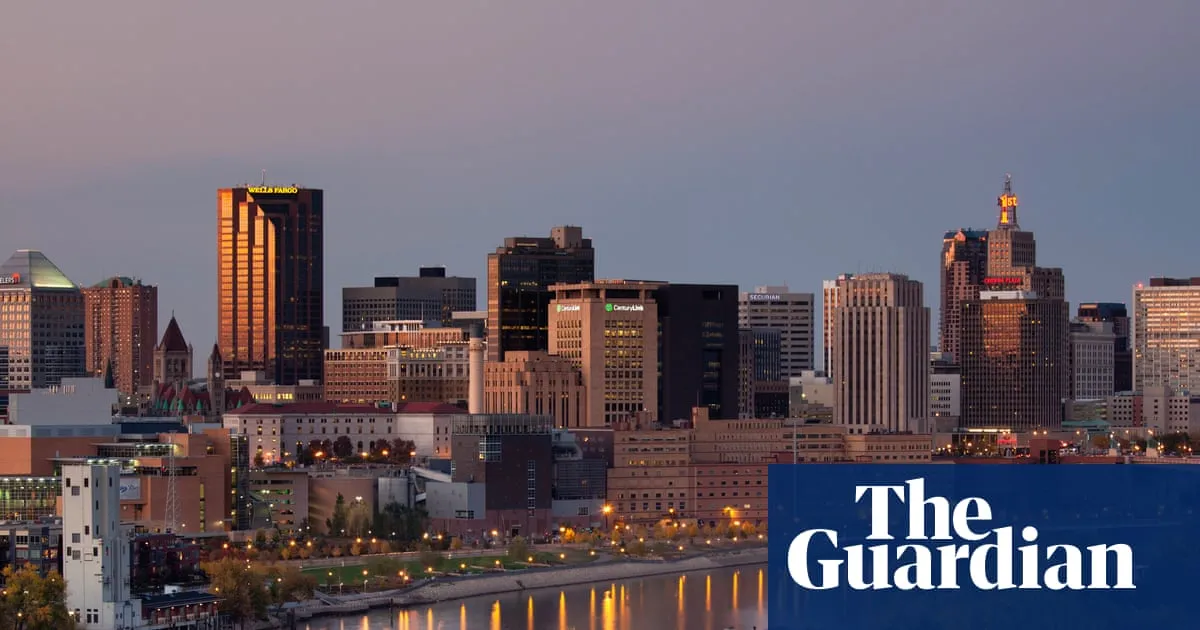
When Michelin announced that it was expanding its world-renowned restaurant guide into the Great Lakes region of the United States, including Minneapolis, one prominent city was left off the map – Saint Paul, the state capital.Despite being just 11 miles apart, the second half of Minnesota’s “Twin Cities” was absent from the highly anticipated announcement. The omission has raised concerns among food critics and locals that Saint Paul – and, more widely, smaller local restaurants in Minneapolis and elsewhere – could be left behind.The issue stuck in the craw for some as the state and the Twin Cities continue to grapple with the economic, social and political fallout from the highly disruptive immigration raids that triggered widespread protests and the killings of two Americans.The reason Minneapolis is set to be included in the Michelin Guide without Saint Paul is relatively straightforward. Like many other cities and tourism boards featured in the guide, Minneapolis paid to bring Michelin inspectors to the city. In this case, the city’s tourism improvement district (TID) agreed to a $250,000-a-year contract for three years for Michelin to review its restaurants.When asked by the Guardian why Michelin will not feature Saint Paul, Jaimee Lucke Hendrikson, CEO of Visit Saint Paul, the city’s official convention and visitors bureau, did not directly explain the exclusion. Instead, she emphasized the broader regional impact of the partnership forged by the larger of the Twin Cities.“The partnership between Minneapolis" class="entity-link entity-organization" data-entity-id="117895" data-entity-type="organization">Meet Minneapolis and Minneapolis-tourism-improvement-district" class="entity-link entity-organization" data-entity-id="117894" data-entity-type="organization">Minneapolis tourism improvement district with Michelin guide is a great opportunity. We understand that the guide’s recommendations will exclusively include restaurants within the Minneapolis TID, but we know that increased awareness and recognition in the region can benefit all of us,” she said, referring to two local entities that promote the city to visitors.Hendrikson added: “Saint Paul’s restaurant industry is unique, diverse, and stands up to the best in the country. It will be great to see this roll out and we look forward to exploring opportunities for expanding awareness of the culinary offerings in Saint Paul and the region.”Diplomatic answers aside, the decision has prompted a variety of questions and concerns locally.“When everyone outside of Minneapolis and St Paul thinks of the two cities as a pair, it’s hard not to feel it more when St Paul is specifically excluded from something that seems like it should be a win for both cities,” Karyn Tomlinson, chef and owner of Myriel, a highly acclaimed Saint Paul restaurant, said in a statement last week.Dara Moskowitz Grumdahl, a restaurant critic and staff writer at MplsStPaul Magazine, expressed dismay at the missing twin city and that the state authorities did not buy in.“The thing that was actually shocking to me, as much as [that] Saint Paul skipped it, is that the state of Minnesota didn’t use our tourism dollars … Minneapolis is the only one that decided to use some of their tourism dollars,” she said.She also pointed to significant costs associated with Michelin visits and the role public funding plays in bringing the guide to a city.“In order for Michelin to come here … they have to fly in, you have to pay for the plane ticket, then they have to spend some time in a hotel or an Airbnb … And then they have to go to … however many restaurants they’re going to evaluate. And typically, they’re going to go to restaurants that don’t make it [into the guide],” Grumdahl said, adding: “That’s standard restaurant critic behavior.”She and others critical of the situation also raised concerns about the type of restaurants a Michelin guide tends to recognize.“Michelin likes a very specific kind of restaurant, the kind of restaurant that is, largely speaking, fancy. They like tablecloths and glassware … You’re going to see 30 service pieces … the servers are going to look great … and they’re going to pour your sauce … It’s very service intensive,” she said.That emphasis, some argue, particularly risks overlooking the diversity that defines Minnesota’s food scene – a state where 24% of residents are people of color and that more than half a million immigrants call home.Kirstie Kimball, an independent Minneapolis-based restaurant critic who writes the Beyond Beurre Blanc Substack newsletter, said many of the state’s standout dining experiences fall outside Michelin’s traditional scope.“My biggest concern is, like, in Minnesota … some of our best restaurants are in malls fully dedicated to one cuisine, like Hmong Village, or the Ethiopian restaurants that are outside of the edge of town,” she said. The first reference is to a shopping center in Saint Paul that, by its own description, “is a vibrant cultural marketplace that showcases the rich traditions, foods, and businesses of the Hmong community”, reflecting the large population of Hmong people in the city and state.“Michelin doesn’t really even give a lot of their Bib Gourmands to African restaurants,” Kimball added, referring to Michelin’s rating system dedicated to restaurants that “serve exceptional food at great value”.“Somali and Ethiopian immigrants are some of our most prominent immigrant groups here and they’re not represented in the guide. What does that mean for our dining?” Kimball said, adding that she is concerned that if tourists or even locals are unfamiliar with the Twin Cities’ food scene, “they are going to sort of look at that guide and say, ‘This is the be-all and end-all of where I’m going to spend my time eating.’”Kimball also said the aftermath of Immigration and Customs Enforcement’s Operation Metro Surge descent upon the area earlier this year has been layoffs and closures across the Twin Cities, particularly among immigrant-owned establishments.“It’s really important that when guests are coming in to think about where they’re going to go and eat, that they make sure that they’re eating at a variety of cuisines, and that they’re really focusing on how they’re going to uplift restaurants that need us the most. Our taquerias on Lake Street and Central need us right now, our Ethiopian and Somali restaurants need us right now, and then also, restaurants outside of Minneapolis will really need us after this guide comes out,” she added.Tomlinson, meanwhile, hoped that consumers look beyond lines on a map and also that news of the guide could contribute to greater promotional efforts more widely.“First, community-shaping food and hospitality is never defined by city limits or by award systems … Second, it is my hope for the cities of Minneapolis and Saint Paul that we can find more ways to be stronger together moving forward, and perhaps sorting this out will be a good catalyst for that. Collaboration is key, especially at this moment in time, and that is what I will be asking of our local leaders,” she said.
SRCThe Guardian - World News
LANGEN
LEANCenter-Left
WORDS1 112
ENT10
FRI · 2026-04-17 · 12:00 GMTBRIEF NSR-2026-0417-70318
NSR-2026-0417-70318News Report·EN·Economic Impact
Why did Michelin snub St Paul in its guide to the best restaurants in the Great Lakes region?
Michelin's expansion into the Great Lakes region omitted St. Paul, Minnesota, from its restaurant guide, despite including its twin city, Minneapolis.
Maya YangThe Guardian - World NewsFiled 2026-04-17 · 12:00 GMTLean · Center-LeftRead · 5 min
The Guardian - World NewsFIG 01
Reading time
5min
Word count
1 112words
Sources cited
4cited
Entities identified
10entities
Quality score
100%
§ 01
Briefing Summary
AI-generatedNEWSAR · AI
Michelin's expansion into the Great Lakes region omitted St. Paul, Minnesota, from its restaurant guide, despite including its twin city, Minneapolis. The exclusion has sparked concern that St. Paul's restaurants, and smaller establishments generally, may be overlooked. Minneapolis secured Michelin's review through a $250,000-a-year contract for three years, paid for by the city’s tourism improvement district. St. Paul's tourism bureau acknowledged the omission but emphasized the potential regional benefits of Minneapolis's inclusion. The decision has raised questions about fairness and the potential impact on St. Paul's culinary scene, as the two cities are often viewed as a pair.
Confidence 0.90Sources 4Claims 5Entities 10
§ 02
Article analysis
Model · rule-basedFraming
Economic Impact
Political Strategy
Tone
Measured
AI-assessed
CalmNeutralAlarmist
Factuality
0.70 / 1.00
Factual
LowHigh
Sources cited
4
Well sourced
FewMany
§ 03
Key claims
5 extracted01
It’s hard not to feel it more when St Paul is specifically excluded from something that seems like it should be a win for both cities.
quoteKaryn Tomlinson, chef and owner of Myriel
Confidence
1.00
02
The partnership between Meet Minneapolis and the Minneapolis tourism improvement district with Michelin guide is a great opportunity.
quoteJaimee Lucke Hendrikson, CEO of Visit Saint Paul
Confidence
1.00
03
Minneapolis paid $250,000 a year for three years to have Michelin review its restaurants.
factual
Confidence
1.00
04
Saint Paul was excluded from the Michelin Guide announcement.
factual
Confidence
1.00
05
Michelin is expanding its restaurant guide into the Great Lakes region, including Minneapolis.
factual
Confidence
1.00
§ 04
Full report
5 min read · 1 112 words§ 05
Entities
10 identifiedKey playerOppositionContextPositiveNeutralNegative
Organizations4
§ 06
Keywords & salience
8 termsmichelin guide
1.00
st paul
0.90
minneapolis
0.80
restaurant guide
0.70
twin cities
0.60
restaurant industry
0.50
tourism
0.50
economic impact
0.40
§ 07
Topic connections
Interactive graph No topic relationship data available yet. This graph will appear once topic relationships have been computed.