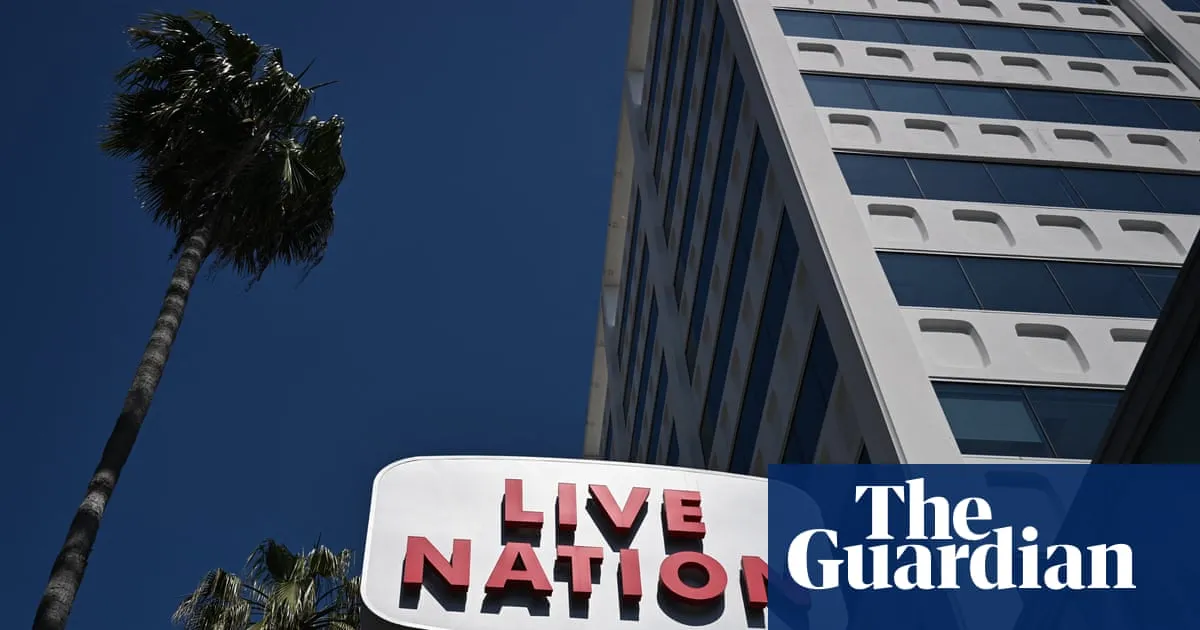
A New York jury has found Live Nation and its subsidiary Ticketmaster liable for systematically stifling competition to extract excessive profits from concertgoers. Photograph: Patrick T Fallon/AFP/Getty Images View image in fullscreen A New York jury has found Live Nation and its subsidiary Ticketmaster liable for systematically stifling competition to extract excessive profits from concertgoers. Photograph: Patrick T Fallon/AFP/Getty Images US Live Nation and Ticketmaster verdict triggers calls for Australian investigation into ticketing rules One insider estimates Australians pay A$10 in fees per ticket, with fans bearing the burden of monopolised music tour schedules and inflated artist values Get our breaking news email, free app or daily news podcast Australia is being urged to improve ticketing transparency after a US federal court found Live Nation Entertainment had a harmful monopoly over big concert venues. This week, a New York jury found the global entertainment giant and its subsidiary Ticketmaster liable for systematically stifling competition to extract excessive profits from concertgoers. The jury identified a baseline overcharge of US$1.72 for every ticket sold by Live Nation since 2010 – totalling an additional US$595m in 2025 alone. Independent promoter Paul Sloan of Australia" class="entity-link entity-organization" data-entity-id="119020" data-entity-type="organization">Billions Australia told Guardian Australia he believed the overcharge figure levied on each Australian ticket could be much higher. “I would say that the raft of ticketing charges that make up ticketing fees in exclusive ticketing contracts … in Australia [is] closer to A$10 per ticket of costs that do not in any way relate to any service or benefit offered,” he said. The US verdict has triggered renewed calls in Australia for the Australian Competition and Consumer Commission (ACCC) to intervene – and for the federal government to act on the recommendations of a major parliamentary inquiry handed down more than a year ago. The March 2025 report, Am I Ever Gonna See You Live Again?, recommended the government authorise the ACCC to monitor the Australian music industry for anti-competitive conduct and take enforcement action as required. It also recommended Australian Consumer Law be amended to improve the transparency of ticket fees and charges and limit price variability. The Media, Entertainment & Arts Alliance (MEAA) said the US verdict showed the Australian government and its agencies needed to act on repeated calls to launch a similar investigation. “[The monopoly] puts musicians and crew in an invidious position, with less and less power, and they’re already suffering low pay and insecure work,” said MEAA’s campaign director, Paul Davies. “We’re once more calling for the government and its agencies to look into the extreme concentrated market power in Australia.” Brian Chladil, the founder of independent ticketing agency Oztix, said the US findings confirmed the worst fears of the local industry. “If they were doing it there, I can’t see why it wouldn’t be happening here,” Chladil said, adding that the verdict proved Live Nation’s vertically integrated business model – where one company owns the promoter, the venue and the ticketing platform – led to a monopolistic lack of competition. The US case now moves into its remedy phase, with the presiding judge to decide whether Live Nation should be forced to divest Ticketmaster. Such a corporate divorce could hold significant implications in Australia. “If the company was forced to split up, I would expect business operations here would have to follow,” Chladil said. “That would mean independent ticketers would finally have access to previously locked-up markets.” Unsealed internal messages provided a damaging insight into the company’s operations during the antitrust lawsuit filed by the US Department of Justice and 40 co-plaintiff states in mid-2024. In Slack messages revealed during the trial, senior ticketing executives mocked fans as being “so stupid” for paying inflated fees, with one director boasting: “Robbing them blind, baby. That’s how we do.” The executive, Benjamin Baker, apologetically testified that the messages were “very immature and unacceptable”. Longtime Australian artist manager Paul Curtis said the messages exposed a corporate culture that viewed music merely as “another product to sell” and treated fans as cash cows. Live Nation’s dominance in the Australian market allowed it to inflate artist values, monopolise touring schedules and leverage control over venues and ticketing outlets, he said. “And the fan bears the burden of that because the artificial value is met with an escalation in the ticket price,” he said. The Greens’ arts spokesperson, Senator Sarah Hanson-Young, said too much market power was held by a monopoly of corporations. “If a jury in the United States can take on giants like Live Nation and Ticketmaster, there’s no excuse for Australia to sit on its hands,” she said. “We’re already seeing the consequences here at home: local venues forced to close, festivals collapsing, homegrown artists struggling to break through, and fans priced out of the gigs they love. Without action, we risk losing the diversity and vibrancy that define our live music scene. “The Australian Government needs to act, with fairer ticketing rules, stronger competition laws, and real support for artists and venues.” Curtis said the US verdict also placed fresh pressure on Australian governments to explain their financial support for the multinational. An investigation by Guardian Australia in 2024 found that Live Nation and one of its Australian subsidiaries, Secret Sounds, had received more than $16m in taxpayer grants since 2020 – subsidies granted while Live Nation chalked up record-breaking revenues of US$22.7bn in 2023. Live Nation Australia and the federal arts minister, Tony Burke, did not respond to requests for comment. In its defence in the New York district court, Live Nation said the company was not a monopoly and that artists, sports teams and venues decided prices and ticketing practices. A company lawyer insisted its size was simply a function of excellence and effort. Live Nation said it planned to appeal against the ruling. The Albanese government is moving to tighten regulations, introducing the Competition and Consumer amendment (unfair trading practices) bill 2026 to parliament earlier this month. A spokesperson for the ACCC said the regulator did not comment on potential investigations. “It is not illegal for a business to operate in a number of markets across a supply chain,” they said. “Businesses may supply goods or services on the condition that the purchaser buys another good or service from the supplier. These arrangements raise concerns under competition law if they have the purpose, effect or likely effect of substantially lessening competition. “Whether or not conduct is likely to substantially lessen competition in Australia requires an assessment of circumstances and conditions within a particular market. Conduct that interferes with or damages competition in one market may not have that same impact if it were to occur in a different market.” Explore more on these topics Consumer affairs Music festivals Festivals Business Ticketmaster news Share Reuse this content
SRCThe Guardian - World News
LANGEN
LEANCenter-Left
WORDS1 125
ENT8
FRI · 2026-04-17 · 15:00 GMTBRIEF NSR-2026-0417-70350
NSR-2026-0417-70350News Report·EN·Economic Impact
US Live Nation and Ticketmaster verdict triggers calls for Australian investigation into ticketing rules
A US court found Live Nation and Ticketmaster liable for monopolistic practices, leading to calls for an Australian investigation into ticketing rules. The New York jury determined the companies stifled competition, resulting in excessive profits from concertgoers since 2010.
Kelly BurkeThe Guardian - World NewsFiled 2026-04-17 · 15:00 GMTLean · Center-LeftRead · 5 min
The Guardian - World NewsFIG 01
Reading time
5min
Word count
1 125words
Sources cited
5cited
Entities identified
8entities
Quality score
100%
§ 01
Briefing Summary
AI-generatedNEWSAR · AI
A US court found Live Nation and Ticketmaster liable for monopolistic practices, leading to calls for an Australian investigation into ticketing rules. The New York jury determined the companies stifled competition, resulting in excessive profits from concertgoers since 2010. An independent promoter estimates Australians pay around A$10 in unnecessary fees per ticket. This verdict has renewed pressure on the Australian Competition and Consumer Commission (ACCC) to intervene and for the government to act on recommendations from a March 2025 parliamentary inquiry. The inquiry suggested monitoring the music industry for anti-competitive conduct and improving ticket fee transparency. The Media, Entertainment & Arts Alliance (MEAA) believes the US outcome highlights the need for a similar investigation in Australia.
Confidence 0.90Sources 5Claims 5Entities 8
§ 02
Article analysis
Model · rule-basedFraming
Economic Impact
Legal & Judicial
Tone
Measured
AI-assessed
CalmNeutralAlarmist
Factuality
0.70 / 1.00
Factual
LowHigh
Sources cited
5
Well sourced
FewMany
§ 03
Key claims
5 extracted01
The March 2025 report recommended the ACCC monitor the Australian music industry for anti-competitive conduct.
factualAm I Ever Gonna See You Live Again? report
Confidence
1.00
02
The jury identified a baseline overcharge of US$1.72 for every ticket sold by Live Nation since 2010.
factualNew York Jury
Confidence
1.00
03
A New York jury found Live Nation and Ticketmaster liable for stifling competition and extracting excessive profits.
factualGuardian Australia
Confidence
1.00
04
The US verdict showed the Australian government and its agencies needed to act on calls to launch a similar investigation.
quoteMEAA
Confidence
0.90
05
The overcharge figure levied on each Australian ticket could be closer to A$10 per ticket.
quotePaul Sloan, Billions Australia
Confidence
0.80
§ 04
Full report
5 min read · 1 125 words§ 05
Entities
8 identifiedKey playerOppositionContextPositiveNeutralNegative
People1
Organizations5
§ 06
Keywords & salience
10 termsticketmaster
1.00
live nation
1.00
ticketing rules
0.90
monopoly
0.80
competition
0.70
australian investigation
0.60
concertgoers
0.60
accc
0.50
ticket fees
0.50
music industry
0.40
§ 07
Topic connections
Interactive graph No topic relationship data available yet. This graph will appear once topic relationships have been computed.