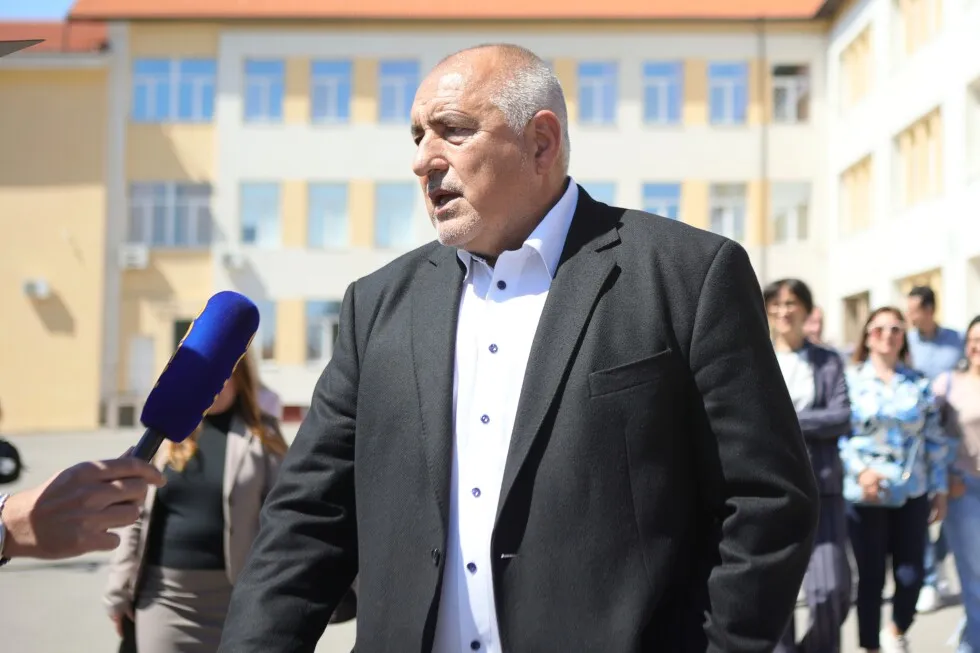
A man casts his ballot during an early election at a polling station in Sofia on Sunday, April 19, 2026. (AP Photo/Valentina Petrova) 2026-04-19T04:00:44Z Sofia, Bulgaria (AP) — Bulgarians are heading to the polls on Sunday for the eighth time in five years, hoping to finally elect a parliament able to resolve the longtime political impasse that has gripped this Balkan country . The snap vote follows the resignation of a conservative-led government amid nationwide protests last December that drew hundreds of thousands, mainly young people, to the streets. The protesters called for an independent judiciary to tackle widespread corruption. Since 2021, the nation of 6.5 million has struggled with fragmented parliaments that produced weak governments, none of which managed to survive more than a year before being brought down by street protests or backroom deals in parliament. The revolving door of governments has fostered widespread public mistrust, voter apathy and a shrinking turnout in elections. Still, Sunday’s vote is significant as it could bring to power a left-leaning, pro-Russian former president — just days after Hungarian voters rejected the authoritarian policies and global far-right movement of Viktor Orbán, who cultivated close ties with Russian President Vladimir Putin . The front-runner, Bulgaria’s former President Rumen Radev , is leading a newly formed, center-left Bulgaria" class="entity-link entity-organization" data-entity-id="118564" data-entity-type="organization">Progressive Bulgaria coalition. He resigned from the mostly ceremonial presidency in January , a few months before the end of his second term, to launch a bid to lead the government as prime minister. (
SRCAssociated Press (AP)
LANGEN
LEANCenter
WORDS248
ENT7
SUN · 2026-04-19 · 12:53 GMTBRIEF NSR-2026-0419-70741
NSR-2026-0419-70741News Report·EN·Political Strategy
Bulgarians head to the polls to elect a parliament for the eighth time in 5 years
Bulgarians are voting in their eighth parliamentary election in five years on Sunday, April 19, 2026, in hopes of resolving a prolonged political crisis. The snap election was triggered by the resignation of the previous government following widespread protests against corruption.
Associated Press (AP)Filed 2026-04-19 · 12:53 GMTLean · CenterRead · 1 min
Associated Press (AP)FIG 01
Reading time
1min
Word count
248words
Sources cited
0cited
Entities identified
7entities
Quality score
100%
§ 01
Briefing Summary
AI-generatedNEWSAR · AI
Bulgarians are voting in their eighth parliamentary election in five years on Sunday, April 19, 2026, in hopes of resolving a prolonged political crisis. The snap election was triggered by the resignation of the previous government following widespread protests against corruption. Since 2021, Bulgaria has experienced political instability with fragmented parliaments and short-lived governments, leading to public mistrust and voter apathy. A potential outcome of this election is the rise of a left-leaning, pro-Russian former president, Rumen Radev, who is leading the Progressive Bulgaria coalition and seeking the position of prime minister after resigning from his presidential role. This election is happening shortly after Hungarian voters rejected Viktor Orbán's policies.
Confidence 0.90Claims 5Entities 7
§ 02
Article analysis
Model · rule-basedFraming
Political Strategy
Conflict
Tone
Measured
AI-assessed
CalmNeutralAlarmist
Factuality
0.80 / 1.00
Factual
LowHigh
Sources cited
0
No named sources
FewMany
§ 03
Key claims
5 extracted01
He resigned from the mostly ceremonial presidency in January to launch a bid to lead the government as prime minister.
factualAP
Confidence
1.00
02
The front-runner, Bulgaria’s former President Rumen Radev , is leading a newly formed, center-left Progressive Bulgaria coalition.
factualAP
Confidence
1.00
03
Since 2021, the nation has struggled with fragmented parliaments that produced weak governments.
factualAP
Confidence
1.00
04
The snap vote follows the resignation of a conservative-led government amid nationwide protests last December.
factualAP
Confidence
1.00
05
Bulgarians are heading to the polls for the eighth time in five years.
factualAP
Confidence
1.00
§ 04
Full report
1 min read · 248 words§ 05
Entities
7 identifiedKey playerOppositionContextPositiveNeutralNegative
People3
Organizations1
§ 06
Keywords & salience
10 termsbulgaria
0.90
elections
0.80
political impasse
0.70
parliament
0.70
government resignation
0.60
protests
0.60
voter apathy
0.50
rumen radev
0.50
corruption
0.50
political instability
0.40
§ 07
Topic connections
Interactive graph Network visualization showing 25 related topics
View Full Graph Person Organization Location Event|Click node to navigate|Edge numbers = shared articles