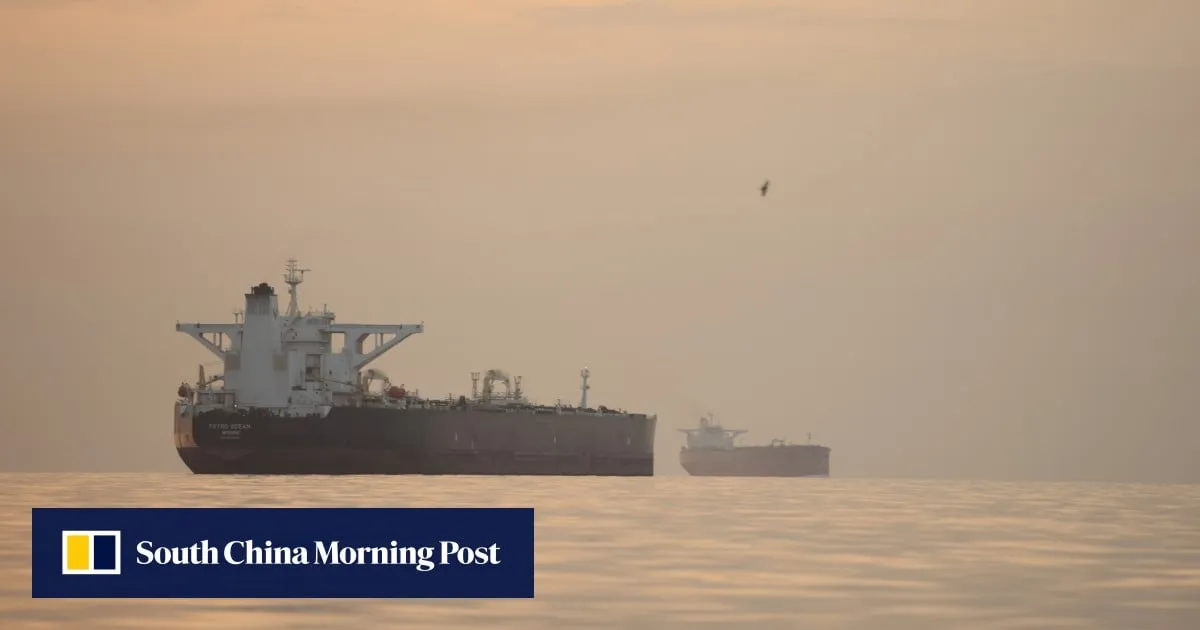
With global attention fixed on the US and Iranian shipping blockades in the Strait of Hormuz and how many vessels have traversed the critically important waterway, a leading Chinese investment bank has been calculating the long-term gains and losses and how they could rewrite the global economic order.The United States was on the horns of a dilemma over the strait that might herald an acceleration of Washington’s strategic retreat and its increasingly transactional relationships with other powers, Beijing-headquartered Citic Securities said in a report.Comparing the situation to the “Suez moment” in the 1950s – when Britain lost control of the Suez Canal along with its global superpower status – Citic Securities analysts wrote on Saturday that a similarly consequential “Hormuz moment” could be a watershed for America’s global supremacy.“The Suez moment marked the United Kingdom’s relinquishing of global power,” they said in the report published on Saturday, adding that the US was now “wedged” in the Strait of Hormuz, facing a challenge to its control of the waterway “and in search of a way out or forward”.
SRCSouth China Morning Post
LANGEN
LEANCenter-Right
WORDS177
ENT7
MON · 2026-04-20 · 14:00 GMTBRIEF NSR-2026-0420-70995
NSR-2026-0420-70995Analysis·EN·Economic Impact
‘Hormuz moment’ could herald decline of US dominance: Citic Securities analysts
A leading Chinese investment bank, Citic Securities, has published a report suggesting that the current US and Iranian shipping blockade in the Strait of Hormuz could mark a significant shift in global economic power dynamics. The situation is being compared to the "Suez moment" in 1950s, when Britain lost control of the Suez Canal and its global superpower status.
Frank ChenSouth China Morning PostFiled 2026-04-20 · 14:00 GMTLean · Center-RightRead · 1 min
South China Morning PostFIG 01
Reading time
1min
Word count
177words
Sources cited
1cited
Entities identified
7entities
Quality score
100%
§ 01
Briefing Summary
AI-generatedNEWSAR · AI
A leading Chinese investment bank, Citic Securities, has published a report suggesting that the current US and Iranian shipping blockade in the Strait of Hormuz could mark a significant shift in global economic power dynamics. The situation is being compared to the "Suez moment" in 1950s, when Britain lost control of the Suez Canal and its global superpower status. Citic Securities analysts believe that a similar "Hormuz moment" could be underway, with the US facing challenges to its control of the Strait of Hormuz. The report notes that the US is now "wedged" in the waterway, seeking a way out or forward. This could potentially herald an acceleration of Washington's strategic retreat and more transactional relationships with other powers. The implications for global economic order are being closely watched by analysts.
Confidence 0.90Sources 1Claims 3Entities 7
§ 02
Article analysis
Model · rule-basedFraming
Economic Impact
Tone
Measured
AI-assessed
CalmNeutralAlarmist
Factuality
0.80 / 1.00
Factual
LowHigh
Sources cited
1
Limited
FewMany
§ 03
Key claims
3 extracted01
the Suez moment marked the United Kingdom’s relinquishing of global power
quoteCitic Securities analysts
Confidence
1.00
02
a similarly consequential 'Hormuz moment' could be a watershed for America's global supremacy
predictionCitic Securities analysts
Confidence
1.00
03
the US was on the horns of a dilemma over the strait that might herald an acceleration of Washington’s strategic retreat
factual
Confidence
0.80
§ 04
Full report
1 min read · 177 words§ 05
Entities
7 identifiedKey playerOppositionContextPositiveNeutralNegative
Organizations1
§ 06
Keywords & salience
8 termsstrait of hormuz
1.00
us dominance
0.90
suez moment
0.80
global economic order
0.70
strategic retreat
0.60
global power
0.50
citic securities
0.50
shipping blockades
0.40
§ 07
Topic connections
Interactive graph Network visualization showing 51 related topics
View Full Graph Person Organization Location Event|Click node to navigate|Edge numbers = shared articles