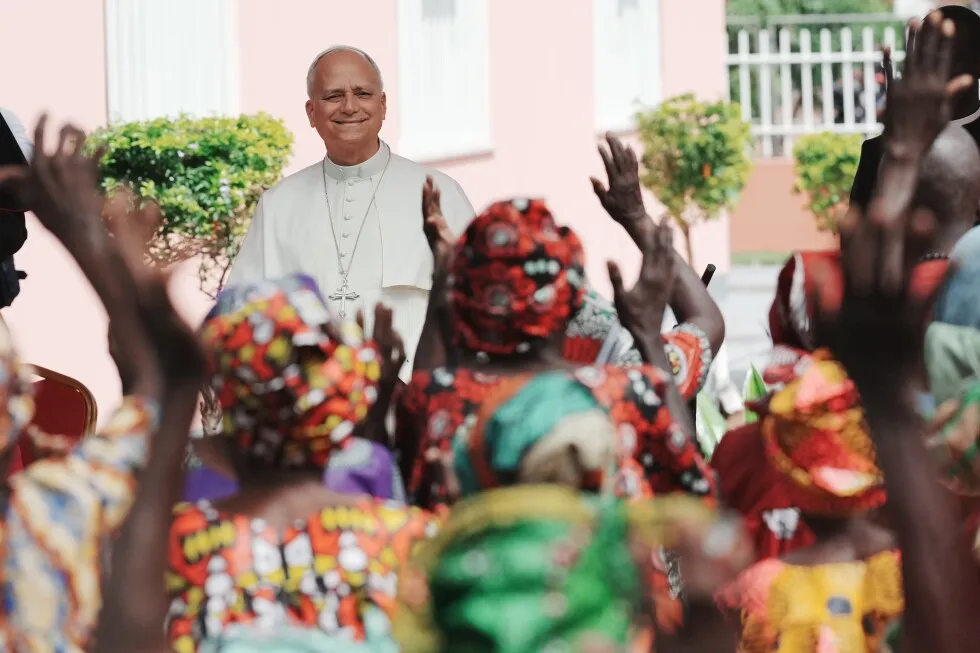
Pope Leo XIV is cheered by faithful on the occasion of his visit to a nursing home, in Saurimo, Angola, Monday, April 20, 2026. (AP Photo/Andrew Medichini) 2026-04-20T12:41:18Z LUANDA, Angola (AP) — And in Africa, the lion roared. There is a case to be made that Pope Leo XIV, the careful, reserved, Midwestern Augustinian, found his voice on his epic trip through Africa, blasting the “handful of tyrants” and “chains of corruption” that have held parts of the continent hostage for centuries. But the fact is, Leo has been preaching this kind of message for a while now, including in the context of the U.S.-Israeli war in Iran. It just took U.S. President Donald Trump’s unprecedented broadside and Vice President JD Vance’s claims of theological superiority for many people to pay attention, especially American Catholics. “Yes, Pope Leo might give the impression that he is engaging, in his quiet way and with authority, and this is how it looks to the world press and social media,” Cardinal Michael Czerny, a top Vatican official and aide to Leo, told The Associated Press. “But in fact the Holy Father’s homilies and talks in Africa have been prepared, well in advance, in terms of the local African reality and the church,” Czerny said. “So, if they seem relevant to the current wars, controversy, this reminds us of Jesus saying, ‘Whoever has ears to hear, let them hear!’” Leo tried to make that point when he came to the back of Air Pope One on April 18, en route from Cameroon to Angola, and complained that “a certain narrative” had taken hold suggesting he was in a feud with Trump over the Iran war and his peace messages in Africa were directed at the president. Leo insisted his words about tyrants and the religious justification for war had been wrongly interpreted and he was referring only to the African context, and to a separatist conflict in western Cameroon, in particular. (
SRCAssociated Press (AP)
LANGEN
LEANCenter
WORDS327
ENT10
MON · 2026-04-20 · 16:53 GMTBRIEF NSR-2026-0420-71018
NSR-2026-0420-71018News Report·EN·Political Strategy
Did Pope Leo find his voice in Africa? Or did the world finally hear him?
Pope Leo XIV's recent trip to Africa has drawn attention to his strong criticisms of tyranny and corruption. While some observers believe the Pope found his voice during this trip, Vatican officials state that these messages are consistent with his previous statements, including those related to the U.S.-Israeli war in Iran.
Associated Press (AP)Filed 2026-04-20 · 16:53 GMTLean · CenterRead · 2 min
Associated Press (AP)FIG 01
Reading time
2min
Word count
327words
Sources cited
2cited
Entities identified
10entities
Quality score
75%
§ 01
Briefing Summary
AI-generatedNEWSAR · AI
Pope Leo XIV's recent trip to Africa has drawn attention to his strong criticisms of tyranny and corruption. While some observers believe the Pope found his voice during this trip, Vatican officials state that these messages are consistent with his previous statements, including those related to the U.S.-Israeli war in Iran. The increased attention stems from recent remarks by U.S. President Donald Trump and Vice President JD Vance, which prompted renewed interest in the Pope's views, particularly among American Catholics. Pope Leo XIV clarified that his comments were specifically directed at the African context, particularly a separatist conflict in Cameroon, and not intended as a direct response to the U.S. political climate. His aide, Cardinal Czerny, emphasized that the Pope's speeches were prepared in advance and tailored to the local realities of Africa.
Confidence 0.90Sources 2Claims 4Entities 10
§ 02
Article analysis
Model · rule-basedFraming
Political Strategy
Diplomatic
Tone
Measured
AI-assessed
CalmNeutralAlarmist
Factuality
0.70 / 1.00
Factual
LowHigh
Sources cited
2
Limited
FewMany
§ 03
Key claims
4 extracted01
Pope Leo said he was referring only to the African context, and to a separatist conflict in western Cameroon, in particular.
quotePope Leo XIV
Confidence
1.00
02
Pope Leo insisted his words about tyrants and the religious justification for war had been wrongly interpreted.
quotePope Leo XIV
Confidence
1.00
03
Cardinal Michael Czerny said Pope Leo's homilies and talks in Africa were prepared well in advance, in terms of the local African reality and the church.
quoteCardinal Michael Czerny
Confidence
1.00
04
Pope Leo XIV blasted the “handful of tyrants” and “chains of corruption” that have held parts of the continent hostage for centuries during his trip to Africa.
factualAP
Confidence
0.90
§ 04
Full report
2 min read · 327 words§ 05
Entities
10 identifiedKey playerOppositionContextPositiveNeutralNegative
People4
Organizations1