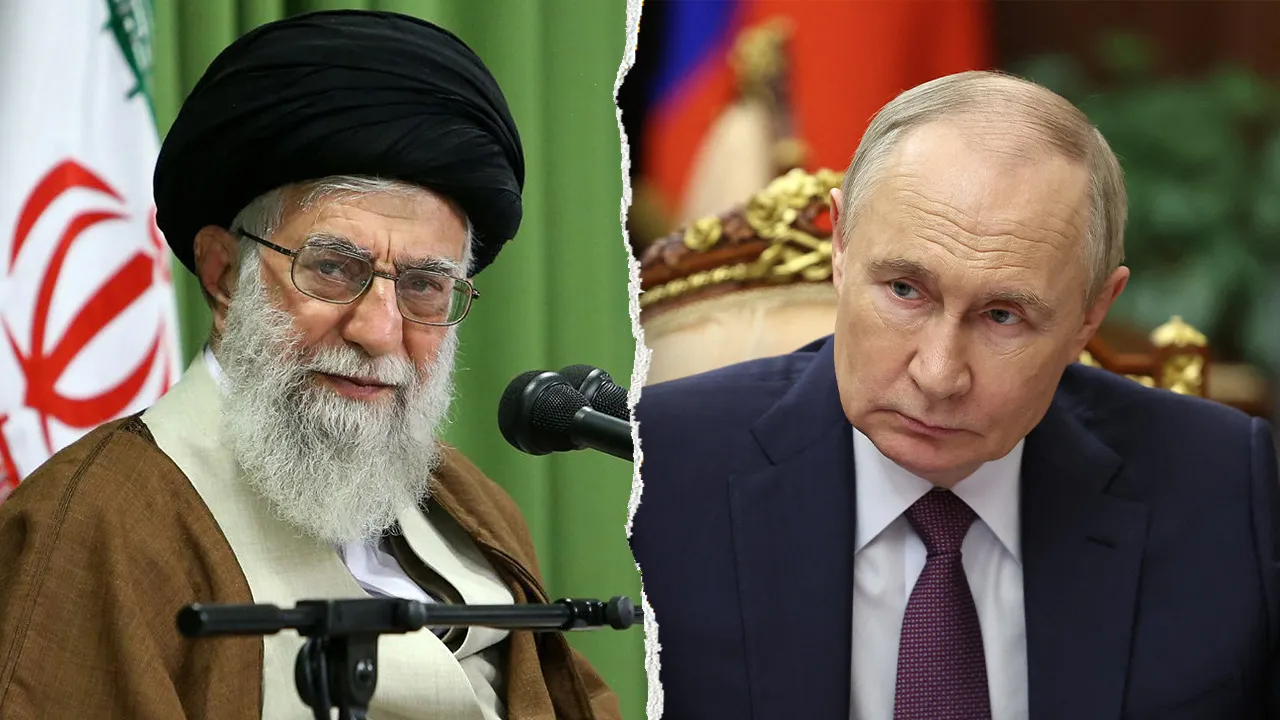
As Iran faces escalating nationwide protests and rising verbal threats from the Trump administration, Iran’s Supreme Leader Ayatollah Ali Khamenei delivered a pointed warning to the United States this week from an unusual platform — his Russian-language account on X — a move analysts say underscores Tehran’s alignment with Moscow as pressure mounts on the regime. In a post dated Jan. 11, Khamenei wrote in Russian, "The United States today is miscalculating in its approach toward Iran." Hours later, he followed with a second message, also in Russian, warning that Americans had suffered defeat before because of "miscalculations" and would do so again because of "erroneous planning." Ksenia Svetlova, executive director of the Regional Organization for Peace, Economy and Security (ROPES) and an associate fellow at Chatham House, said the language choice was telling, even if the execution was clumsy. PROTESTS SPREAD ACROSS Iran AS REGIME THREATENS US FORCES AS 'LEGITIMATE TARGETS' AFTER TRUMP WARNING "This is bad Russian," Svetlova told Fox News Digital. "It seems that it’s translated by Google Translate, not by a human being." Still, she said the use of Khamenei’s Russian-language account was no surprise given how closely Iran and Russia have aligned in recent years. Khamenei’s warning came as Iran’s internal crisis continued to deepen. According to HRANA, a human rights organization tracking the unrest, at least 544 people have been killed in nationwide protests, with dozens of additional cases still under review. Opposition group NCRI has claimed the death toll is far higher — more than 3,000 — though exact figures remain difficult to verify amid widespread internet blackouts imposed by Iranian authorities. President Donald Trump has led U.S. criticism in response to the rising death toll. In response to a question about whether Iran had crossed a red line, Trump responded by saying, "They're starting to, it looks like. And they seem to be some people killed that aren't supposed to be killed. These are violent. If you call them leaders, I don't know if they're leaders, or just they rule through violence. But we're looking at it very seriously," he said on Sunday aboard Air Force One. IRANIAN PRESIDENT SAYS HIS COUNTRY IS AT 'TOTAL WAR' WITH THE US, ISRAEL AND EUROPE: REPORTS "We’re looking at some very strong options," he added. Iranian leaders have pushed back, accusing Washington of interference and warning that any U.S. military action would trigger retaliation against American forces and allies in the region. At the same time, Tehran has signaled it wants to keep diplomatic back channels open. Iranian Foreign Ministry spokesman Esmaeil Baghaei said Monday that communication between Foreign Minister Abbas Araghchi and U.S. special envoy Steve Witkoff remains active. Axios separately reported that Araghchi reached out to Witkoff over the weekend amid Trump’s warnings of possible military action. IRANIAN MILITARY LEADER THREATENS PREEMPTIVE ATTACK AFTER TRUMP COMMENTS Despite those overtures, analysts say Khamenei’s Russian-language message reflects where Iran sees its most reliable strategic partner. Russia has become a critical lifeline for Tehran , particularly as Moscow relies on Iranian-supplied drones and other military equipment for its war in Ukraine. That dependence, Svetlova said, means Iran’s internal instability could carry serious consequences for the Kremlin. "I think that could be a dramatic effect, because they do depend on Iran — specifically military production, the drones and ballistic missiles," she said. "They need them to continue their war against Ukraine ." Yet the partnership has also fueled resentment inside Iran. Svetlova pointed to criticism following the 12-day war with Israel, when many Iranians accused Moscow of failing to come to Tehran’s aid. "There was a lot of criticism in Iran against Russia that it did not come to help," she said. "It didn’t reach out. It didn’t do anything, basically." Still, she said Russia has few alternatives as its global position narrows. With longtime allies weakened or toppled, such as Bashar al-Assad in Syria and Nicolás Maduro in Venezuela, Moscow is increasingly reliant on Tehran — even as it remains largely silent about the protests rocking Iran. Against that backdrop, Svetlova explained, Khamenei’s warning in Russian appears like a signal — to Washington and to Moscow — that Iran sees its confrontation with the United States as part of a shared front with President Vladimir Putin .
SRCFox News - World
LANGEN
LEANCenter-Right
WORDS711
ENT12
MON · 2026-01-12 · 17:35 GMTBRIEF NSR-2026-0112-7109
NSR-2026-0112-7109News Report·EN·National Security
Iran's Khamenei issues direct warning to United States in Russian-language posts
Amid escalating protests and rising tensions with the U.S., Iran's Supreme Leader Ayatollah Ali Khamenei issued a warning to the United States via his Russian-language account on X on January 11th. Khamenei stated that the U.S.
Efrat LachterFox News - WorldFiled 2026-01-12 · 17:35 GMTLean · Center-RightRead · 3 min
Fox News - WorldFIG 01
Reading time
3min
Word count
711words
Sources cited
4cited
Entities identified
12entities
Quality score
100%
§ 01
Briefing Summary
AI-generatedNEWSAR · AI
Amid escalating protests and rising tensions with the U.S., Iran's Supreme Leader Ayatollah Ali Khamenei issued a warning to the United States via his Russian-language account on X on January 11th. Khamenei stated that the U.S. is miscalculating its approach toward Iran and will face defeat due to "erroneous planning." Analysts suggest this unusual platform underscores Iran's alignment with Russia as internal pressure mounts. The warning comes as protests within Iran have resulted in hundreds of deaths, according to human rights organizations, while the U.S., led by President Trump, has criticized Iran's response to the unrest and threatened strong action. Iranian leaders have accused the U.S. of interference and warned of retaliation against any U.S. military action.
Confidence 0.90Sources 4Claims 5Entities 12
§ 02
Article analysis
Model · rule-basedFraming
National Security
Political Strategy
Tone
Mixed Tone
AI-assessed
CalmNeutralAlarmist
Factuality
0.70 / 1.00
Factual
LowHigh
Sources cited
4
Well sourced
FewMany
§ 03
Key claims
5 extracted01
Trump said the U.S. is looking at some very strong options regarding Iran.
quoteDonald Trump
Confidence
1.00
02
Khamenei issued a warning to the U.S. on his Russian-language X account.
factualArticle
Confidence
1.00
03
Communication between Iranian and U.S. officials remains active.
factualEsmaeil Baghaei
Confidence
0.90
04
At least 544 people have been killed in nationwide protests in Iran.
statisticHRANA
Confidence
0.80
05
Opposition group NCRI has claimed the death toll is more than 3,000.
statisticNCRI
Confidence
0.60
§ 04
Full report
3 min read · 711 words§ 05
Entities
12 identifiedKey playerOppositionContext
I
Iran location · Key Player
95
AA
Ayatollah Ali Khamenei person · Key Player
90
US
United States location · Opposition
90
DT
Donald Trump person · Opposition
75
R
Russia location
70
M
Moscow location
60
H
HRANA organization
50
KS
Ksenia Svetlova person
50
NC
National Council of Resistance of Iran (NCRI) organization
50
CH
Chatham House organization
40
RO
Regional Organization for Peace, Economy and Security (ROPES) organization
40
FN
Fox News Digital organization
30
§ 06
Keywords & salience
10 termsiran
1.00
khamenei
0.90
united states
0.90
protests
0.80
warning
0.70
russian-language
0.70
trump
0.60
miscalculation
0.60
iran-russia relations
0.60
internal crisis
0.50
§ 07
Topic connections
Interactive graph Network visualization showing 51 related topics
View Full Graph Person Organization Location Event|Click node to navigate|Edge numbers = shared articles