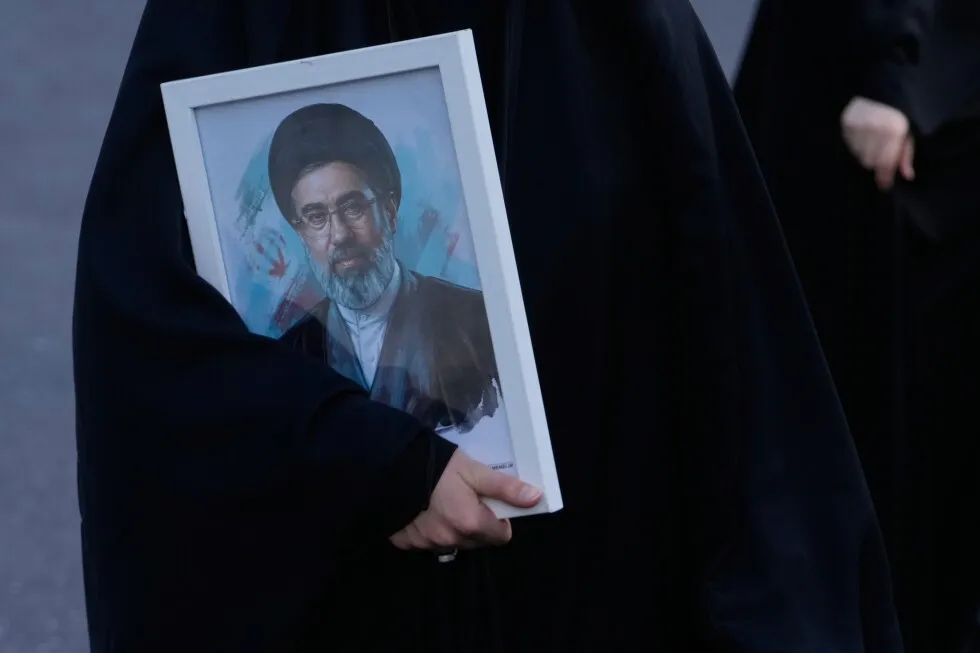
A woman holds a picture of the Iranian Supreme Leader Ayatollah Mojtaba Khamenei in a memorial for school children who were killed during a strike on a school in southern town of Minab on Feb. 28, in downtown Tehran, Iran, Tuesday, April 7, 2026. (AP Photo/Vahid Salemi, File) 2026-04-21T13:30:56Z CAIRO (AP) — After U.S.-Israeli bombardment eliminated Iran’s supreme leader and much of its top echelons, the Islamic Republic’s leadership didn’t fall apart — but negotiations to end the war offer a new test. For decades, the supreme leader successfully managed several powerful factions, bringing to heel those who challenged his authority while listening to rival opinions. It’s now unclear who wields that kind of authority over the collection of civilian figures and powerful generals from the paramilitary Revolutionary Guard who appear to be in charge. They have found unity — for now — by taking a tough line. But disagreements over how much to concede in negotiations with the United States could reveal fault lines, as Pakistani mediators try to host a new round of talks this week. A committee now appears to be in charge In the past, Supreme Leader Ayatollah Ali Khamenei was able to impose his will on the Islamic Republic’s disparate power centers. After Israeli strikes killed him on the first day of the war , his son Ayatollah Mojtaba Khamenei succeeded him. But doubts continue to swirl over the younger Khamenei’s role after reports he was wounded in the strikes. Still in hiding, he has not appeared in public since becoming supreme leader and how he gives orders to top leaders is a mystery. At the center of power now is a politburo-like body known as the Supreme National Security Council, which includes Iran’s top civilian and military officials. Mohammad Bagher Qalibaf, the parliament speaker and a veteran insider with strong contacts on all sides, has emerged as its face and the chief negotiator with the U.S. The late Khamenei began giving more authority to the council before his death, but the war has consolidated its power. (
SRCAssociated Press (AP)
LANGEN
LEANCenter
WORDS343
ENT6
TUE · 2026-04-21 · 15:53 GMTBRIEF NSR-2026-0421-71283
NSR-2026-0421-71283News Report·EN·Political Strategy
Iran’s leadership survived US-Israeli bombardment. But talks to end the war present a new challenge
Following a U.S.-Israeli bombardment that killed Iran's Supreme Leader and other top officials, the country's leadership has not collapsed, but faces challenges in upcoming negotiations to end the war. The Supreme National Security Council, a politburo-like body, now appears to be in charge, led by parliament speaker Mohammad Bagher Qalibaf.
Associated Press (AP)Filed 2026-04-21 · 15:53 GMTLean · CenterRead · 2 min
Associated Press (AP)FIG 01
Reading time
2min
Word count
343words
Sources cited
0cited
Entities identified
6entities
Quality score
100%
§ 01
Briefing Summary
AI-generatedNEWSAR · AI
Following a U.S.-Israeli bombardment that killed Iran's Supreme Leader and other top officials, the country's leadership has not collapsed, but faces challenges in upcoming negotiations to end the war. The Supreme National Security Council, a politburo-like body, now appears to be in charge, led by parliament speaker Mohammad Bagher Qalibaf. The council includes top civilian and military officials. While they currently present a united front, disagreements over concessions in negotiations with the United States could expose internal divisions. Pakistani mediators are attempting to host a new round of talks this week. The absence and uncertain role of the new Supreme Leader, Ayatollah Mojtaba Khamenei, further complicates the situation.
Confidence 0.90Claims 5Entities 6
§ 02
Article analysis
Model · rule-basedFraming
Political Strategy
Conflict
Tone
Measured
AI-assessed
CalmNeutralAlarmist
Factuality
0.70 / 1.00
Factual
LowHigh
Sources cited
0
No named sources
FewMany
§ 03
Key claims
5 extracted01
U.S.-Israeli bombardment eliminated Iran’s supreme leader and much of its top echelons.
factualAP
Confidence
0.90
02
A politburo-like body known as the Supreme National Security Council is now at the center of power.
factualAP
Confidence
0.80
03
Negotiations to end the war offer a new test for the Islamic Republic’s leadership.
factualAP
Confidence
0.80
04
Ayatollah Mojtaba Khamenei succeeded his father after the latter was killed in Israeli strikes.
factualAP
Confidence
0.70
05
Doubts continue to swirl over the younger Khamenei’s role after reports he was wounded in the strikes.
factualAP
Confidence
0.60
§ 04
Full report
2 min read · 343 words§ 05
Entities
6 identifiedKey playerOppositionContextPositiveNeutralNegative
People2
§ 06
Keywords & salience
9 termsus-israeli bombardment
0.90
iran-us conflict
0.80
us-iran relations
0.80
revolutionary guard
0.70
islamic republic leadership
0.70
ayatollah mojtaba khamenei
0.60
iranian politics
0.60
iran nuclear talks
0.50
pakistani mediation
0.40
§ 07
Topic connections
Interactive graph Network visualization showing 13 related topics
View Full Graph Person Organization Location Event|Click node to navigate|Edge numbers = shared articles