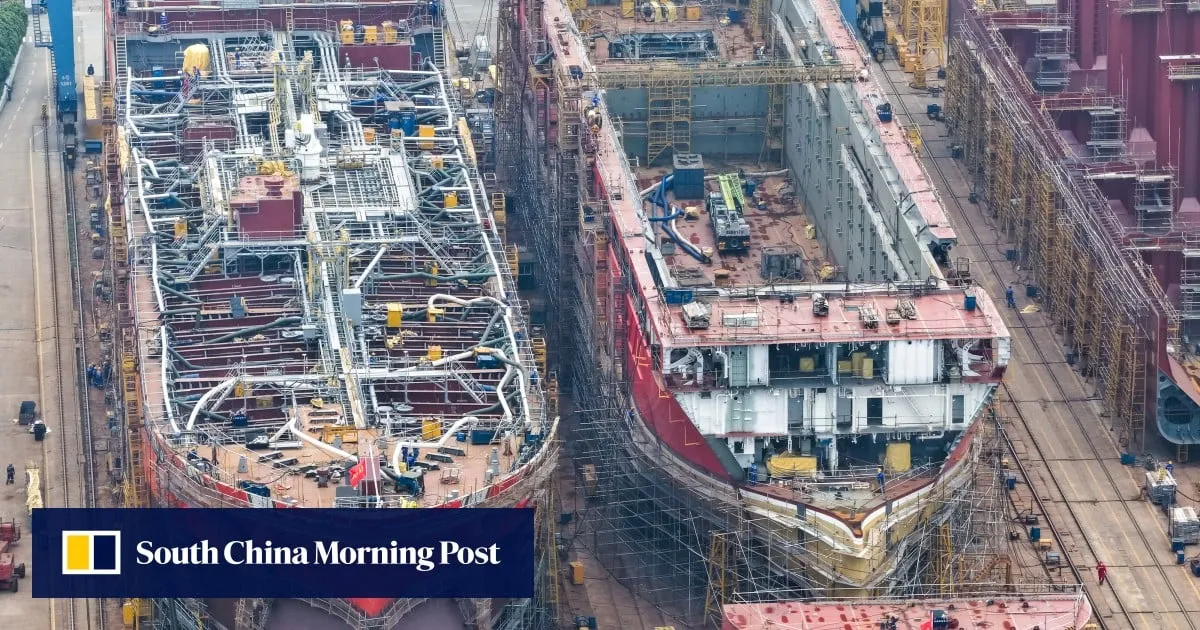
China’s shipyards are emerging as beneficiaries from the US-Israeli war on Iran, securing new orders as crude transport bottlenecks worsen and global demand for large oil tankers rises.With the United States and Iran effectively blockading the Strait of Hormuz – a chokepoint that handles about a quarter of the world’s seaborne oil – shipping companies are racing to expand capacity, particularly in very large crude carriers (VLCCs) capable of transporting about 2 million barrels of oil per voyage.The flurry of orders comes amid mounting pressure on global shipping. The strait has been largely blocked for eight weeks, sending crude oil prices to historic highs. Tankers are taking longer routes to avoid risky journeys through the Persian Gulf, exacerbating already tight fleets caused by ageing vessels and further straining supply.But the disruption is opening new opportunities for Chinese shipbuilders, which are benefiting from strong capacity, lower costs and shorter delivery times. At least two Swiss firms and one Singapore-based company have placed VLCC orders with Chinese shipyards in recent weeks.
SRCSouth China Morning Post
LANGEN
LEANCenter-Right
WORDS169
ENT8
WED · 2026-04-22 · 00:00 GMTBRIEF NSR-2026-0422-71404
NSR-2026-0422-71404News Report·EN·Economic Impact
China’s shipyards secure wave of oil tanker orders as Iran war drives demand
China's shipyards are securing new orders for oil tankers as a result of the US-Israeli war on Iran, which is driving up demand for large vessels due to bottlenecks in crude transport. The United States and Iran have effectively blocked the Strait of Hormuz, a key chokepoint that handles about a quarter of the world's seaborne oil, leading shipping companies to seek alternative routes.
Mia NurmamatSouth China Morning PostFiled 2026-04-22 · 00:00 GMTLean · Center-RightRead · 1 min
South China Morning PostFIG 01
Reading time
1min
Word count
169words
Sources cited
0cited
Entities identified
8entities
Quality score
75%
§ 01
Briefing Summary
AI-generatedNEWSAR · AI
China's shipyards are securing new orders for oil tankers as a result of the US-Israeli war on Iran, which is driving up demand for large vessels due to bottlenecks in crude transport. The United States and Iran have effectively blocked the Strait of Hormuz, a key chokepoint that handles about a quarter of the world's seaborne oil, leading shipping companies to seek alternative routes. This has resulted in longer journeys and increased pressure on global shipping fleets. Chinese shipyards are benefiting from strong capacity, lower costs, and shorter delivery times, with at least two Swiss firms and one Singapore-based company placing orders for very large crude carriers (VLCCs) in recent weeks. The disruption is exacerbating existing supply chain issues, but also creating new opportunities for Chinese builders. Global demand for VLCCs is rising as a result of the crisis.
Confidence 0.90Claims 4Entities 8
§ 02
Article analysis
Model · rule-basedFraming
Economic Impact
Conflict
Tone
Mixed Tone
AI-assessed
CalmNeutralAlarmist
Factuality
0.70 / 1.00
Factual
LowHigh
Sources cited
0
No named sources
FewMany
§ 03
Key claims
4 extracted01
At least two Swiss firms and one Singapore-based company have placed VLCC orders with Chinese shipyards in recent weeks.
factual
Confidence
0.90
02
China’s shipyards are securing new orders as crude transport bottlenecks worsen.
factual
Confidence
0.90
03
The United States and Iran are effectively blockading the Strait of Hormuz.
factual
Confidence
0.80
04
The strait has been largely blocked for eight weeks, sending crude oil prices to historic highs.
factual
Confidence
0.70
§ 04
Full report
1 min read · 169 words§ 05
Entities
8 identifiedKey playerOppositionContextPositiveNeutralNegative