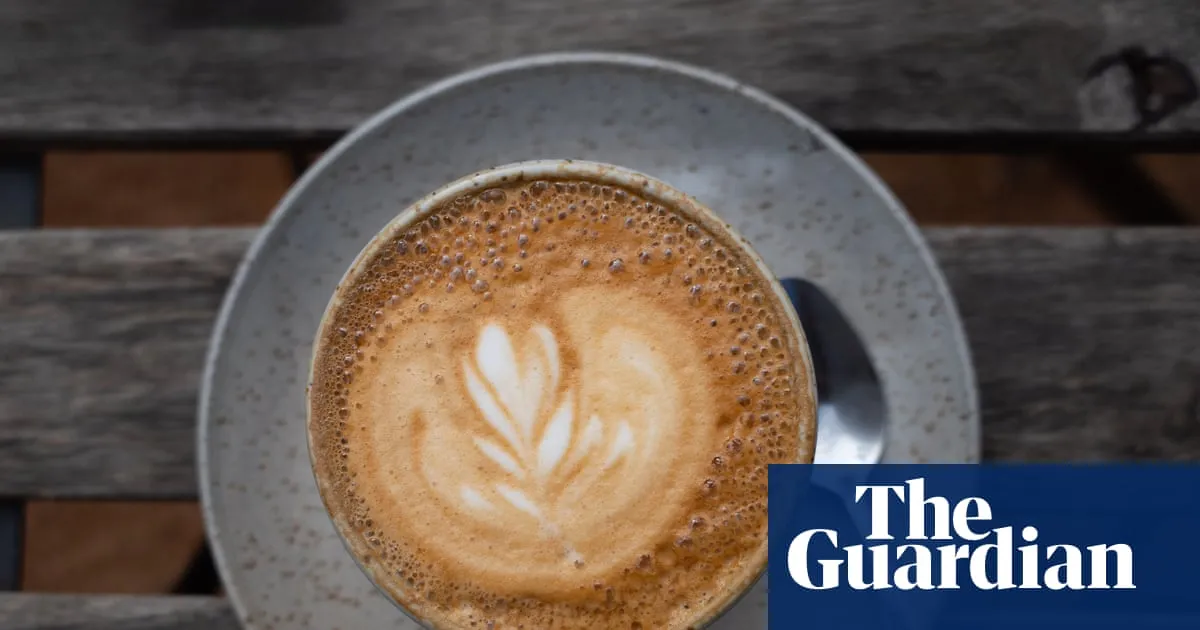
More than 50% of Australian consumers are cutting back on treats such as coffee and snacks, which are usually among the most resilient purchases, new research shows. Photograph: Wavebreakmedia Ltd UC61_62_63/Alamy View image in fullscreen More than 50% of Australian consumers are cutting back on treats such as coffee and snacks, which are usually among the most resilient purchases, new research shows. Photograph: Wavebreakmedia Ltd UC61_62_63/Alamy Takeaway coffee sales plunge as fuel and living costs dent Australian spending. Is the economy next? The trend has been accelerated by the US-Israel war on Iran, leaving households – and cafe owners – glum, surveys suggest Follow our Australia news live blog for latest updates Get our breaking news email, free app or daily news podcast For many coffee drinkers, takeaway orders are changing from a habitual purchase to an occasional treat, as elevated petrol prices and other living costs leave households feeling glum. This rapid shift in behaviour has disappointed cafe owners and surprised economists, raising an uneasy question: if takeaway coffee sales are falling, is the economy next? Changes in coffee purchases are an early indicator of consumer attitudes because Australians are generally unwilling to give up their daily habit until absolutely necessary. Australia-bank" class="entity-link entity-organization" data-entity-id="120177" data-entity-type="organization">National Australia Bank research shows that more than 50% of consumers are cutting back on treats such as coffee and snacks, which the bank says are usually among the most resilient purchases. While the trend has been in place for a few months, it accelerated quickly when petrol prices ignited in March due to the Iran conflict. “We are hearing from cafes and restaurants around the country that they’ve seen a slowdown in what patrons are purchasing,” says Wes Lambert, chief executive of the Australian Restaurant & Cafe Association. “Unfortunately, it could lead to increased home and petrol station coffee consumption which would be a crying shame in Australia, a country that is famous for its barista coffee.” The consumer pessimism has been confirmed by multiple surveys, including the closely watched Westpac-Melbourne Institute consumer sentiment index, released last week, which recorded its sharpest monthly decline since the onset of the pandemic. The deterioration in confidence has been rapid, with many households feeling upbeat just a few months ago, before mortgage and petrol price increases – and a souring global economic outlook – took hold. Lambert says there is a “great coffee standoff” between cautious customers and businesses that need to lift prices due to rising costs. A February report by payments company Tyro found that the average maximum price Australians say they’re willing to pay for a coffee is $6.60, a price ceiling some cafes are breaking. While weakened economic activity, high fuel prices and rising inflation are weighing on the Australian economy, forecasting has become particularly challenging due to uncertainty over how the Middle East conflict might be resolved. AMP’s chief economist, Shane Oliver, says the global economy is “getting closer to crunch time” because the longer the disruption to oil supplies continue, the greater the risk of recession. He says Australia is particularly vulnerable given its strong reliance on oil imports. “Our rough estimate is that if the flow of oil through the [strait of Hormuz] does not quickly resume we could survive till late next month but beyond that fuel rationing would likely be required, which would mean a direct reduction in economic activity and the likelihood of recession,” Oliver says. Dean Pearson, head of behavioural economics at NAB, says during tough times people would usually stick with “affordable luxuries” like a daily coffee, even as they cut back in other areas. He says the consumer change is a response to the psychological blow of seeing high and rising prices for everyday items like coffee and fuel. “That means skyrocketing costs are having a big impact on how people are feeling about the state of the economy and their household budgets.” But he warns against over-interpreting what the coffee trend means for Australia’s economic outlook. “Our forecasts would suggest consumption is easing, not collapsing. In some ways you can look at people who are cutting back as a really important way to take back control in an environment of extreme uncertainty,” Pearson says. Some of the downturn in coffee spending may also be caused by changed work habits, following advice from the Australian government and the International Energy Agency to conserve fuel for essential services such as farming, freight and emergency services. Those working from home typically reduce the number of takeaway coffees and bought lunches they consume each week. Other consumer behaviour also suggests households are being cautious, but not necessarily preparing for a full-blown economic downturn. Households have been throwing an extra can or two of tinned goods into their shopping trolley, while resisting the urge to panic-buy. People are still eating out – but are sharing meals at restaurants to save some money. Others are struggling more, and are now spreading their payments for essentials like groceries, petrol and utility bills over several instalments as their budgets tighten. A Zip spokesperson says the platform also recorded “increased spend on fuel from February to March 2026”. Gary Mortimer, a professor of marketing and consumer behaviour at Queensland University of Technology, says people are starting to adjust their budgets, but not panicking. “You may not be able to cut your mortgage repayments or rent, but you can scale back on streaming subscriptions and on that morning coffee, because they are a bit of a luxury,” says Mortimer. “People will be starting to bring leftovers to work, because that saves 15 bucks for lunch.” Explore more on these topics Economics Consumer affairs Petrol prices Business (Australia news) US-Israel war on Iran Coffee Banking news Share Reuse this content
SRCThe Guardian - World News
LANGEN
LEANCenter-Left
WORDS953
ENT7
WED · 2026-04-22 · 00:00 GMTBRIEF NSR-2026-0422-71407
NSR-2026-0422-71407News Report·EN·Economic Impact
Takeaway coffee sales plunge as fuel and living costs dent Australian spending. Is the economy next?
A recent study by the National Australia Bank indicates that over 50% of Australian consumers are reducing spending on non-essential items like coffee and snacks due to rising fuel and living costs. This decline in takeaway coffee sales, typically a resilient purchase, is raising concerns about the overall economy.
Jonathan Barrett and Patrick ComminsThe Guardian - World NewsFiled 2026-04-22 · 00:00 GMTLean · Center-LeftRead · 4 min
The Guardian - World NewsFIG 01
Reading time
4min
Word count
953words
Sources cited
3cited
Entities identified
7entities
Quality score
100%
§ 01
Briefing Summary
AI-generatedNEWSAR · AI
A recent study by the National Australia Bank indicates that over 50% of Australian consumers are reducing spending on non-essential items like coffee and snacks due to rising fuel and living costs. This decline in takeaway coffee sales, typically a resilient purchase, is raising concerns about the overall economy. Cafe owners are reporting a slowdown in customer spending, potentially leading to increased at-home coffee consumption. The trend accelerated in March with rising petrol prices, exacerbated by the conflict involving Iran. Multiple surveys, including the Westpac-Melbourne Institute consumer sentiment index, confirm a rapid decline in consumer confidence, reversing a previously optimistic outlook due to mortgage increases, petrol prices, and a souring global economy.
Confidence 0.90Sources 3Claims 5Entities 7
§ 02
Article analysis
Model · rule-basedFraming
Economic Impact
Tone
Mixed Tone
AI-assessed
CalmNeutralAlarmist
Factuality
0.70 / 1.00
Factual
LowHigh
Sources cited
3
Well sourced
FewMany
§ 03
Key claims
5 extracted01
The Westpac-Melbourne Institute consumer sentiment index recorded its sharpest monthly decline since the onset of the pandemic.
factualnull
Confidence
1.00
02
Cafes and restaurants around the country have seen a slowdown in what patrons are purchasing.
quoteWes Lambert, chief executive of the Australian Restaurant & Cafe Association
Confidence
1.00
03
More than 50% of Australian consumers are cutting back on treats such as coffee and snacks.
statisticNational Australia Bank research
Confidence
1.00
04
The trend accelerated quickly when petrol prices ignited in March due to the Iran conflict.
factualnull
Confidence
0.90
05
Changes in coffee purchases are an early indicator of consumer attitudes.
factualnull
Confidence
0.80
§ 04
Full report
4 min read · 953 words§ 05
Entities
7 identifiedKey playerOppositionContextPositiveNeutralNegative
Organizations3
§ 06
Keywords & salience
9 termstakeaway coffee sales
1.00
consumer spending
0.90
cost of living
0.90
australian economy
0.80
consumer sentiment
0.70
fuel prices
0.70
economic outlook
0.60
cafe owners
0.50
resilient purchases
0.50
§ 07
Topic connections
Interactive graph Network visualization showing 51 related topics
View Full Graph Person Organization Location Event|Click node to navigate|Edge numbers = shared articles