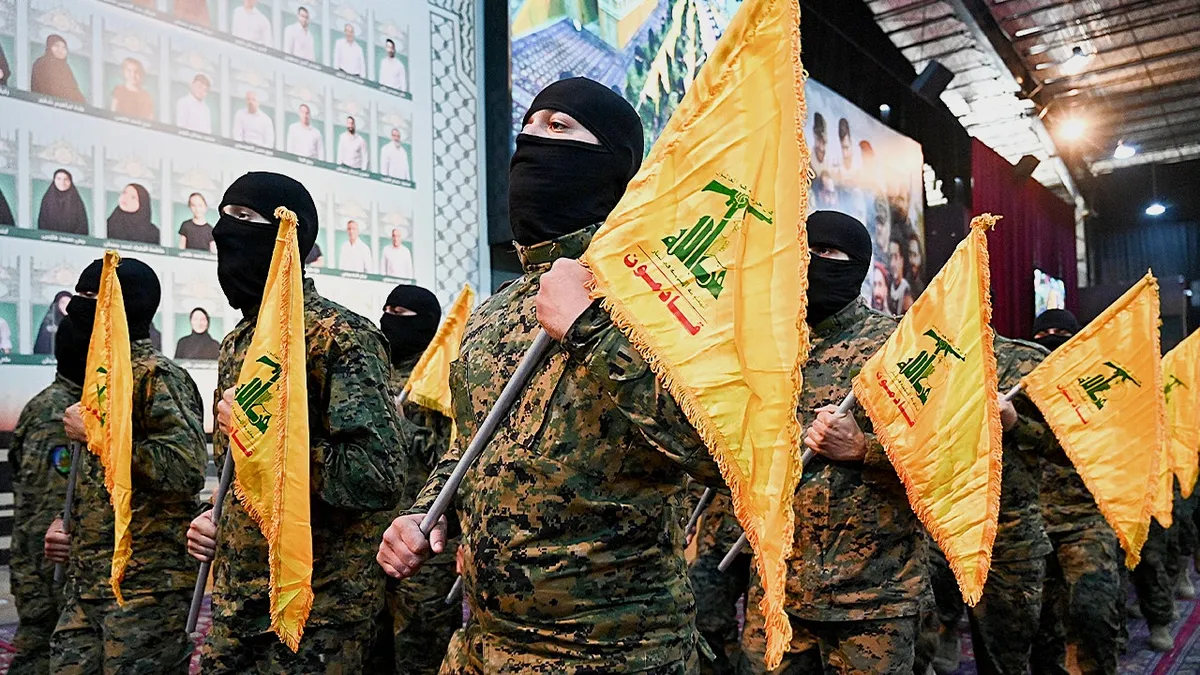
close Video Israel, Lebanon agree to ceasefire as Trump pushes Iran deal Fox News senior foreign affairs correspondent Greg Palkot reports on the Israel-Lebanon ceasefire and ongoing U.S.-Iran negotiations as the Trump administration works toward a broader regional agreement on ‘Special Report.’ NEWYou can now listen to Fox News articles! Hören Sie sich diesen Artikel an 5 Min As Israel and Lebanon return to U.S.-brokered talks Thursday in Washington, the central question is the one that has derailed every previous attempt at a lasting deal: What happens to Hezbollah, an Iran-backed terror organization? An Israeli official told Fox News Digital that the meeting, hosted by Secretary of State Marco Rubio, will include senior U.S. officials — U.S. Ambassador to Israel Mike Huckabee, U.S. Ambassador to Lebanon Michel Issa and Counselor Michael Needham — alongside Israeli Ambassador Yechiel Leiter and Lebanese Ambassador Nada Hamadeh. A State Department spokesperson called the initial April 14 meeting "productive." "We will continue to facilitate direct, good-faith discussions between the two governments," the spokesperson told Fox News Digital. The meeting comes as a fragile U.S.-brokered ceasefire, reached in mid-April, is holding for now, offering what officials describe as a narrow window for diplomacy after weeks of cross-border fighting. Israel-Hezbollah TRUCE IN JEOPARDY AFTER ROCKET BARRAGE KILLS 6 From left, Michael Needham, State Department counselor, U.S. Ambassador to the United Nations Mike Waltz, Secretary of State Marco Rubio, U.S. Ambassador to Lebanon Michel Issa, Lebanese Ambassador to the U.S. Nada Hamadeh Moawad, and Israeli Ambassador to the U.S. Yechiel Leiter pose for a photo before a meeting at the State Department in Washington, April 14, 2026. (Jacquelyn Martin/AP Photo) But the truce has not resolved the underlying conflict — only paused it. The latest escalation began March 2, when Hezbollah launched attacks on Israel’s northern border, opening a new front in the regional war days after U.S.–Israeli strikes on Iran Feb. 28, according to prior reporting. Israel responded with sustained air and ground operations across southern Lebanon aimed at pushing Hezbollah forces away from the border, while Hezbollah continued firing rockets and drones into northern Israel. The fighting displaced more than a million people in Lebanon and forced Israeli civilians into shelters, underscoring the scale of the escalation. MACRON UNDER FIRE OVER Iran, Hezbollah POLICY AS TRUMP ADMIN HOSTS Israel-Lebanon TALKS The truce has not resolved the underlying conflict — only paused it. (Ammar Awad/Reuters) Now, even as the guns have temporarily quieted, the core conditions that led to the war remain unchanged — leaving negotiators to grapple with the same unresolved question at the heart of the conflict. A senior U.S. official familiar with the negotiations described the core dilemma: Hezbollah will not agree to disarm without a full Israeli withdrawal from southern Lebanon, while Israel will not withdraw without Hezbollah disarming. International mechanisms — including the United Nations Interim Force in Lebanon (UNIFIL) and a multilateral coordination group — have been working to bridge that gap since late 2024, without success. The same official also indicated that Lebanon’s president, Joseph Aoun, is not necessarily the decisive factor in these discussions, but Nabih Berri, speaker of the nation's House, is the one with true authority, not Aoun. At the same time, Hezbollah has remained opposed to any contact with Israel and continues to exert significant influence over Lebanon’s political and security decisions, complicating U.S. efforts to advance talks. Inside Lebanon, however, frustration with Hezbollah appears to be growing. Israel 'MOVING FORWARD' ON POSSIBLE Hezbollah CEASE-FIRE, OFFICIAL SAYS An explosion erupts from a building following an Israeli strike in central Beirut, Lebanon, March 18, 2026. (Hussein Malla/AP Photo) "There is a growing sense across Lebanon that any U.S.-brokered negotiation track could be a rare opportunity to restore balance to the state," said Rami Naeem, a Lebanese journalist and analyst with Jusoor News. "Hezbollah’s continued military and political dominance is widely seen as a central driver of the collapse, and even a gradual or indirect opening with Israel could help rebuild state institutions and their role." Mariam Kasrawani, a Lebanese analyst at Jusoor News, said criticism is becoming more explicit. "It is becoming harder to ignore the depth of the crisis," she said. "Some are now saying it plainly: Hezbollah has taken Lebanon as a whole — and Shia in particular — to a very bad place." "I’m not at all optimistic," said Barak Seener of the Henry Jackson Society think tank. "Lebanon is far too weak and divided to force Hezbollah to disarm. And Hezbollah… is so enmeshed in Lebanon’s political system. Any attempt to disarm Hezbollah risks civil war." CARTEL CONNECTION: Hezbollah AND Iran EXPLOIT MADURO’S VENEZUELA FOR COCAINE CASH As Israel and Lebanon return to U.S.-brokered talks Thursday in Washington, the central question is the one that has derailed every previous attempt at a lasting deal: What happens to Hezbollah, an Iran-backed terror organization? (Fadel Itani/NurPhoto via Getty Images) Instead, Seener said, the talks are focused on limited, tactical goals. "Talks are focused on ceasefire expansion, Hezbollah withdrawal from border zones, and an expanded presence of the Lebanese army… talks are not at all focused on disarmament." That gap underscores what he described as the real nature of the process. "I think that these talks are doomed to failure," Seener said. "I think Israel is currently engaged in conflict management." Adding to the uncertainty are reports from the Saudi daily Asharq Al-Awsat that the U.S. may press Lebanon to repeal its 1955 Israel Boycott Law, which bans contact with Israelis. The meeting comes as a fragile U.S.-brokered ceasefire, reached in mid-April, is holding for now, offering what officials describe as a narrow window for diplomacy after weeks of cross-border fighting. (Adri Salido/Getty Images) The report frames such a move as a step toward normalization but provides no details and has not been confirmed by U.S. or Lebanese officials. Fox News Digital reached out for comment from the State Department and the Lebanese Embassy in D.C. but did not receive a response in time for publication. Efrat Lachter is a foreign correspondent for Fox News Digital covering international affairs and the United Nations. Follow her on X @efratlachter. Stories can be sent to efrat.lachter@fox.com. Fox News' Antisemitism Exposed" newsletter brings you stories on the rising anti-Jewish prejudice across the U.S. and the world." By entering your email and clicking the Subscribe button, you agree to the Fox News and Terms of Use, and agree to receive content and promotional communications from Fox News. You understand that you can opt-out at any time. You've successfully subscribed to this newsletter!
SRCFox News - World
LANGEN
LEANCenter-Right
WORDS1 092
ENT10
THU · 2026-04-23 · 10:00 GMTBRIEF NSR-2026-0423-71466
NSR-2026-0423-71466News Report·EN·National Security
Hezbollah disarmament deadlock risks civil war, analysts say, as US prepares for Israel–Lebanon talks
US officials are hosting talks between Israel and Lebanon in Washington, as a fragile ceasefire holds for now. The meeting, hosted by Secretary of State Marco Rubio, brings together senior US officials and their counterparts from both countries.
Fox News - WorldFiled 2026-04-23 · 10:00 GMTLean · Center-RightRead · 5 min
Fox News - WorldFIG 01
Reading time
5min
Word count
1 092words
Sources cited
4cited
Entities identified
10entities
Quality score
100%
§ 01
Briefing Summary
AI-generatedNEWSAR · AI
US officials are hosting talks between Israel and Lebanon in Washington, as a fragile ceasefire holds for now. The meeting, hosted by Secretary of State Marco Rubio, brings together senior US officials and their counterparts from both countries. The central question remains: what happens to Hezbollah, an Iran-backed terror organization? A US-brokered ceasefire was reached in mid-April, but the underlying conflict has not been resolved. The latest escalation began on March 2, when Hezbollah launched attacks on Israel's northern border, prompting a response from Israel with sustained air and ground operations across southern Lebanon. The talks aim to address the issue of Hezbollah's disarmament, which has derailed previous attempts at a lasting deal.
Confidence 0.90Sources 4Claims 5Entities 10
§ 02
Article analysis
Model · rule-basedFraming
National Security
Diplomatic
Tone
Mixed Tone
AI-assessed
CalmNeutralAlarmist
Factuality
0.70 / 1.00
Factual
LowHigh
Sources cited
4
Well sourced
FewMany
§ 03
Key claims
5 extracted01
The latest escalation began March 2, when Hezbollah launched attacks on Israel’s northern border.
factualFox News
Confidence
1.00
02
The central question is what happens to Hezbollah, an Iran-backed terror organization.
factualFox News
Confidence
1.00
03
Israel and Lebanon are returning to U.S.-brokered talks in Washington.
factualFox News
Confidence
1.00
04
Hezbollah will not agree to disarm without a full Israeli withdrawal.
quoteSenior U.S. official
Confidence
0.90
05
A fragile U.S.-brokered ceasefire, reached in mid-April, is holding for now.
factualFox News
Confidence
0.90
§ 04
Full report
5 min read · 1 092 words§ 05
Entities
10 identifiedKey playerOppositionContextPositiveNeutralNegative
People5
Organizations1
§ 06
Keywords & salience
6 termshezbollah disarmament
0.90
israel-lebanon ceasefire
0.80
us-iran negotiations
0.70
regional conflict
0.60
iran-backed terror organization
0.50
middle east peace process
0.40
§ 07
Topic connections
Interactive graph Network visualization showing 51 related topics
View Full Graph Person Organization Location Event|Click node to navigate|Edge numbers = shared articles