The attack in Pahalgam added to the strain, triggering four days of military conflict between the neighbouring countries, with Delhi accusing a Pakistan-based group of carrying out the killings - a charge Islamabad denied. A ceasefire was announced four days later.While tourist numbers have since begun to recover elsewhere in Kashmir" class="entity-link entity-location" data-entity-id="43267" data-entity-type="location">Indian-administered Kashmir, Pahalgam - once among the busiest destinations - has struggled to draw visitors back. The town recorded about 259,000 visitors between January and mid-April this year, down from more than 469,000 in the same period before the attack.The decline has hit local businesses hard. Just four months before the attack, Mohammad Abubakar, 25, invested two million rupees ($21,254; £15,762) to open a hotel."But after April, we earned almost nothing," he said, adding that he had to shut down the business.The impact has not only been felt in numbers.In the days after the killings - which prompted protests and condemnation across the region - security operations intensified. Nearly 3,000 young men were detained for questioning, and in some areas authorities demolished the homes of suspected militants, extending the consequences of the attack into everyday life.While officials say the security situation has since stabilised, for those who depend on tourism the uncertainty has lingered - raising questions over when, or if, visitors will return."We've seen difficult times before," said Abdul Waheed Bhat, head of the pony riders' association in Pahalgam."But this attack is different. This has sent a very negative message."Over the years, Kashmir's conflict has produced a grim cycle - phases of protest, security crackdowns and militant violence that flare and recede, followed by periods in which daily life is gradually pieced back together. Tourism, too, found a place within that uneasy pattern. Even during years of unrest, places like Pahalgam - known for its pine forests and alpine meadows - were largely spared from direct violence.The attack last April shattered that.By targeting visitors in one of Kashmir's busiest hubs, locals say it disrupted a delicate balance that had allowed livelihoods to coexist with instability.Abdul Waheed Bhat, head of the pony riders' association in Pahalgam, says the attack sent a 'very negative message'That shift is now visible in daily life.In Pahalgam, mornings still arrive the same way - a pale wash of light over pine slopes, the river moving steadily through the valley.But the rhythm of the day has changed. Guides gather at the roadside, waiting for work that may or may not come. By afternoon, small groups of visitors drift through, taking photographs quickly, as if aware of time. By evening, the town empties out, with few choosing to stay the night.Hotels that once ran at full capacity now sit largely empty, with as much as 80% of rooms unoccupied. "Last year my target was to earn around 20m rupees but I could only make 1.5m," said Mushtaq Ahmad Magrey, who heads Pahalgam's hotel association. About three miles from the meadow, a memorial now stands. People approach it slowly. Some leave flowers. Others linger only for a moment, reading the names of the victims before stepping back, as though unsure how long it is appropriate to stay.The site of the attack - a meadow - is still shut, and a memorial has been built near it For Nazakat Ali, that hesitation has become part of the job.Each call carries an unspoken calculation - how much to reassure, how firmly to say it."Nothing in the landscape has changed, and yet the place does not feel entirely the same," he said.The attack also cut across the federal government's broader effort to present Kashmir as stable and open to tourism. In recent years, authorities have pointed to rising visitor numbers, new infrastructure and high-profile events as signs of normalcy returning - particularly after the 2019 revocation of the region's semi-autonomous status, a move that was accompanied by a security lockdown, communication blackout and a sharp, though temporary, collapse in tourist arrivals.Officials now point to early signs of recovery, saying the broader security situation remains relatively stable, with violence at one of its lowest levels in decades.Syed Qamar Sajad, Kashmir's tourism director, declined to share figures for this claim but said that tourists were still visiting the region, including Pahalgam, suggesting that "confidence is gradually returning"."We are hinged to hope," he said, adding that outreach efforts were being stepped up across India.AFP via Getty ImagesSeveral homes of suspected militants were demolished in Kashmir after the attackSome visitors have returned, cautiously. Kiran Rao, visiting with his family from Kerala, said security concerns had not stopped them from coming."There were worries before we booked," he said. "But it feels good to be here."For many in Kashmir, however, last year has been harder to move past.Rayees Ahmad Bhat, a horse rider, was among the first to reach the meadow after the shooting. A year on, the memory still haunts him."I saw bodies lying all around," he said. "People crying for help."In the months that followed, he sought therapy.Then there is Syed Haider Shah, whose son Adil - a pony rider and the family's sole breadwinner - was killed as he tried to shield tourists, guiding them away from the attackers."We miss him every day," Shah said. "But we are proud of him."Getty ImagesAdil Shah's brother looks at a photograph of him - he says he misses him every dayElsewhere, the aftermath has taken a different shape.In Pulwama district, Abdul Rashid said his family had spent the past year in a makeshift shelter after their house was demolished days after the attack, part of a wider crackdown. His son, who had joined a militant group, had been killed the previous year.Authorities say such demolitions are meant to deter militancy, but critics call them collective punishment. For Rashid, that has meant enduring a harsh winter without a home."Temperatures dropped below zero," he said. "If someone has committed a crime, why should the family suffer?"Back in Pahalgam, Nazakat Ali is still answering his phone, repeating the same reassurances to visitors.
SRCBBC News - World
LANGEN
LEANCenter
WORDS992
ENT8
FRI · 2026-04-24 · 22:01 GMTBRIEF NSR-2026-0425-71499
NSR-2026-0425-71499News Report·EN·Economic Impact
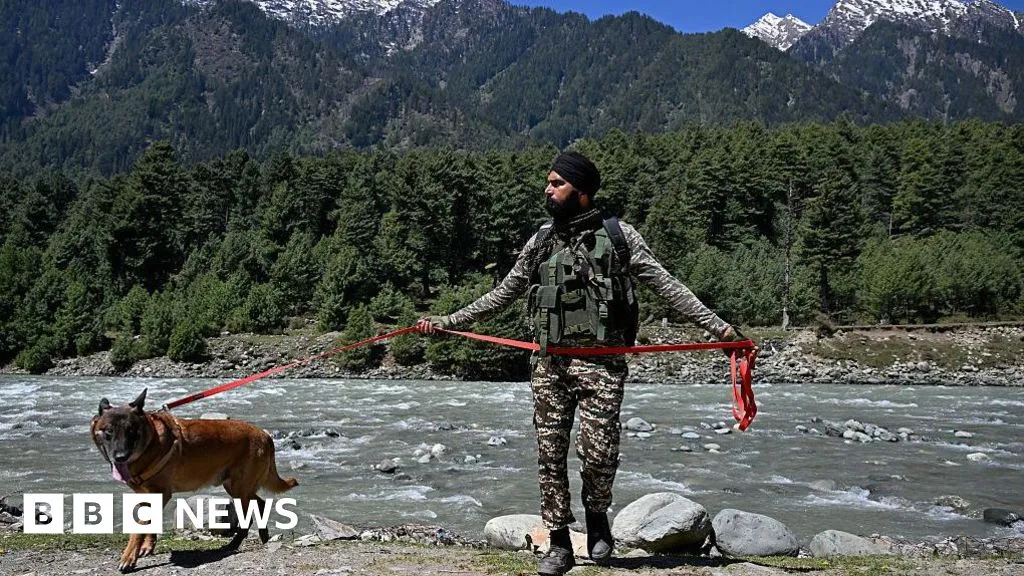
The Kashmir town trying to win back tourists after a deadly attack
The Kashmir town of Pahalgam is struggling to recover its tourism industry following a deadly attack in April that targeted visitors. The incident, which led to a brief military conflict between India and Pakistan, has significantly reduced tourist numbers in Pahalgam, a once-popular destination.
BBC News - WorldFiled 2026-04-24 · 22:01 GMTLean · CenterRead · 4 min
BBC News - WorldFIG 01
Reading time
4min
Word count
992words
Sources cited
5cited
Entities identified
8entities
Quality score
100%
§ 01
Briefing Summary
AI-generatedNEWSAR · AI
The Kashmir town of Pahalgam is struggling to recover its tourism industry following a deadly attack in April that targeted visitors. The incident, which led to a brief military conflict between India and Pakistan, has significantly reduced tourist numbers in Pahalgam, a once-popular destination. Local businesses, like hotels and pony ride services, have suffered substantial financial losses, with some forced to close. The attack also resulted in intensified security operations and detentions, impacting daily life for residents. Despite officials stating the security situation has stabilized, the negative perception created by the attack continues to deter visitors, disrupting the town's long-standing ability to attract tourists even during periods of unrest.
Confidence 0.90Sources 5Claims 5Entities 8
§ 02
Article analysis
Model · rule-basedFraming
Economic Impact
Conflict
Tone
Measured
AI-assessed
CalmNeutralAlarmist
Factuality
0.70 / 1.00
Factual
LowHigh
Sources cited
5
Well sourced
FewMany
§ 03
Key claims
5 extracted01
Nearly 3,000 young men were detained for questioning after the attack.
factualArticle
Confidence
1.00
02
Mohammad Abubakar invested two million rupees to open a hotel.
factualMohammad Abubakar
Confidence
1.00
03
Pahalgam recorded more than 469,000 visitors between January and mid-April before the attack.
statisticArticle
Confidence
1.00
04
Pahalgam recorded about 259,000 visitors between January and mid-April this year.
statisticArticle
Confidence
1.00
05
Hotels now sit largely empty, with as much as 80% of rooms unoccupied.
statisticArticle
Confidence
0.90
§ 04
Full report
4 min read · 992 words§ 05
Entities
8 identifiedKey playerOppositionContextPositiveNeutralNegative
§ 06
Keywords & salience
9 termskashmir tourism
1.00
pahalgam attack
0.90
security situation
0.80
economic impact
0.70
conflict
0.60
tourism recovery
0.50
ceasefire
0.50
livelihoods
0.40
militant violence
0.40
§ 07
Topic connections
Interactive graph No topic relationship data available yet. This graph will appear once topic relationships have been computed.