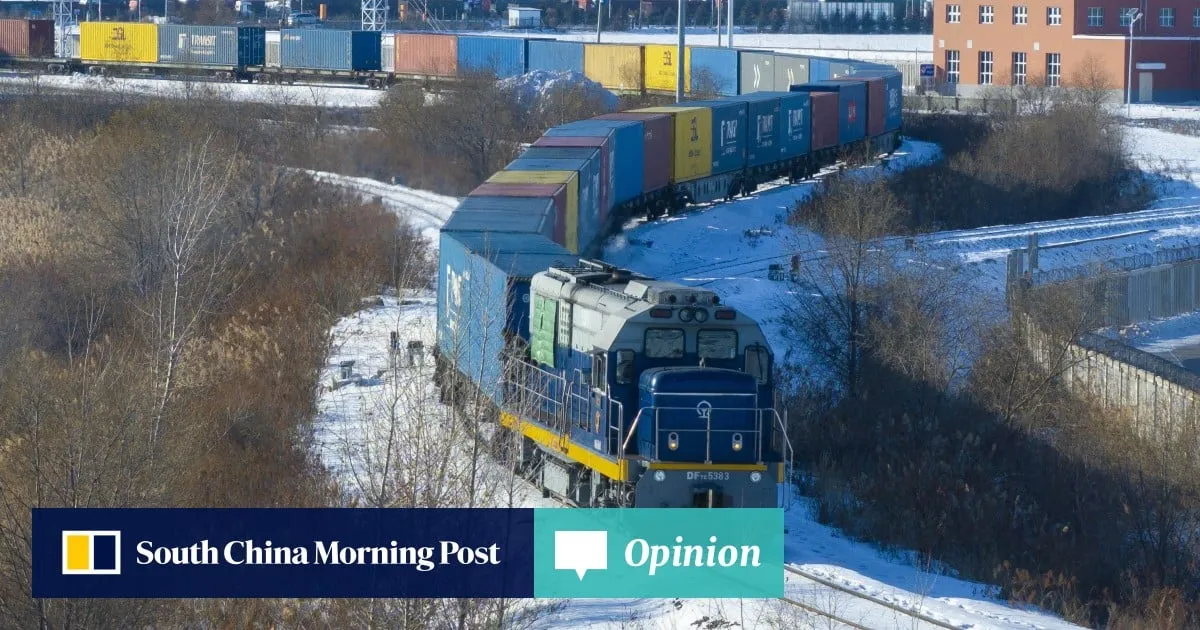
The China-Europe railway network has evolved in the past decade from a nascent logistical experiment into a growing commercial alternative to maritime and air freight. In the wake of the Israel-war-on-Iran" class="entity-link entity-event" data-entity-id="38678" data-entity-type="event">US-Israel war on Iran, it might now be assuming an unanticipated role as a key security provider for transcontinental supply chains.What began as sporadic trial runs has matured into a sprawling web of rail connections that currently links 235 cities across 26 European countries with more than 120 Chinese cities.This growth is being propelled by economic calculus as well as strategic infrastructure investments and geopolitical recalibrations. Notably, the rise of the trans-Caspian route, also known as the Middle Corridor, has added resilience and diversification to the network, reducing dependence on Russia and opening new commercial and political possibilities for both China and Europe.
SRCSouth China Morning Post
LANGEN
LEANCenter-Right
WORDS133
ENT9
SUN · 2026-04-26 · 12:30 GMTBRIEF NSR-2026-0426-71759
NSR-2026-0426-71759Analysis·EN·Economic Impact
Middle East shipping crisis elevates China-Europe railway’s profile
The China-Europe railway network has transformed from an experimental venture into a significant commercial freight option over the past decade. Currently connecting 235 European cities with over 120 Chinese cities, this expansion is driven by economic factors, strategic investments, and geopolitical shifts.
Bob SavicSouth China Morning PostFiled 2026-04-26 · 12:30 GMTLean · Center-RightRead · 1 min
South China Morning PostFIG 01
Reading time
1min
Word count
133words
Sources cited
0cited
Entities identified
9entities
Quality score
100%
§ 01
Briefing Summary
AI-generatedNEWSAR · AI
The China-Europe railway network has transformed from an experimental venture into a significant commercial freight option over the past decade. Currently connecting 235 European cities with over 120 Chinese cities, this expansion is driven by economic factors, strategic investments, and geopolitical shifts. The development of the Middle Corridor route, in particular, has enhanced the network's resilience and diversification, lessening reliance on Russia. Amidst the ongoing Middle East shipping crisis, the railway is emerging as a crucial security provider for transcontinental supply chains, offering a stable alternative to maritime and air transport.
Confidence 0.85Claims 5Entities 9
§ 02
Article analysis
Model · rule-basedFraming
Economic Impact
National Security
Tone
Sensational
AI-assessed
CalmNeutralAlarmist
Factuality
0.60 / 1.00
Mixed
LowHigh
Sources cited
0
No named sources
FewMany
§ 03
Key claims
5 extracted01
The China-Europe railway network links 235 cities across 26 European countries with more than 120 Chinese cities.
statistic
Confidence
1.00
02
The China-Europe railway has evolved from a nascent logistical experiment into a commercial alternative to maritime and air freight.
factual
Confidence
0.90
03
The rise of the trans-Caspian route (Middle Corridor) has reduced dependence on Russia for transcontinental shipping.
factual
Confidence
0.85
04
The railway network is assuming an unanticipated role as a key security provider for transcontinental supply chains.
prediction
Confidence
0.60
05
A US-Israel war on Iran is currently impacting Middle East shipping and elevating the railway's profile.
factual
Confidence
0.30
§ 04
Full report
1 min read · 133 words§ 05
Entities
9 identifiedKey playerOppositionContextPositiveNeutralNegative
Organizations1
Locations7
§ 06
Keywords & salience
8 termschina-europe railway
1.00
middle east shipping crisis
0.90
supply chains
0.80
middle corridor
0.70
logistical experiment
0.60
geopolitical recalibrations
0.50
transcontinental
0.40
maritime freight
0.40
§ 07
Topic connections
Interactive graph No topic relationship data available yet. This graph will appear once topic relationships have been computed.