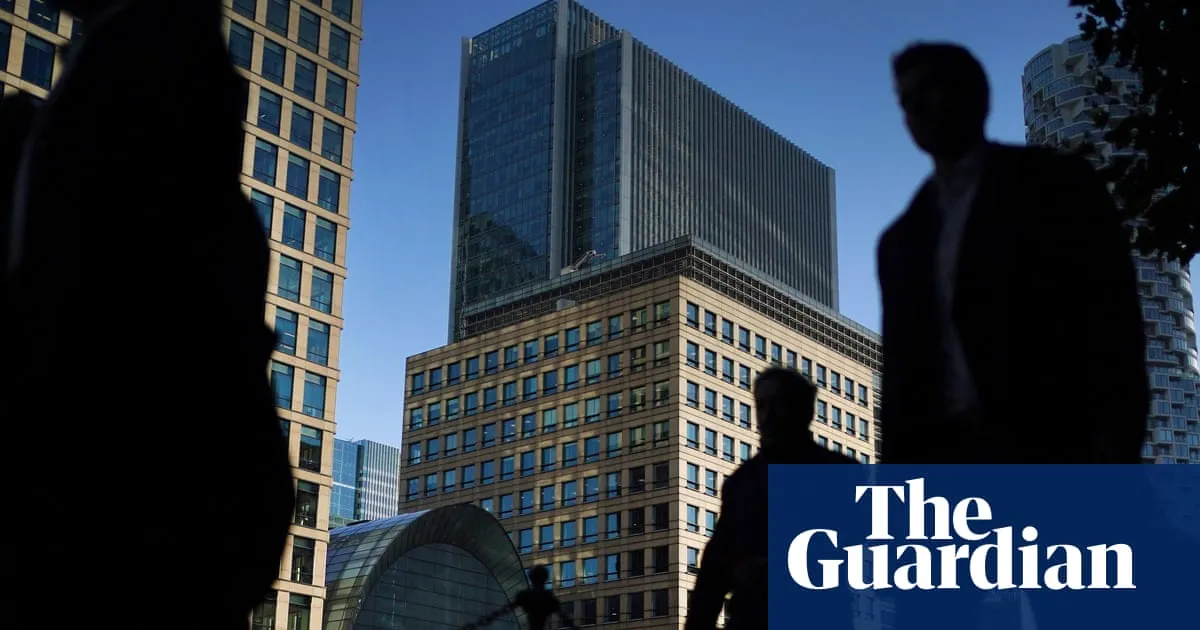
Niesr has downgraded its previous UK growth forecasts for 2026 by 0.5 percentage points, to 0.9%, and by 0.3 percentage points in 2027, to 1%. Photograph: Victoria Jones/PA View image in fullscreen Niesr has downgraded its previous UK growth forecasts for 2026 by 0.5 percentage points, to 0.9%, and by 0.3 percentage points in 2027, to 1%. Photograph: Victoria Jones/PA UK faces £35bn hit and risk of recession this year over impact of Iran-war" class="entity-link entity-event" data-entity-id="38748" data-entity-type="event">Iran war, thinktank warns Niesr says even under best-case scenario, economy would grow at slower pace in 2026 and 2027 because of conflict Britain is facing a £35bn economic hit and the risk of a recession this year as the fallout from the Iran-war" class="entity-link entity-event" data-entity-id="38748" data-entity-type="event">Iran war adds to the pressure on Keir Starmer’s government, a leading thinktank has warned. The National Institute of Economic and Social Research (Niesr) said that even under a best-case scenario the UK economy would grow at a much slower pace this year and next because of the Middle East conflict. With households facing a rise in energy costs linked to the Iran-war" class="entity-link entity-event" data-entity-id="38748" data-entity-type="event">Iran war, the chancellor, Rachel Reeves, has said that “nothing is off the table” as the government considers options to provide a targeted and temporary support package. However, Britain’s oldest independent economic research institute said the government faced a multibillion-pound hole in the public finances amid a worsening inflation shock that would make it harder for Reeves to respond. David Aikman, the Niesr director, said: “This is a serious blow to the government’s mission to get the UK economy growing again. “The Middle East conflict has laid bare the fact that the UK remains highly exposed to global energy shocks. Even if hostilities ease rapidly, higher energy prices will leave households poorer, businesses facing higher costs, and the economy materially smaller than we expected only a few months ago.” In a downbeat assessment on Britain’s prospects as the war unfolds, Niesr downgraded its previous growth forecasts for 2026 by 0.5 percentage points, to 0.9%, and by 0.3 percentage points in 2027, to 1%. It also warned under an adverse scenario, involving the global oil price hitting $140 a barrel, that Britain would face a much bigger inflation shock than currently anticipated, which would risk plunging the economy into a recession in the second half of this year. A barrel of Brent crude oil was trading at $111 on Tuesday. Calling this “severe but plausible”, it said such a scenario would risk UK inflation rising above 5%, which it said could force the Bank of England to raise interest rates by the most in a single move – 1.5% – since Black Wednesday in 1992. Even under its baseline scenario, based on a gradual cooling in global energy prices, it said it expected the Bank to raise interest rates by a quarter point in July to 4%, although it cautioned that a rise in borrowing costs from Threadneedle Street at its next policy meeting on Thursday could not be ruled out. Financial markets widely expect the Bank to keep interest rates unchanged on Thursday. City traders give an outside probability of a quarter-point rise. Last month the Bank kept rates on hold at 3.75%. With Labour under pressure in the run-up to a tough round of local elections next week, Niesr said that the economic hit from the Iran-war" class="entity-link entity-event" data-entity-id="38748" data-entity-type="event">Iran war had the potential to add almost £24bn to UK government borrowing by the end of the decade. This would almost entirely erase Reeves’s headroom against her self-imposed fiscal rules. Stephen Millard, a Niesr deputy director, said: “Things can be much worse. In a way, the assumption [made by financial markets] that oil prices have more or less peaked and will come down to $65 per barrel over the next two years looks to be increasingly optimistic. “Either way the [Bank’s] monetary policy committee are going to have to raise rates this year, and the chancellor is going to have some very tough calls.” Amid speculation that Starmer could face a leadership challenge after a disappointing set of elections, and as the inflation shock unfolds, the UK’s borrowing costs on the global bond markets have risen sharply. The yield – in effect the interest rate – on 10-year UK government bonds rose on Tuesday above 5%. The 30-year yield has also risen close to the highest levels since 1998. Reeves told MPs in the Commons on Tuesday that her focus was on providing targeted support because blanket measures would be costly and risk stoking inflation further. “While people are calling for immediate support, the impacts of the previous government – the untargeted support which cost over £100bn in total – meant that interest rates, inflation and taxes have ended up being higher than they needed to be,” she said. Explore more on these topics Economics Economic growth (GDP) Rachel Reeves US-Israel war on Iran Inflation Interest rates Thinktanks news Share Reuse this content
SRCThe Guardian - World News
LANGEN
LEANCenter-Left
WORDS819
ENT8
TUE · 2026-04-28 · 23:01 GMTBRIEF NSR-2026-0429-72364
NSR-2026-0429-72364News Report·EN·Economic Impact
UK faces £35bn hit and risk of recession this year over impact of Iran war, thinktank warns
A thinktank, the National Institute of Economic and Social Research (Niesr), has warned that the UK faces a £35bn economic hit and a risk of recession this year due to the impact of the Iran war. The conflict is expected to lead to higher energy costs for households and increased expenses for businesses, slowing down economic growth.
Richard Partington Senior economics correspondentThe Guardian - World NewsFiled 2026-04-28 · 23:01 GMTLean · Center-LeftRead · 4 min
The Guardian - World NewsFIG 01
Reading time
4min
Word count
819words
Sources cited
2cited
Entities identified
8entities
Quality score
100%
§ 01
Briefing Summary
AI-generatedNEWSAR · AI
A thinktank, the National Institute of Economic and Social Research (Niesr), has warned that the UK faces a £35bn economic hit and a risk of recession this year due to the impact of the Iran war. The conflict is expected to lead to higher energy costs for households and increased expenses for businesses, slowing down economic growth. Niesr has downgraded its UK growth forecasts for 2026 and 2027, anticipating a slower pace of expansion. In an adverse scenario, with oil prices reaching $140 a barrel, the UK could experience a significant inflation shock and a recession in the latter half of this year. The government is considering support packages, but faces a substantial hole in public finances.
Confidence 0.90Sources 2Claims 5Entities 8
§ 02
Article analysis
Model · rule-basedFraming
Economic Impact
Conflict
Tone
Mixed Tone
AI-assessed
CalmNeutralAlarmist
Factuality
0.85 / 1.00
Factual
LowHigh
Sources cited
2
Limited
FewMany
§ 03
Key claims
5 extracted01
Niesr downgraded UK growth forecasts for 2026 by 0.5 percentage points to 0.9%, and for 2027 by 0.3 percentage points to 1%.
statisticNational Institute of Economic and Social Research (Niesr)
Confidence
1.00
02
The government is considering a targeted and temporary support package for households facing rising energy costs.
quoteRachel Reeves
Confidence
0.90
03
The UK faces a £35bn economic hit and the risk of a recession this year due to the fallout from the Iran war.
predictionNational Institute of Economic and Social Research (Niesr)
Confidence
0.80
04
Under an adverse scenario with oil at $140 a barrel, UK inflation would rise above 5%.
predictionNational Institute of Economic and Social Research (Niesr)
Confidence
0.70
05
The Bank of England could be forced to raise interest rates by 1.5% in a single move, the most since 1992, under a severe scenario.
predictionNational Institute of Economic and Social Research (Niesr)
Confidence
0.60
§ 04
Full report
4 min read · 819 words§ 05
Entities
8 identifiedKey playerOppositionContextPositiveNeutralNegative
People3
Locations3
§ 06
Keywords & salience
10 termsrisk of recession
1.00
economic hit
1.00
iran war
0.90
uk growth forecasts
0.90
energy costs
0.80
inflation shock
0.80
global energy shocks
0.70
public finances
0.60
niesr
0.50
middle east conflict
0.50
§ 07
Topic connections
Interactive graph No topic relationship data available yet. This graph will appear once topic relationships have been computed.