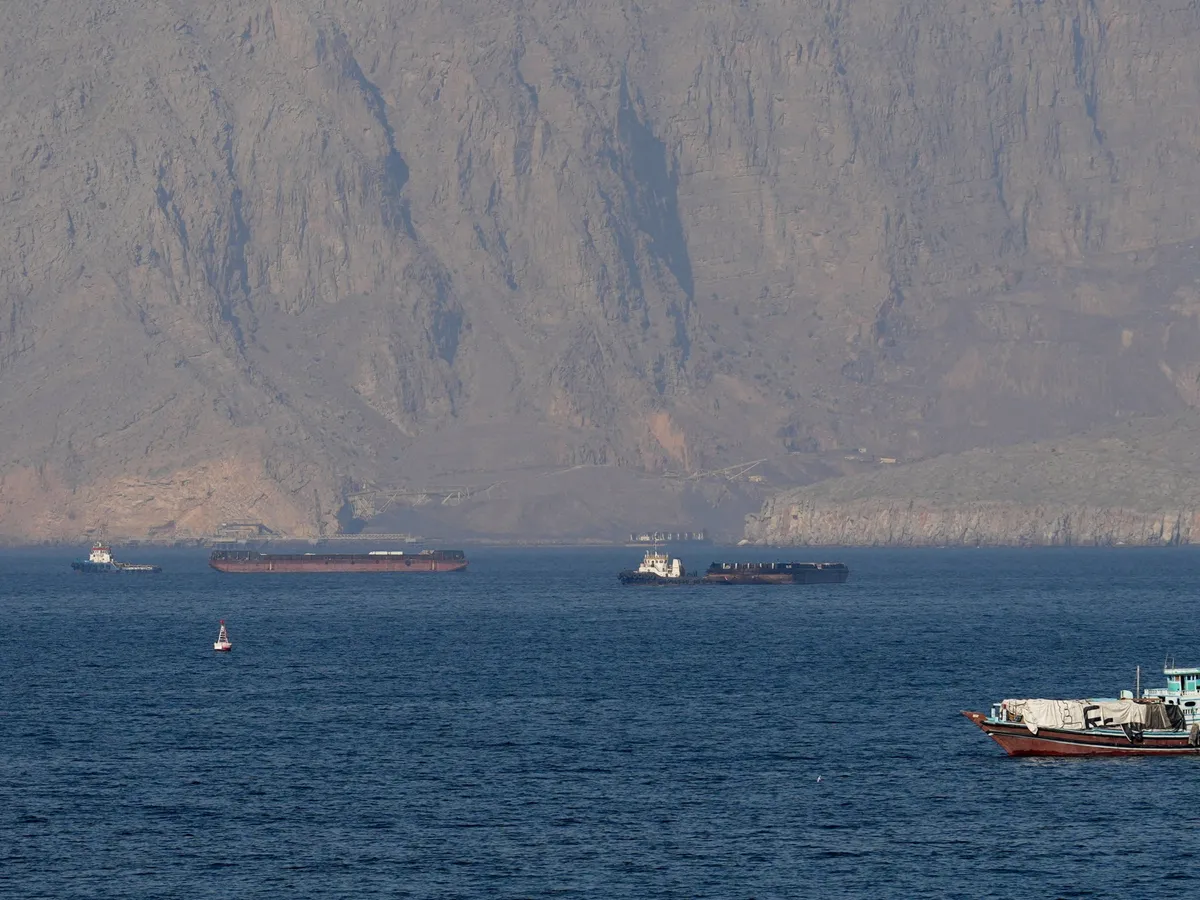
Using fake flags, shell companies and disabled tracking signals, a vast network of vessels bypassed the US naval blockade of the Strait of Hormuz.Ships and tankers in the Strait of Hormuz off the coast of Musandam, Oman, on April 18, 2026 [Reuters]Published On 30 Apr 2026On March 11, the Thai cargo ship Mayuree Naree was struck by two projectiles while crossing the Strait of Hormuz, one of the world’s most important waterways located between Iran and Oman. A fire broke out in the engine room, and while 20 sailors were rescued, three remained trapped inside the stricken vessel. Their remains were found weeks later when a specialised rescue team boarded the vessel, which had run aground on the shores of Iran’s Qeshm island.At about the same time, a “shadow fleet” of tankers continued to navigate the very same waters safely. Operating with fake flags, disabled signals and unspecified destinations, this covert armada survived because it operates outside the traditional rules of maritime trade.Recommended Stories list of 4 itemslist 1 of 4Oil prices soar on fears of long supply disruption, US siege of Iran portslist 2 of 4Could the US-Iran war become a protracted ‘frozen’ conflict?list 3 of 4Iran war: What’s happening on day 62 as Trump asks Iran to ‘give up’?list 4 of 4Pakistan opens up road trade routes into Iran amid Hormuz blockadeend of listIran threatened to block “enemy” ships passing through the Strait of Hormuz – a crucial chokepoint for a fifth of the world’s oil – in the wake of the United States-Israeli war launched on February 28. Soon, navigation through the strait was disrupted amid fears of attacks.Following a temporary ceasefire on April 8, the United States imposed a full naval blockade on Iranian ports on April 13. Theoretically, traffic through the strait should have come to a complete halt.However, tracking data reveals a remarkably different reality.(Al Jazeera)An exclusive Al Jazeera open-source investigation tracked 202 voyages made by 185 vessels through the strait between March 1 and April 15, navigating both under fire and across blockade lines.The numbers behind the shadowsTo understand how the strait operated under extreme pressure, Al Jazeera’s Digital Investigative Unit monitored the waterway daily, cross-referencing vessel International Maritime Organization (IMO) numbers with international sanction lists from the US Office of Foreign Assets Control (OFAC), the European Union, the United Kingdom and the United Nations. An IMO number is a unique seven-digit figure assigned to commercial ships.Of the tracked voyages, 77 (38.5 percent) were directly or indirectly linked to Iran. Notably, 61 of the ships transiting the strait were explicitly listed on international sanctions lists.(Al Jazeera)The investigation divided the conflict into three distinct phases to map the fleet’s behaviour: Phase 1: Open War (March 1 – April 6): 126 ships crossed the strait, peaking at 30 vessels on March 1. Among these, 46 were linked to Iran. Phase 2: The Truce (April 7 – 13): 49 ships crossed during this fragile pause. More than 40 percent of these vessels were tied to Iran, including the US-sanctioned, Iranian-flagged Roshak, which successfully exited the Gulf. Phase 3: The US Blockade (April 13 – 15): Despite the explicit naval blockade, 25 ships crossed the strait. Breaking the blockadeWhen the US blockade took effect, the shadow fleet adapted immediately.The Iranian cargo ship “13448” successfully broke the blockade. Because it is a smaller vessel operating in coastal waters, it lacks an official IMO number, allowing it to evade traditional sanction-monitoring tools. The vessel departed Iran’s Al Hamriya port and reached Karachi, Pakistan.Similarly, the Panama-flagged Manali broke the blockade, crossing on April 14 and penetrating the cordon again on April 17 en route to Mumbai, India.The investigation uncovered widespread manipulation of Automatic Identification System (AIS) trackers. Vessels such as the US-sanctioned Flora, Genoa and Skywave deliberately disabled or jammed their signals to hide their identities and destinations.Fake flags and shell companiesTo obscure ultimate ownership, the shadow fleet heavily relies on a complex web of “false flags” and shell companies. The investigation identified 16 ships operating under fake flags, including registries from landlocked nations like Botswana and San Marino, as well as others from Madagascar, Guinea, Haiti and Comoros.(Al Jazeera)(Al Jazeera)The operational network managing these ships spans the globe. Operating firms were primarily based in Iran (15.7 percent), China (13 percent), Greece (more than 11 percent) and the United Arab Emirates (9.7 percent). Notably, the operators of nearly 19 percent of the observed vessels remain unknown.The toll of a parallel systemDespite the intense military pressure, energy carriers dominated the traffic, with 68 ships (36.2 percent) transporting crude oil, petroleum products and gas. Ten of these tankers were directly linked to Iran. Non-oil trade also persisted, with 57 bulk and general cargo ships crossing during the open war phase, 41 of which were tied to Tehran.(Al Jazeera)Before the war, at least 100 ships crossed the Strait of Hormuz daily. Today, a staggering 20,000 sailors are trapped on 2,000 ships across the Gulf – a crisis the International Maritime Organization described as unprecedented since World War II.A shadow Iranian fleet, meanwhile, has been navigating seamlessly as part of a parallel maritime system born from 47 years of US sanctions on Tehran. Washington slapped sanctions on Tehran following the 1979 Islamic revolution that toppled the pro-Washington ruler Shah Mohammad Reza Pahlavi. The two countries have had no diplomatic ties since 1980.
SRCAl Jazeera
LANGEN
LEANCenter
WORDS888
THU · 2026-04-30 · 11:54 GMTBRIEF NSR-2026-0430-72769
NSR-2026-0430-72769News Report·EN·Conflict
Tracking the shadow fleet: How Iran evaded the US naval blockade in Hormuz
A "shadow fleet" of vessels successfully bypassed a US naval blockade of the Strait of Hormuz between March 1 and April 15, 2026, following an escalation of conflict involving Iran. This covert network of ships utilized fake flags, shell companies, and disabled tracking signals to navigate the vital waterway, which is crucial for global oil transport.
Al Jazeera StaffAl JazeeraFiled 2026-04-30 · 11:54 GMTLean · CenterRead · 4 min
Al JazeeraFIG 01
Reading time
4min
Word count
888words
Sources cited
6cited
Entities identified
0entities
Quality score
75%
§ 01
Briefing Summary
AI-generatedNEWSAR · AI
A "shadow fleet" of vessels successfully bypassed a US naval blockade of the Strait of Hormuz between March 1 and April 15, 2026, following an escalation of conflict involving Iran. This covert network of ships utilized fake flags, shell companies, and disabled tracking signals to navigate the vital waterway, which is crucial for global oil transport. The blockade was imposed by the United States on April 13 after Iran threatened to block enemy ships. Despite the blockade, an investigation tracked 202 voyages by 185 vessels through the strait, demonstrating Iran's ability to evade international maritime restrictions. This operation occurred amidst fears of attacks and disruptions to navigation in the strait, a chokepoint for a fifth of the world's oil.
Confidence 0.90Sources 6Claims 5
§ 02
Article analysis
Model · rule-basedFraming
Conflict
Technology
Tone
Mixed Tone
AI-assessed
CalmNeutralAlarmist
Factuality
0.85 / 1.00
Factual
LowHigh
Sources cited
6
Well sourced
FewMany
§ 03
Key claims
5 extracted01
The United States imposed a full naval blockade on Iranian ports on April 13 following a temporary ceasefire.
factual
Confidence
1.00
02
The Thai cargo ship Mayuree Naree was struck by two projectiles while crossing the Strait of Hormuz on March 11.
factual
Confidence
1.00
03
61 of the ships transiting the strait during the investigation period were explicitly listed on international sanctions lists.
statisticAl Jazeera Digital Investigative Unit
Confidence
0.95
04
Al Jazeera tracked 202 voyages made by 185 vessels through the Strait of Hormuz between March 1 and April 15.
statisticAl Jazeera Digital Investigative Unit
Confidence
0.95
05
77 of the tracked voyages through the Strait of Hormuz were directly or indirectly linked to Iran.
statisticAl Jazeera Digital Investigative Unit
Confidence
0.90
§ 04
Full report
4 min read · 888 words§ 06
Keywords & salience
10 termsstrait of hormuz
1.00
shadow fleet
1.00
us naval blockade
0.90
iran
0.80
maritime trade
0.70
tracking signals
0.60
fake flags
0.60
covert armada
0.50
oil prices
0.40
sanction lists
0.40
§ 07
Topic connections
Interactive graph Network visualization showing 51 related topics
View Full Graph Person Organization Location Event|Click node to navigate|Edge numbers = shared articles