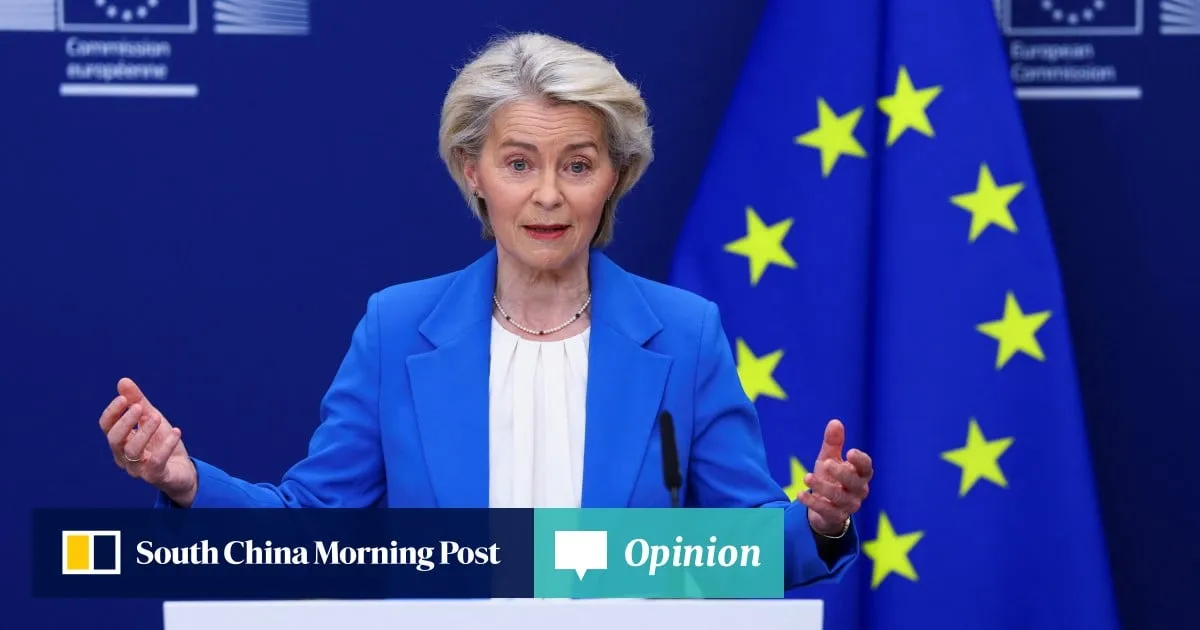
Amid the trade war with the United States, the last thing China needs is an economic confrontation with the European Union – Beijing’s major export destination. But with the EU seemingly determined to protect its market by introducing measures that many see as controversial, an economic stand-off appears inevitable.When European Commission President Ursula von der Leyen blamed China last June for showing an “unwillingness to live within the constraints of the rules-based international system”, it was a clear indication that the 27-nation bloc was dissatisfied with relations with Beijing. In 2024, the EU imposed tariffs of up to 35.3 per cent on Chinese electric vehicles (EVs), citing unfair state subsidies that allow China to position itself as a key player in the European car market.Although Brussels and Beijing agreed in January to take steps towards resolving their dispute, things have not returned to normal. The European Commission is pushing a “Made in Europe” law – formally known as the Industrial Accelerator Act – designed to bolster local industries against competition from China. The legislation also aims to strengthen the EU’s industrial base in response to rising global economic rivalry and a growing reliance on non-EU suppliers in key sectors.
SRCSouth China Morning Post
LANGEN
LEANCenter-Right
WORDS199
ENT7
MON · 2026-05-04 · 12:30 GMTBRIEF NSR-2026-0504-73632
NSR-2026-0504-73632Analysis·EN·Diplomatic
‘Made in Europe’ law sets stage for an economic showdown with China
The European Union is implementing a "Made in Europe" law, formally the Industrial Accelerator Act, to protect its domestic industries from Chinese competition. This move follows the EU's imposition of up to 35.3% tariffs on Chinese electric vehicles in 2024, citing unfair state subsidies.
Nikola MikovicSouth China Morning PostFiled 2026-05-04 · 12:30 GMTLean · Center-RightRead · 1 min
South China Morning PostFIG 01
Reading time
1min
Word count
199words
Sources cited
1cited
Entities identified
7entities
Quality score
100%
§ 01
Briefing Summary
AI-generatedNEWSAR · AI
The European Union is implementing a "Made in Europe" law, formally the Industrial Accelerator Act, to protect its domestic industries from Chinese competition. This move follows the EU's imposition of up to 35.3% tariffs on Chinese electric vehicles in 2024, citing unfair state subsidies. The legislation aims to bolster local manufacturing and reduce reliance on non-EU suppliers amidst increasing global economic rivalry. While attempts were made in January to resolve disputes, the EU's determination to protect its market suggests an inevitable economic stand-off with China, a major export destination for Beijing. The EU's dissatisfaction with China's adherence to international rules has been a driving factor behind these protective measures.
Confidence 0.90Sources 1Claims 5Entities 7
§ 02
Article analysis
Model · rule-basedFraming
Diplomatic
Economic Impact
Tone
Mixed Tone
AI-assessed
CalmNeutralAlarmist
Factuality
0.70 / 1.00
Factual
LowHigh
Sources cited
1
Limited
FewMany
§ 03
Key claims
5 extracted01
European Commission President Ursula von der Leyen blamed China for showing an ‘unwillingness to live within the constraints of the rules-based international system’.
quoteUrsula von der Leyen
Confidence
1.00
02
The EU is pushing a ‘Made in Europe’ law, formally known as the Industrial Accelerator Act, to bolster local industries.
factualarticle
Confidence
1.00
03
The EU imposed tariffs of up to 35.3 per cent on Chinese electric vehicles (EVs) in 2024.
statisticarticle
Confidence
1.00
04
The EU is dissatisfied with relations with Beijing.
factualarticle
Confidence
0.90
05
An economic stand-off between the EU and China appears inevitable.
predictionarticle
Confidence
0.70
§ 04
Full report
1 min read · 199 words§ 05
Entities
7 identifiedKey playerOppositionContextPositiveNeutralNegative
Organizations2
§ 06
Keywords & salience
10 termsmade in europe law
1.00
economic showdown
0.90
china
0.90
european union
0.90
industrial accelerator act
0.80
electric vehicles
0.70
tariffs
0.60
state subsidies
0.50
global economic rivalry
0.50
trade war
0.40
§ 07
Topic connections
Interactive graph Network visualization showing 51 related topics
View Full Graph Person Organization Location Event|Click node to navigate|Edge numbers = shared articles