Mohamad Zreik is a postdoctoral fellow at the School of International Studies, Sun Yat-sen University, China.For decades, the Strait of Hormuz has been a narrow passage with a big footprint. Whenever it comes under tension, the world is reminded that energy security is less a policy construct than an everyday reality for Asia’s economies, factories and prices. For China, Japan, South Korea, India and Southeast Asia, it has always been more than just a Middle Eastern problem. It is an Asian economic issue.This is why we should not interpret the latest Gulf tensions solely in terms of naval forces, sanctions and deterrence. Rather, it is a question of whether Asia can rely on a security regime in which oil supplies are vulnerable to political disruption and the world’s largest energy producers and consumers have little sway over escalation.For China and the Gulf States, there should be a more ambitious energy deal: one that maintains a stable oil trade but eventually brings the cooperation focus back to renewables, storage, electric vehicles, industrial localisation and green finance.
SRCSouth China Morning Post
LANGEN
LEANCenter-Right
WORDS175
ENT9
TUE · 2026-05-05 · 21:30 GMTBRIEF NSR-2026-0505-73984
NSR-2026-0505-73984Opinion·EN·Economic Impact
How China-Gulf ties can turn energy vulnerability into sustainability
The Strait of Hormuz's vulnerability to political disruption poses an energy security challenge for Asian economies, including China. This situation highlights the need for a more robust energy strategy beyond reliance on oil supplies susceptible to geopolitical tensions.
Mohamad ZreikSouth China Morning PostFiled 2026-05-05 · 21:30 GMTLean · Center-RightRead · 1 min
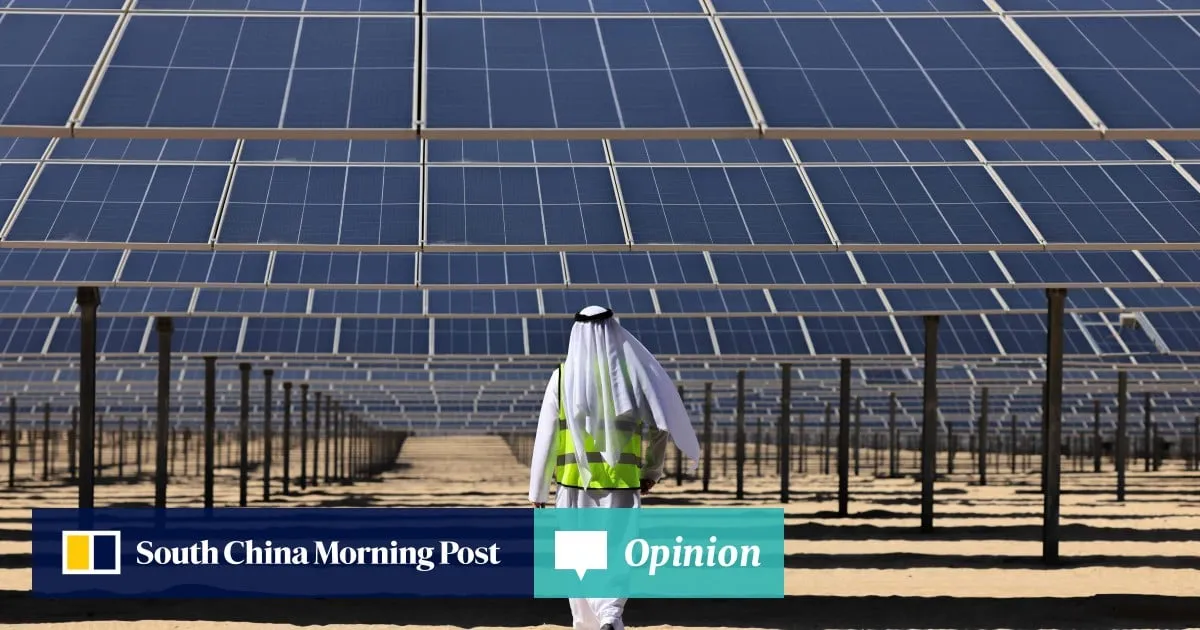
South China Morning PostFIG 01
Reading time
1min
Word count
175words
Sources cited
1cited
Entities identified
9entities
Quality score
100%
§ 01
Briefing Summary
AI-generatedNEWSAR · AI
The Strait of Hormuz's vulnerability to political disruption poses an energy security challenge for Asian economies, including China. This situation highlights the need for a more robust energy strategy beyond reliance on oil supplies susceptible to geopolitical tensions. The article suggests that China and Gulf states should pursue an ambitious energy deal that not only ensures stable oil trade but also shifts focus towards renewable energy, storage solutions, electric vehicles, industrial localization, and green finance. This collaboration aims to transform energy vulnerability into a pathway for sustainability.
Confidence 0.90Sources 1Claims 4Entities 9
§ 02
Article analysis
Model · rule-basedFraming
Economic Impact
Diplomatic
Tone
Measured
AI-assessed
CalmNeutralAlarmist
Factuality
0.30 / 1.00
Opinion-Heavy
LowHigh
Sources cited
1
Limited
FewMany
§ 03
Key claims
4 extracted01
For China, Japan, South Korea, India, and Southeast Asia, energy security has always been more than just a Middle Eastern problem; it is an Asian economic issue.
factual
Confidence
0.90
02
The Strait of Hormuz's tensions remind the world that energy security is an everyday reality for Asia's economies, factories, and prices.
factual
Confidence
0.90
03
Asia should not interpret the latest Gulf tensions solely in terms of naval forces, sanctions, and deterrence, but as a question of reliance on a security regime vulnerable to political disruption.
factual
Confidence
0.80
04
China and Gulf states should pursue a more ambitious energy deal focusing on renewables, storage, electric vehicles, industrial localization, and green finance.
prediction
Confidence
0.70
§ 04
Full report
1 min read · 175 words§ 05
Entities
9 identifiedKey playerOppositionContextPositiveNeutralNegative
Organizations1
§ 06
Keywords & salience
8 termsenergy security
1.00
china-gulf ties
0.90
sustainability
0.80
strait of hormuz
0.70
renewables
0.60
oil trade
0.50
green finance
0.40
electric vehicles
0.40
§ 07
Topic connections
Interactive graph Network visualization showing 51 related topics
View Full Graph Person Organization Location Event|Click node to navigate|Edge numbers = shared articles