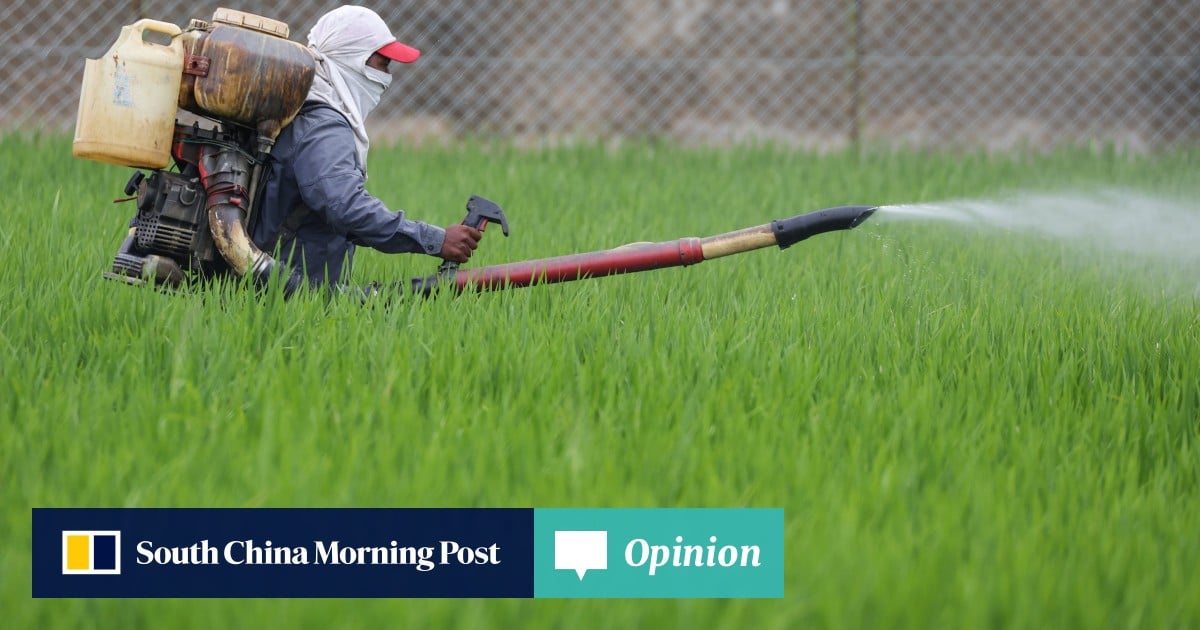
Asia’s next food crisis is under way. After the US-Israeli strikes on Iran, shipping through the Strait of Hormuz collapsed, sending shock waves across energy, fertiliser and food systems. Fuel, freight and fertiliser costs are rising sharply, amplified by skyrocketing insurance premiums – feeding directly into the price of every tonne of fertiliser that still reaches the market.The scale of disruption reflects the strait’s outsize role in global trade. It carries around one-third of globally traded fertiliser, one-quarter of seaborne oil and a major share of liquefied natural gas (LNG) – the primary feedstock for nitrogen fertiliser production.Asia is heavily exposed. It normally takes 35 per cent of the Gulf’s urea exports, 53 per cent of its sulphur and 64 per cent of its ammonia, with import reliance ranging from 36 per cent of fertiliser in Sri Lanka to 53 per cent in Bangladesh. Equally alarming is Asia’s energy dependence. Last year, about 80 per cent of oil and oil products transiting the strait went to Asia, alongside almost 90 per cent of the LNG, accounting for over a quarter of Asia’s LNG imports.
SRCSouth China Morning Post
LANGEN
LEANCenter-Right
WORDS184
ENT7
WED · 2026-05-06 · 08:30 GMTBRIEF NSR-2026-0506-74100
NSR-2026-0506-74100Analysis·EN·Economic Impact
Asia must unite to avert an Iran war food crisis
Following US-Israeli strikes on Iran, shipping through the Strait of Hormuz has collapsed, triggering a food crisis in Asia. This disruption significantly impacts global energy, fertilizer, and food systems, with rising fuel, freight, and insurance costs directly increasing fertilizer prices.
Genevieve Donnellon-MaySouth China Morning PostFiled 2026-05-06 · 08:30 GMTLean · Center-RightRead · 1 min
South China Morning PostFIG 01
Reading time
1min
Word count
184words
Sources cited
0cited
Entities identified
7entities
Quality score
100%
§ 01
Briefing Summary
AI-generatedNEWSAR · AI
Following US-Israeli strikes on Iran, shipping through the Strait of Hormuz has collapsed, triggering a food crisis in Asia. This disruption significantly impacts global energy, fertilizer, and food systems, with rising fuel, freight, and insurance costs directly increasing fertilizer prices. The Strait of Hormuz is crucial, handling approximately one-third of globally traded fertilizer and a substantial portion of oil and LNG, the primary feedstock for nitrogen fertilizer. Asia is particularly vulnerable, relying heavily on Gulf exports for urea, sulfur, and ammonia, and importing a significant percentage of its oil and LNG from the region. This situation threatens food security across the continent.
Confidence 0.90Claims 5Entities 7
§ 02
Article analysis
Model · rule-basedFraming
Economic Impact
Conflict
Tone
Mixed Tone
AI-assessed
CalmNeutralAlarmist
Factuality
0.70 / 1.00
Factual
LowHigh
Sources cited
0
No named sources
FewMany
§ 03
Key claims
5 extracted01
Approximately 80% of oil and 90% of LNG transiting the Strait of Hormuz last year went to Asia.
statistic
Confidence
0.95
02
The Strait of Hormuz carries around one-third of globally traded fertilizer and one-quarter of seaborne oil.
statistic
Confidence
0.95
03
Asia is heavily exposed to disruptions in the Strait of Hormuz, importing significant percentages of Gulf urea, sulfur, and ammonia.
factual
Confidence
0.90
04
Shipping through the Strait of Hormuz collapsed following US-Israeli strikes on Iran.
factual
Confidence
0.90
05
Asia must unite to avert an Iran war food crisis.
prediction
Confidence
0.70
§ 04
Full report
1 min read · 184 words§ 05
Entities
7 identified§ 06
Keywords & salience
9 termsstrait of hormuz
1.00
iran war food crisis
1.00
asia food crisis
0.90
fertiliser costs
0.80
energy dependence
0.70
global trade
0.60
shipping disruption
0.50
insurance premiums
0.40
liquefied natural gas
0.40
§ 07
Topic connections
Interactive graph Network visualization showing 51 related topics
View Full Graph Person Organization Location Event|Click node to navigate|Edge numbers = shared articles