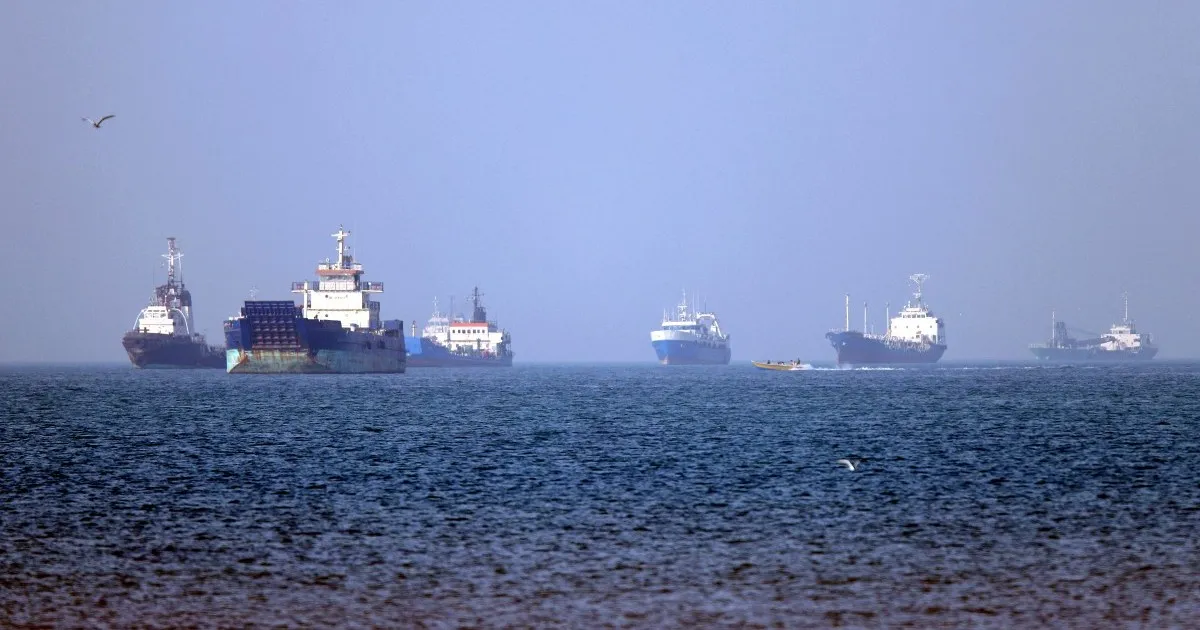
Some 20,000 seafarers are stranded in the Gulf amid the closure of the Strait of Hormuz.Vessels are pictured anchored in the Strait of Hormuz off Bandar Abbas in southern Iran [File: Amirhossein Khorgooei/ISNA via AFP]Published On 8 May 2026Stranded at an Iranian port for nearly 10 weeks, Indian seafarer Anish has unintentionally become a firsthand witness to the Iran war.Anish arrived in the Shatt al-Arab waterway on a cargo ship days before United States President Donald Trump launched “Operation Epic Fury” on February 28.Recommended Stories list of 4 itemslist 1 of 4Sabalenka, Gauff threaten player boycott of French Open over prize moneylist 2 of 4US must not insult IRGC during the World Cup: Iran’s football chieflist 3 of 4Syria says it dismantled Hezbollah-linked cell plotting assassinationslist 4 of 4NBA Playoffs: OKC Thunder overpower LA Lakers to take 1-0 leadend of listHe has been stuck on the vessel ever since.“We’ve faced the whole situation here, the war, the missiles,” Anish, who was granted a pseudonym after agreeing to speak on condition of anonymity, told Al Jazeera.“Our minds are terribly distracted.”Some of his fellow Indian seafarers have been able to return home by crossing Iran’s 44km land border with Armenia, Anish said, but many others have remained because they are still waiting to get paid.“Some are stuck because of their Indian agents; they are not getting their salaries,” Anish said, referring to the middlemen who recruit seafarers, manage payrolls and take care of other employee matters on behalf of shipping firms.“Some are stuck because the Iranian agents say we will not give you the dollars to reach Armenia.”Anish said he has been subsisting on a diet of potatoes, onions, tomatoes and flatbread, but has heard that food and water on other ships are running low.Anish’s predicament is one faced by an estimated 20,000 seafarers stranded since Iran in effect shut the Strait of Hormuz in retaliation for the United States and Israel’s attacks on the country.Before the war, the strait functioned as one of the world’s most critical shipping routes, carrying about one-fifth of global oil and gas supplies, and one-third of the seaborne fertiliser trade.Despite the announcement of a tenuous ceasefire between Washington and Tehran on April 7, maritime traffic has remained at a standstill amid recurrent attacks in and around the waterway.US Central Command said on Thursday that it had “intercepted” and “eliminated” inbound Iranian threats after three US Navy guided-missile destroyers came under attack from missiles, drones and small boats while crossing the strait.Iran’s military said it had retaliated against the US Navy vessels after US forces targeted an oil tanker in its territorial waters.Tehran also accused Washington of violating their ceasefire by carrying out air strikes on civilian areas, including Qeshm Island.Throughout the war, Iran has offered ships safe passage through its territorial waters for a fee, while continuing to fire intermittently on commercial vessels.At the same time, the US has blockaded Iranian ports since April 13 in a bid to disrupt Tehran’s oil exports and access to foreign currency.UK-based maritime intelligence company Lloyd’s List said on Monday that at least four commercial ships were fired upon since the previous day, while a container ship operated by French company CMA CGM on Wednesday reported that it had come under attack while crossing the waterway.The United Nations International Maritime Organization estimates that at least 10 seafarers have been killed since the start of the war.Iran’s merchant marine union reported that at least 44 Iranian seafarers, including dockworkers and fishermen, had been killed as of April 1.Trump said on Wednesday that US officials held “very good talks” with Tehran and that a peace deal was “very possible”, but it remains unclear how close the sides are to any agreement.The MSC Francesca ship is seen during its seizure by the IRGC in the Strait of Hormuz, Iran, on April 24, 2026 [Meysam Mirzadeh/Tasnim/West Asia News Agency via Reuters]While some ships have managed to exit the Strait of Hormuz during brief lulls in hostilities, each day brings new uncertainty for the civilian crews manning the Gulf’s massive fleet of oil, gas and container ships, according to labour groups.Last month, Iranian forces detained two foreign-flagged cargo ships and their crew, while the US Navy captured three Iran-linked commercial vessels in the Gulf and the Indian Ocean.The prospect of being detained on top of being stranded at sea has created an “enhanced state of fear,” said Stephen Cotton, general secretary of the International Transport Workers’ Federation, which represents about 700 unions across 150 countries.“Since the beginning of the year, we’ve got military forces boarding ships like it’s the 17th century, and that’s terrifying,” Cotton told Al Jazeera.“It’s kind of crazy, because these are seafarers. These are just workers.”The IMO has called the situation facing mariners an “unprecedented” humanitarian crisis, though conditions facing workers can vary considerably depending on the shipowner and whether they are unionised.While seafarers on board vessels operated by major international shipping lines have been receiving hazard pay and other assistance, some seafarers working with smaller operations are struggling to get paid or have their basic needs met, according to Cotton and other seafarers’ advocates.“The reality is you’ve got two kinds of shipping industries. One is the intercontinental trade – the big gas, the big oil, and the big containers. Then you’ve got the local trade supplying oil, food, water and moving it around the Gulf,” Cotton said, adding that smaller vessels often operate without unions or the “rigorous enforcement of international regulations”.Saman Rezaei, general secretary of the ITF-affiliated Iranian Merchant Mariners Syndicate, said that many foreign seafarers in Iran work for “irregular agencies” that do not meet international standards.Crew rotation has become a major pressure point for ships.Under the 2006 Maritime Labour Convention – an international treaty ratified by 111 countries, including China, India, Japan, Australia, and the United Kingdom – the maximum time a seafarer can be required to serve on board is 12 months.While seafarers have a legal right to leave their vessel beyond this period, unstable conditions have made repatriation a complicated and expensive prospect.In some cases, especially on board large cargo ships still at sea, departing crew must first be replaced by incoming employees for safety reasons.“With the ships unable to move and flights disrupted, many have had no choice but to remain on the ships even after their planned rotation,” John Bradford, a former US Navy officer and executive director of the Yokosuka Council on Asia-Pacific Studies in Japan, told Al Jazeera.“This keeps them from their families and creates all sorts of social ripple effects even as they continue in a situation that is increasingly stressful.”‘I told my crew how to run’Steven Jones, the founder of the “Seafarer Happiness Index,” said seafarers’ self-reported wellbeing score has fallen about 5 percent during the war.Seafarers have described seeing Iranian drones and missiles flying at low altitude, Jones said.“One told us: ‘What scares me the most is the thought of an intercepted drone or missile falling on us,’” Jones, who is affiliated with the UK-based Mission to Seafarers charity, told Al Jazeera.Other seafarers have reported dwindling food supplies and preparing escape plans, Jones said.“Several senior officers say they have had to prepare evacuation plans for their teams: ‘I told my crew how to run, where to jump from, and what to carry if something happens,’” Jones said, quoting one seafarer.
SRCAl Jazeera
LANGEN
LEANCenter
WORDS1 221
ENT10
FRI · 2026-05-08 · 01:45 GMTBRIEF NSR-2026-0508-74564
NSR-2026-0508-74564News Report·EN·Human Interest
As US and Iran weigh peace deal, stranded seafarers wait in limbo
Approximately 20,000 seafarers are stranded in the Gulf, primarily at an Iranian port, due to the closure of the Strait of Hormuz. This situation began around February 28, following the US launching "Operation Epic Fury" and Iran's subsequent retaliation.
Erin HaleAl JazeeraFiled 2026-05-08 · 01:45 GMTLean · CenterRead · 5 min
Al JazeeraFIG 01
Reading time
5min
Word count
1 221words
Sources cited
3cited
Entities identified
10entities
Quality score
100%
§ 01
Briefing Summary
AI-generatedNEWSAR · AI
Approximately 20,000 seafarers are stranded in the Gulf, primarily at an Iranian port, due to the closure of the Strait of Hormuz. This situation began around February 28, following the US launching "Operation Epic Fury" and Iran's subsequent retaliation. The Strait, a vital shipping route for oil and gas, has been effectively shut down, halting maritime traffic despite a ceasefire announced on April 7. Seafarers like Indian national Anish are facing challenges including limited food and water, and difficulties returning home due to unpaid salaries and issues with agents. Recurrent attacks in the waterway continue to prevent the resumption of normal shipping operations.
Confidence 0.90Sources 3Claims 5Entities 10
§ 02
Article analysis
Model · rule-basedFraming
Human Interest
Conflict
Tone
Mixed Tone
AI-assessed
CalmNeutralAlarmist
Factuality
0.70 / 1.00
Factual
LowHigh
Sources cited
3
Well sourced
FewMany
§ 03
Key claims
5 extracted01
Indian seafarer Anish has been stranded on a cargo ship for nearly 10 weeks, witnessing the Iran war.
quoteAnish (via Al Jazeera)
Confidence
1.00
02
The Strait of Hormuz is a critical shipping route, carrying about one-fifth of global oil and gas supplies.
statistic
Confidence
0.95
03
US Central Command reported intercepting and eliminating inbound Iranian threats after US Navy destroyers came under attack.
factualUS Central Command
Confidence
0.90
04
Approximately 20,000 seafarers are stranded in the Gulf due to the closure of the Strait of Hormuz.
statistic
Confidence
0.90
05
Iran claims the US violated the ceasefire by carrying out air strikes on civilian areas, including Qeshm Island.
factualIran
Confidence
0.85
§ 04
Full report
5 min read · 1 221 words§ 05
Entities
10 identifiedKey playerOppositionContextPositiveNeutralNegative
Locations5
§ 06
Keywords & salience
10 termsstranded seafarers
1.00
strait of hormuz
1.00
iran war
0.90
us-iran relations
0.80
maritime traffic
0.70
shipping routes
0.60
ceasefire
0.50
operation epic fury
0.40
iranian agents
0.40
global oil and gas
0.40
§ 07
Topic connections
Interactive graph Network visualization showing 51 related topics
View Full Graph Person Organization Location Event|Click node to navigate|Edge numbers = shared articles