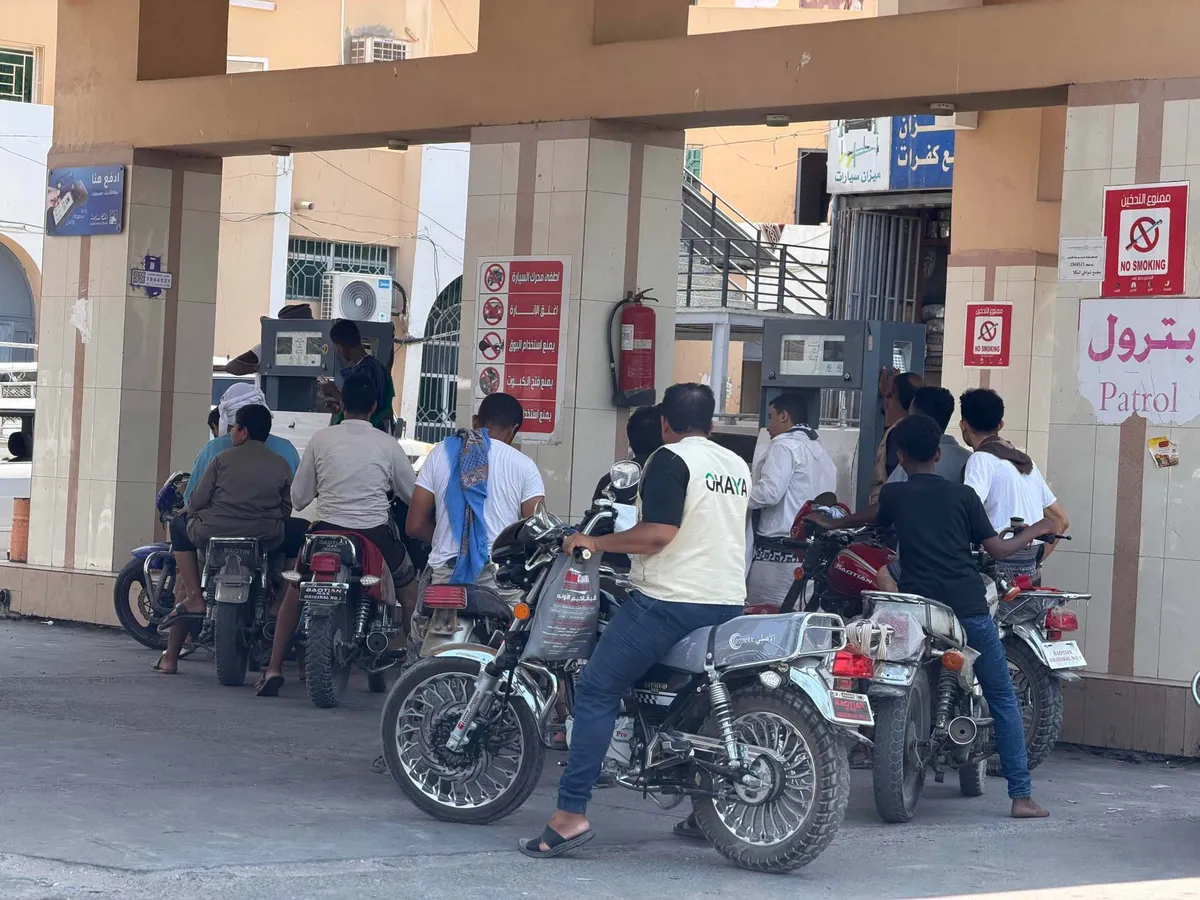
Rising fuel costs in Yemen force drivers to raise fares, as passengers struggle with worsening financial burdens.Motorcyclists queue to refuel at a petrol station in the city of Mukalla, as a new round of fuel hikes by the Yemeni Government pushes up prices and further strains daily life and transport costs [Saeed Al Batati/Al Jazeera]Published On 8 May 2026Mukalla, Yemen – When Abdullah Salem raised his fare by 100 Yemeni riyals ($0.06) on a routine afternoon trip from the eastern outskirts of Yemen’s port city of Mukalla to the city centre, passengers pushed back immediately. “They shouted at me,” the 55-year-old driver told Al Jazeera as he prepared for another trip. “I told them it’s not my decision; it’s the government who have hiked fuel prices.”The Yemen-petroleum-company" class="entity-link entity-organization" data-entity-id="124020" data-entity-type="organization">Yemen Petroleum Company (YPC), controlled by the internationally recognised government, has announced a new round of fuel price hikes in areas under its administration, a move that analysts say could accelerate inflation and deepen economic hardship across the country.Recommended Stories list of 3 itemslist 1 of 3Does Trump hold ‘all the cards’ against Iran in the Strait of Hormuz?list 2 of 3It does not make sense to invest more Arab resources in a US alliancelist 3 of 3In Yemen, Starlink internet brings opportunities – for someend of listIn a statement posted on social media on April 16, filled with praise for the government’s efforts to stabilise prices and ensure the flow of fuel, the company said it had raised the price of petrol and diesel to 1,475 Yemeni riyals ($0.98) per litre, up from 1,190 ($0.79), representing a sharp 24 percent increase.It attributed the increase to regional tensions, including the Iran war, disruptions to shipping through the Strait of Hormuz, and a surge in transport and insurance costs for shipments to Yemen.In the same post, the YPC sought to ease public concern, saying the increase would be temporary and that prices would return to previous levels once regional hostilities subsided. “The company regrets having to raise prices and emphasises that the increase is temporary, contingent on the resolution of the Gulf crisis and a return to normal conditions,” it said.The company has since defended the fuel hikes, even as global oil prices have occasionally decreased amid hope of a possible deal between the United States and Iran. The prices would still have to rise, the company said, because it imports already-refined fuel with prices that are tied to global product markets rather than the cost of crude oil. It added that fuel is priced in local currency upon arrival in Yemen, based on the US dollar exchange rate at the time of purchase, in addition to transport and storage costs.Struggle to earn enoughBut for millions of Yemenis like Abdullah Salem, who work long hours and still struggle to make ends meet, the latest fuel hikes are another blow.Abdullah said that he spends his mornings transporting students from different parts of Mukalla to the city’s university, before driving routes for the general public in the afternoon. Even with the long hours, he barely earns enough to cover fuel costs and support his extended family, including his brother’s household, with whom he shares a home.“We don’t save anything. Everything is expensive, food and other commodities,” he said.To cope with the rising costs, Abdullah has increased monthly fares for students by 3,000 riyals ($2) and raised afternoon trip fares by 100 riyals ($0.06). While students have largely accepted the increase, many passengers on his afternoon routes have stopped using his service, opting instead to hitchhike.Shoppers move through a busy market in Mukalla on a hot afternoon, as residents brace for rising prices of essential goods after fuel hikes of more than 20 percent approved by the Yemeni Government [Saeed Al Batati/Al Jazeera]“We want the government to provide subsidised fuel,” Abdullah said. “People are very poor, and these price hikes will only push food prices higher.”Despite no immediate reports of increases in food prices, economists say the latest fuel hikes are likely to push up costs across several sectors, including food. They also warn that the government could approve another round of fuel price increases if global oil prices continue to rise.Mustafa Nasr, head of the Studies and Economic Media Center, said Yemen imports fuel from international markets, while some fuel produced from local oilfields is also sold on the domestic market.“Economic activity is likely to be affected across the board, whether through rising prices of goods in the markets or potential shortages of petroleum products, with repercussions across multiple sectors,” Nasr told Al Jazeera. “Fragile economies like Yemen’s are particularly vulnerable to such external shocks, meaning the impact is likely to be felt more deeply and across all levels of society.”Exhausted savingsShortly after the latest fuel hikes took effect, residents across government-controlled areas, including Aden and Mukalla, reported increases in transportation fares.Government officials appeared on state media meeting with representatives of transport unions, in what appeared to be a message aimed at reassuring the public that authorities would rein in unjustified fare increases. Unlike previous rounds of fuel hikes that triggered violent protests, there has been little reported unrest in government-controlled areas so far.Um Fatemia, a university student who travels nearly an hour from home to campus in Mukalla, said her family has exhausted its savings and that her mother has even sold jewellery to help pay for her education.“I live in a difficult situation, and no one has helped me,” she told Al Jazeera, asking to be identified by her nickname.A vendor counts money at Mukalla’s fish market, where prices are expected to come under pressure as fishermen say they are spending more on fuel to take their boats out to sea [Saeed Al Batati/Al Jazeera]She often falls behind on bus fares, sometimes settling the previous month’s fees halfway through the following month.Although the latest fuel price hikes took effect in the second half of April, the bus driver told her and other students they would have to pay 49,000 Yemeni riyals ($32.60) by the end of the month, up from less than 45,000 Yemeni riyals ($30) the previous month.“What surprised me most is that buses running on gas, whose price was not affected by the latest hike, also raised their fares, claiming they spend long hours queuing at gas stations,” she said. “My father is a teacher, and his salary is often delayed. Even when he is paid, it barely covers our household expenses, forcing my mother to sell her jewellery to help cover bus fares and other costs. My father is responsible for supporting the entire family.”
SRCAl Jazeera
LANGEN
LEANCenter
WORDS1 093
ENT8
FRI · 2026-05-08 · 08:47 GMTBRIEF NSR-2026-0508-74635
NSR-2026-0508-74635News Report·EN·Economic Impact
Yemen fuel price hikes deepen hardship as transport costs rise
Yemen's government-controlled Yemen Petroleum Company (YPC) has implemented a significant 24% increase in petrol and diesel prices, raising them to 1,475 Yemeni riyals ($0.98) per litre. This decision, announced on April 16th, is attributed to regional tensions, including the Iran war, disruptions in the Strait of Hormuz, and rising shipping costs.
Saeed Al BatatiAl JazeeraFiled 2026-05-08 · 08:47 GMTLean · CenterRead · 5 min
Al JazeeraFIG 01
Reading time
5min
Word count
1 093words
Sources cited
2cited
Entities identified
8entities
Quality score
100%
§ 01
Briefing Summary
AI-generatedNEWSAR · AI
Yemen's government-controlled Yemen Petroleum Company (YPC) has implemented a significant 24% increase in petrol and diesel prices, raising them to 1,475 Yemeni riyals ($0.98) per litre. This decision, announced on April 16th, is attributed to regional tensions, including the Iran war, disruptions in the Strait of Hormuz, and rising shipping costs. The YPC claims the hikes are temporary and contingent on the resolution of regional hostilities. However, the price increase is already forcing drivers to raise fares, exacerbating the financial burdens faced by passengers and deepening hardship across Yemen, particularly in areas under the government's administration.
Confidence 0.90Sources 2Claims 5Entities 8
§ 02
Article analysis
Model · rule-basedFraming
Economic Impact
Human Interest
Tone
Measured
AI-assessed
CalmNeutralAlarmist
Factuality
0.70 / 1.00
Factual
LowHigh
Sources cited
2
Limited
FewMany
§ 03
Key claims
5 extracted01
The Yemen Petroleum Company (YPC) raised petrol and diesel prices by 24 percent, from 1,190 to 1,475 Yemeni riyals per litre.
statisticYemen Petroleum Company (YPC)
Confidence
1.00
02
The YPC stated the price increase is temporary and contingent on the resolution of the Gulf crisis.
quoteYemen Petroleum Company (YPC)
Confidence
0.90
03
YPC attributes the fuel price increase to regional tensions, including the Iran war, disruptions in the Strait of Hormuz, and increased shipping costs.
quoteYemen Petroleum Company (YPC)
Confidence
0.90
04
Rising fuel costs in Yemen force drivers to raise fares, impacting passengers with worsening financial burdens.
factual
Confidence
0.90
05
Analysts suggest the fuel hikes could accelerate inflation and deepen economic hardship in Yemen.
predictionanalysts
Confidence
0.70
§ 04
Full report
5 min read · 1 093 words§ 05
Entities
8 identifiedKey playerOppositionContextPositiveNeutralNegative
Organizations2
§ 06
Keywords & salience
8 termsyemen
1.00
fuel price hikes
1.00
economic hardship
0.90
transport costs
0.80
inflation
0.70
yemen petroleum company
0.60
regional tensions
0.50
strait of hormuz
0.40
§ 07
Topic connections
Interactive graph Network visualization showing 51 related topics
View Full Graph Person Organization Location Event|Click node to navigate|Edge numbers = shared articles