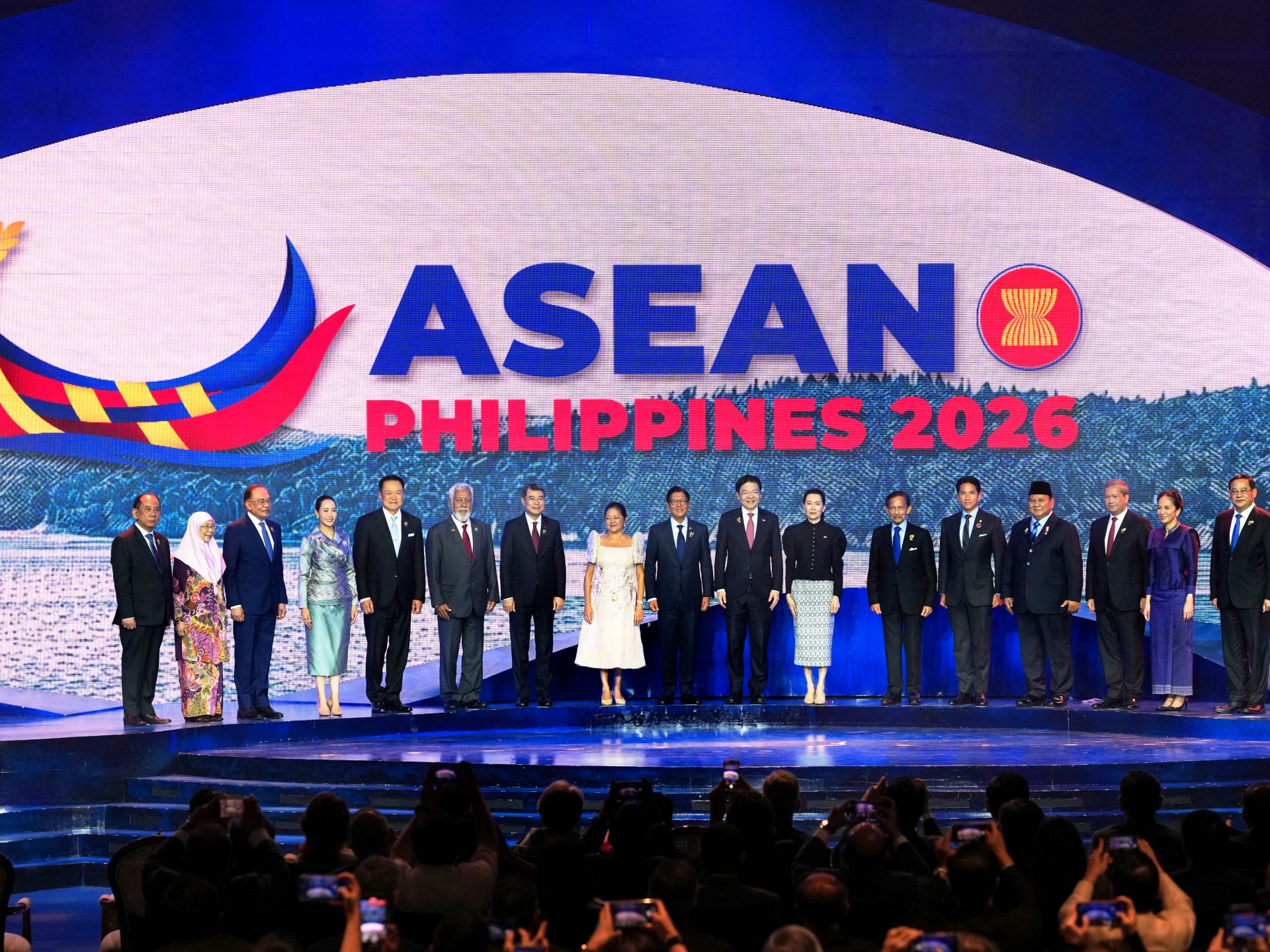
The bloc currently imports more than half of its crude oil from the Middle East.Southeast Asian leaders have agreed on measures aimed at reducing the impact of the Iran war on their economies, but conceded that the initiatives will take considerable time to come into effect.On Friday, leaders gathered in the Philippines for a summit of the Association of Southeast Asian Nations (ASEAN), with the closure of the Strait of Hormuz dominating the agenda.Recommended Stories list of 3 itemslist 1 of 3US trade with Southeast Asia and Taiwan surging despite Trump tariffslist 2 of 3Southeast Asia shuts offices, limits travel as oil crisis deepenslist 3 of 3Southeast Asia’s leaders confront fallout from Iran war at ASEAN summitend of listMembers agreed to a regional fuel-sharing framework in a bid to ease the economic strain caused by the more than two-month closure of the strategic waterway, which has triggered a global energy crisis. However, it remains unclear how the programme would function, with key details still needing to be finalised, including which countries would be prioritised during a crisis.ASEAN chair and Philippine President Ferdinand Marcos Jr welcomed the outcome, but conceded that the practical arrangements still needed to be clarified.“How is the sharing? Who gets what? How do you pay for it? Do you pay for it? Is it an exchange? … We haven’t done it before,” he said.The initiative was one of a handful of measures adopted at the summit.Leaders also agreed to develop a regional power grid and fuel stockpile, while reducing their dependence on energy imports from the Middle East. ASEAN currently imports more than half of its crude oil and 17 percent of its natural gas from the region, according to the bloc’s Centre for Energy. In late March, the Philippines became the first country in the world to declare a national emergency over dwindling energy stockpiles.
SRCAl Jazeera
LANGEN
LEANCenter
WORDS309
ENT7
FRI · 2026-05-08 · 18:07 GMTBRIEF NSR-2026-0508-74767
NSR-2026-0508-74767News Report·EN·Economic Impact
ASEAN leaders adopt measures to ease economic pain caused by Iran war
ASEAN leaders, meeting in the Philippines, have agreed on measures to mitigate the economic impact of the Iran war and the closure of the Strait of Hormuz. The bloc, which imports over half its crude oil from the Middle East, will implement a regional fuel-sharing framework, though practical details are still being finalized.
Daniel Khalili-TariAl JazeeraFiled 2026-05-08 · 18:07 GMTLean · CenterRead · 2 min
Al JazeeraFIG 01
Reading time
2min
Word count
309words
Sources cited
2cited
Entities identified
7entities
Quality score
100%
§ 01
Briefing Summary
AI-generatedNEWSAR · AI
ASEAN leaders, meeting in the Philippines, have agreed on measures to mitigate the economic impact of the Iran war and the closure of the Strait of Hormuz. The bloc, which imports over half its crude oil from the Middle East, will implement a regional fuel-sharing framework, though practical details are still being finalized. Other initiatives include developing a regional power grid and fuel stockpile to reduce reliance on Middle Eastern energy imports. Philippine President Ferdinand Marcos Jr. acknowledged that the sharing mechanisms require further clarification. These measures aim to address the ongoing energy crisis affecting Southeast Asian economies.
Confidence 0.90Sources 2Claims 5Entities 7
§ 02
Article analysis
Model · rule-basedFraming
Economic Impact
Diplomatic
Tone
Measured
AI-assessed
CalmNeutralAlarmist
Factuality
0.80 / 1.00
Factual
LowHigh
Sources cited
2
Limited
FewMany
§ 03
Key claims
5 extracted01
Philippine President Ferdinand Marcos Jr expressed uncertainty about the practical arrangements of the fuel-sharing program.
quoteFerdinand Marcos Jr
Confidence
1.00
02
ASEAN currently imports more than half of its crude oil and 17 percent of its natural gas from the Middle East.
statisticASEAN’s Centre for Energy
Confidence
1.00
03
The closure of the Strait of Hormuz dominated the ASEAN summit agenda.
factual
Confidence
0.95
04
ASEAN agreed to a regional fuel-sharing framework to ease economic strain.
factual
Confidence
0.90
05
ASEAN leaders agreed on measures to reduce the impact of the Iran war on their economies.
factual
Confidence
0.90
§ 04
Full report
2 min read · 309 words§ 05
Entities
7 identifiedKey playerOppositionContext
§ 06
Keywords & salience
10 termsasean
1.00
iran war
0.90
economic pain
0.80
energy crisis
0.70
strait of hormuz
0.70
fuel-sharing framework
0.60
regional power grid
0.50
middle east
0.50
energy imports
0.40
energy stockpiles
0.40
§ 07
Topic connections
Interactive graph Network visualization showing 21 related topics
View Full Graph Person Organization Location Event|Click node to navigate|Edge numbers = shared articles