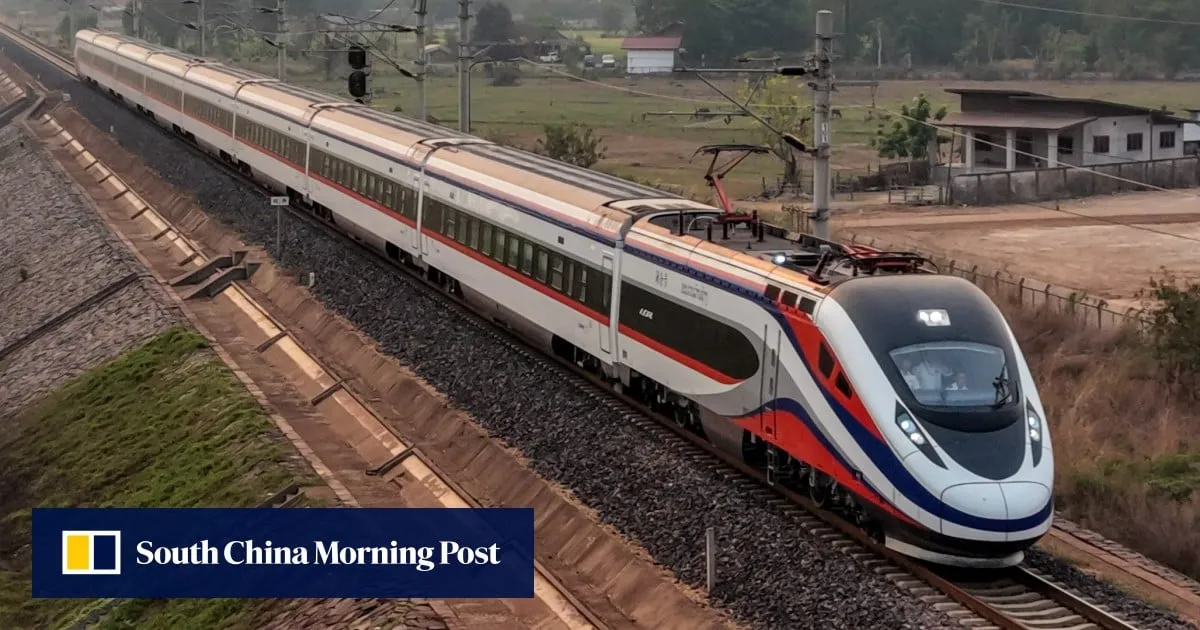
The initiative underscores Beijing’s broader effort to strengthen its economic footprint in the region through roads and railway infrastructure, as it seeks alternative trade routes amid a fractious relationship with the United States.Laos is conducting route surveys for an expressway linking the capital Vientiane to its northeastern border with Vietnam, the Laotian Times reported.From Vientiane, a chain of sections is expected to eventually reach the Chinese border, with a Chinese firm responsible for part of that work.Henan ZhongGong Design and Research Group, a 62-year-old state-owned firm, would conduct a feasibility study and a preliminary design survey for the expressway, which is expected to extend 186km to 207km (116 to 129 miles), according to the report published on Thursday.The highway would support Laos’ ambition to “expand regional connectivity and develop the country into a land-linked transport hub” connecting China, Thailand, Vietnam and other parts of the Mekong River region in Southeast Asia, the media outlet reported.The impoverished, landlocked country of about 8 million people needed new roads to transport agricultural produce, especially during the rainy season when dirt tracks were impassable, said Jayant Menon, a visiting senior fellow at the ISEAS – Yusof Ishak Institute in Singapore.
SRCSouth China Morning Post
LANGEN
LEANCenter-Right
WORDS196
ENT12
FRI · 2026-05-08 · 23:00 GMTBRIEF NSR-2026-0509-74792
NSR-2026-0509-74792News Report·EN·Economic Impact
How a China-backed highway may turn landlocked Laos into a trade gateway
Laos is planning a new China-backed expressway to connect its capital, Vientiane, to the Vietnamese border, with eventual links to China. This initiative is part of China's strategy to enhance regional economic ties through infrastructure development, seeking alternative trade routes.
Ralph JenningsSouth China Morning PostFiled 2026-05-08 · 23:00 GMTLean · Center-RightRead · 1 min
South China Morning PostFIG 01
Reading time
1min
Word count
196words
Sources cited
2cited
Entities identified
12entities
Quality score
100%
§ 01
Briefing Summary
AI-generatedNEWSAR · AI
Laos is planning a new China-backed expressway to connect its capital, Vientiane, to the Vietnamese border, with eventual links to China. This initiative is part of China's strategy to enhance regional economic ties through infrastructure development, seeking alternative trade routes. A Chinese firm will conduct feasibility studies for the approximately 200km highway, which aims to transform landlocked Laos into a regional transport hub connecting China, Thailand, and Vietnam. The project is intended to improve Laos' ability to transport agricultural goods, particularly during the rainy season, supporting the country's ambition for expanded regional connectivity.
Confidence 0.90Sources 2Claims 5Entities 12
§ 02
Article analysis
Model · rule-basedFraming
Economic Impact
Political Strategy
Tone
Measured
AI-assessed
CalmNeutralAlarmist
Factuality
0.70 / 1.00
Factual
LowHigh
Sources cited
2
Limited
FewMany
§ 03
Key claims
5 extracted01
Laos is conducting route surveys for an expressway linking Vientiane to its northeastern border with Vietnam.
factualLaotian Times
Confidence
0.95
02
Laos needs new roads to transport agricultural produce, especially during the rainy season when dirt tracks are impassable.
factualJayant Menon
Confidence
0.90
03
Henan ZhongGong Design and Research Group will conduct a feasibility study and preliminary design survey for the expressway.
factualHenan ZhongGong Design and Research Group
Confidence
0.90
04
China is strengthening its economic footprint in the region through infrastructure projects like roads and railways.
factual
Confidence
0.90
05
The highway would support Laos’ ambition to develop the country into a land-linked transport hub connecting China, Thailand, and Vietnam.
factualLaotian Times
Confidence
0.85
§ 04
Full report
1 min read · 196 words§ 05
Entities
12 identifiedKey playerOppositionContextPositiveNeutralNegative
Organizations2
§ 06
Keywords & salience
10 termslaos
1.00
china-backed highway
1.00
trade gateway
0.90
economic footprint
0.80
infrastructure
0.70
regional connectivity
0.70
transport hub
0.60
landlocked country
0.60
alternative trade routes
0.50
mekong river region
0.40
§ 07
Topic connections
Interactive graph Network visualization showing 15 related topics
View Full Graph Person Organization Location Event|Click node to navigate|Edge numbers = shared articles