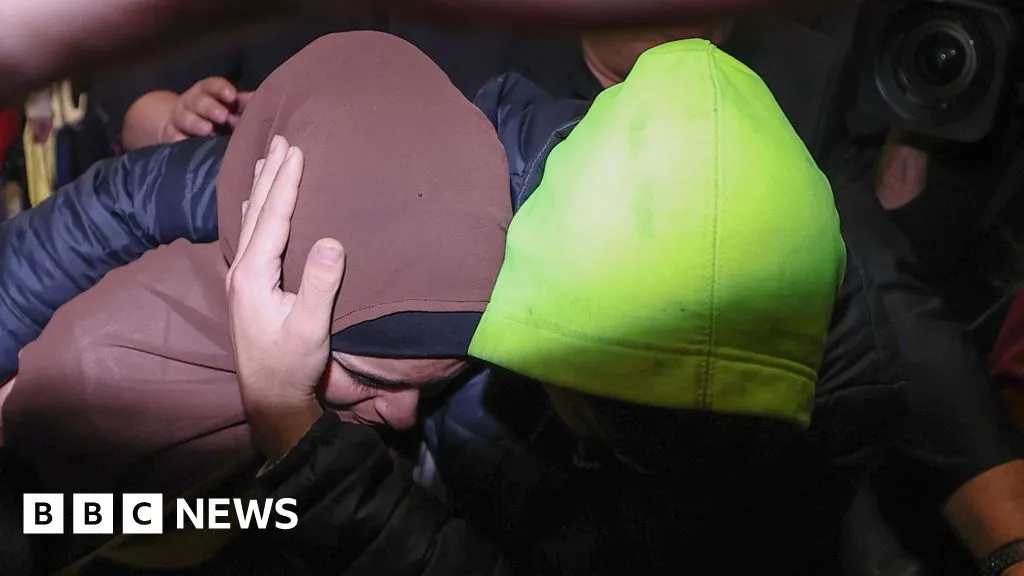
"The government want us to forget about them… [But] the quicker they come to Australia, the safer it is for all of Australia and for themselves," Sydney doctor Jamal Rifi told the BBC in an interview earlier this year, after an earlier bid to return by Australian IS families failed.Who are the women?The two camps where the families of IS fighters were channelled when the "caliphate" fell have long been described as a ticking time bomb - rife with violence, incubators for radicalisation, and an ever-growing humanitarian crisis.The largest, al-Hol, was shut down in February after Syrian forces of the new government reclaimed the country, while the future of the remaining al-Roj camp, in the country's north-east Kurdish region, is uncertain.There are about 2,000 people in al-Roj, from dozens of countries which refuse to take them back - including Shamima Begum, who was stripped of her British citizenship after travelling to Syria as a 15-year-old and marrying an IS fighter.Until last month, it was also the home of Janai Safar, 32, who landed in Sydney with her nine-year-old son on Thursday night, and has since been charged with terrorism offences.The former nursing student told The Australian newspaper back in 2019 that she didn't regret travelling to join IS, but "didn't train or kill anyone".Arriving in Melbourne at the same time was 33-year-old Zahra Ahmed, who spent years in the camp alongside her younger sister Zeinab, 31, and her 54-year-old mother Kawsar Abbas.They say they were trapped in Syria after travelling there for a family wedding, not realising the groom had sworn allegiance to the Islamic State group - though authorities suspect the patriarch of the family had been funnelling cash to them."I didn't make this bed," Zahra told the Special Broadcasting Service (SBS) in 2024."We are now forced to suffer for the decisions that other people - other male influencers - have made on our behalf, and now they're all gone, and we are left to suffer with our kids."Her mother and sister have been charged with crimes against humanity related to slavery.Getty ImagesThe families were accompanied by a relativeThe Australian Federal Police say Zahra Ahmed is still under investigation, and that the nine children who returned with the group will be asked to undergo community integration and countering violent extremism programmes.They were part of a larger group which in February left al-Roj for Australia, but were turned back within hours due to "technical issues". The camp administrators later told media they believed Syrian authorities had been spooked by Australia's insistence the women would not be welcomed back."It's a disgrace that both governments, state and federal, are letting them come back."Refugees who fled to Australia for safety from IS - many of whom survived massacres, slavery and sexual abuse at their hands - are particularly distressed."Imagine a Yazidi survivor encountering ISIS brides [here]," one such man named Sami told Australian public broadcaster SBS.But people like Rifi - an award-winning Western Sydney doctor - say Australia owes the children in these camps protection too.He was roped into providing the group tele-healthcare years ago, but - moved by their plight - more recently became a broker and "delivery boy" for their temporary passports.Getty ImagesJamal Rifi - a respected member of the interfaith community - has been lauded for his work in improving healthcare access"If those women have done anything wrong by our legal system… if the prime minister wants to 'throw the book' at them, let him throw the book. We're not going to stop him," he told the BBC in February."But while they are staying in Syria, he can't throw anything at them, except words."We believe those children should not continue to pay the heavy price for the sins of their fathers and mothers… It's not what we understand of Australian values."For helping these women, Rifi has gone from being a national hero to a pariah – with the opposition party going as far as to float a policy aimed at jailing people like him.The community's "alarm, concern and fear" is "entirely understandable", Australia's special envoy to combat Islamaphobia said this week, adding the women had put the Muslim community in particular in a "deeply challenging position".But Aftab Malik said the "rule of law" must be upheld, calling for the temperature of the national debate to be lowered.In her role with the Asylum Seeker Resource Centre, Jana Fevaro has seen firsthand the harm wrought by IS, but she argues Australia has to trust its laws - and law enforcement agencies - will do their job."Once politicians start… deciding how citizens should be treated, what right citizens should have, that is a dangerous and slippery slope," she told the BBC.'Serious limits' on preventing returnsGetty ImagesThe government has been criticised for failing to stop the recently arrived familiesLabor knows that showing any concern towards people linked to IS is not popular right now, but legally, their hands are bound.Announcing this group of 13 had booked flights home earlier this week, Home Affairs Minister Tony Burke said the government did not help these IS families return and will not help others.But there are "very serious limits" on what can be done to stop them, he added.One un-named woman was in February barred from returning upon advice from the national security agencies, but the legal threshold for invoking that law is high and no other member of the group has met it, Burke says.However opposition spokespeople, right up until the moment the four women landed on Thursday, said the government should stop them at any cost and offered to work with them on laws which would help."It's a hot button issue in a way that it may not have been six months previously," says Rodger Shanahan, a Middle East expert at the Lowy Institute.Had the government dealt with it earlier, it would have "blown over", he argues.ReutersTwenty-one Australians remain in the al-Roj camp
SRCBBC News - World
LANGEN
LEANCenter
WORDS978
ENT12
FRI · 2026-05-08 · 19:21 GMTBRIEF NSR-2026-0508-74796
NSR-2026-0508-74796News Report·EN·National Security
Return of IS-linked families sparks debate in terror-traumatised Australia
Two Australian women, Janai Safar and Zahra Ahmed, along with their children, have returned to Australia after being held in Syrian camps for families of Islamic State fighters. Safar, who previously expressed no regret about joining IS, faces terrorism charges.
BBC News - WorldFiled 2026-05-08 · 19:21 GMTLean · CenterRead · 4 min
BBC News - WorldFIG 01
Reading time
4min
Word count
978words
Sources cited
5cited
Entities identified
12entities
Quality score
100%
§ 01
Briefing Summary
AI-generatedNEWSAR · AI
Two Australian women, Janai Safar and Zahra Ahmed, along with their children, have returned to Australia after being held in Syrian camps for families of Islamic State fighters. Safar, who previously expressed no regret about joining IS, faces terrorism charges. Ahmed, her mother, and sister claim they were trapped in Syria after a family wedding, though authorities suspect financial support for IS. The women and children are undergoing investigations and will participate in integration and counter-extremism programs. This return follows previous failed attempts and sparks ongoing debate in Australia regarding the repatriation of IS-linked families from camps described as radicalization incubators.
Confidence 0.90Sources 5Claims 5Entities 12
§ 02
Article analysis
Model · rule-basedFraming
National Security
Human Interest
Tone
Mixed Tone
AI-assessed
CalmNeutralAlarmist
Factuality
0.60 / 1.00
Mixed
LowHigh
Sources cited
5
Well sourced
FewMany
§ 03
Key claims
5 extracted01
Yazidi survivors are distressed by the potential return of 'ISIS brides'.
quoteSami (Yazidi survivor)
Confidence
1.00
02
Zahra Ahmed stated, 'We are now forced to suffer for the decisions that other people - other male influencers - have made on our behalf'.
quoteZahra Ahmed
Confidence
1.00
03
Janai Safar, who returned to Sydney, was charged with terrorism offences.
factualAustralian Federal Police
Confidence
1.00
04
Two Australian IS-linked families have returned to Australia.
factual
Confidence
1.00
05
Al-Hol camp was described as a 'ticking time bomb' and an 'incubator for radicalisation'.
factual
Confidence
0.90
§ 04
Full report
4 min read · 978 words§ 05
Entities
12 identifiedKey playerOppositionContextPositiveNeutralNegative
People6
§ 06
Keywords & salience
8 termsis families
1.00
radicalisation
0.90
terrorism offences
0.80
al-hol camp
0.70
al-roj camp
0.70
countering violent extremism
0.60
humanitarian crisis
0.50
community integration
0.40
§ 07
Topic connections
Interactive graph Network visualization showing 21 related topics
View Full Graph Person Organization Location Event|Click node to navigate|Edge numbers = shared articles