Foreign affairs are not a series of disconnected episodes. They are a test of whether nations learn from history and act with foresight. The United States has often failed that test. It forgets that unchecked aggression leads to wider wars and that removing governments without building new authority invites chaos.Russia’s invasion of Ukraine, Iran’s destabilising role in the Middle East and the collapse of Libya and Afghanistan all testify to what happens when those lessons are ignored.China, by contrast, has not waged wars of conquest or slaughtered civilians abroad. Its rise has lifted hundreds of millions out of poverty and reshaped trade. Yet Beijing’s sharp focus on Taiwan, while understandable from its perspective, risks narrowing its vision. China still depends on the global trading system.That system requires stability, and stability requires accommodation with the US, however pushy Washington may seem.Iran is a case in point. Beijing has not actively helped Tehran prolong conflict, though it is pushing back against US sanctions over Iranian oil. Active help would entangle China in the very kind of destructive adventurism it has so far avoided. The world needs China to be a constructive power, not a spoiler. If China wants its prosperity to endure, it must resist the temptation in some quarters to side with those who thrive on chaos.Iran’s partnership with Russia in Syria and support for militias across the region have created humanitarian disasters. China’s credibility as a responsible global actor would be undermined if it lent cover to such behaviour.China’s permanent representative to the United Nations, Fu Cong, vetoes a UN Security Council draft resolution aiming to boost security in the Strait of Hormuz at the UN headquarters in New York on April 7. Photo: Xinhua
SRCSouth China Morning Post
LANGEN
LEANCenter-Right
WORDS285
ENT12
SAT · 2026-05-09 · 21:30 GMTBRIEF NSR-2026-0509-74957
NSR-2026-0509-74957Opinion·EN·Diplomatic
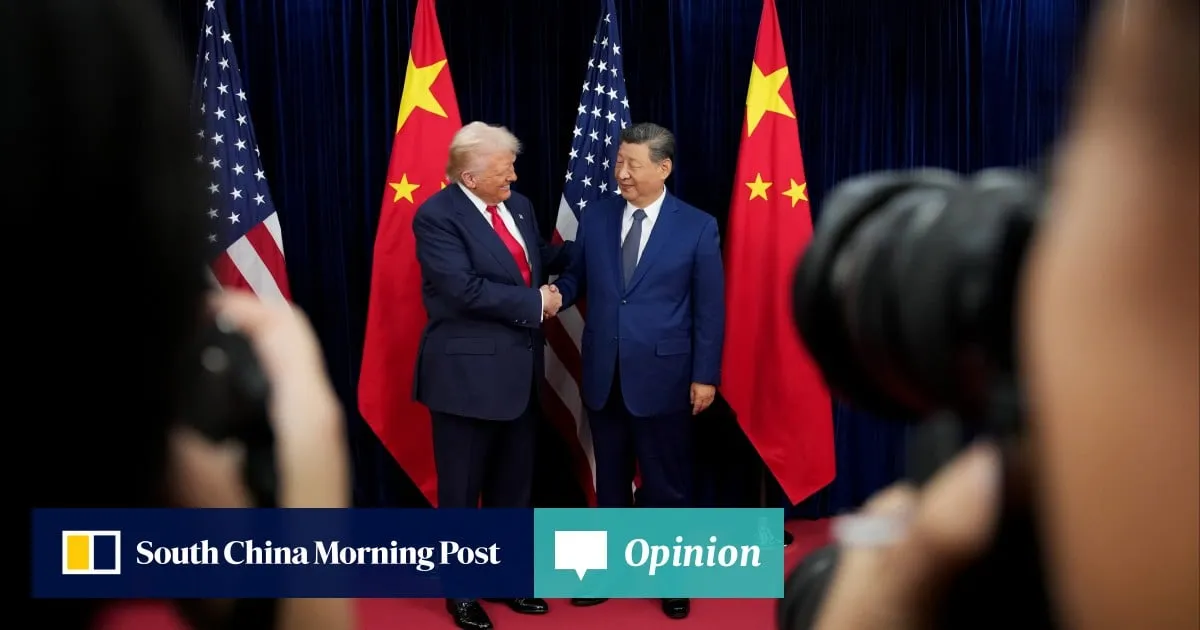
With the US, China must choose constructive power over destruction
The article argues that China must choose constructive engagement over destructive actions in its foreign policy, particularly in its relationship with the United States. It highlights historical examples of US foreign policy failures, such as unchecked aggression and government removal without establishing new authority, leading to wider wars and chaos.
Dong LeiSouth China Morning PostFiled 2026-05-09 · 21:30 GMTLean · Center-RightRead · 2 min
South China Morning PostFIG 01
Reading time
2min
Word count
285words
Sources cited
1cited
Entities identified
12entities
Quality score
100%
§ 01
Briefing Summary
AI-generatedNEWSAR · AI
The article argues that China must choose constructive engagement over destructive actions in its foreign policy, particularly in its relationship with the United States. It highlights historical examples of US foreign policy failures, such as unchecked aggression and government removal without establishing new authority, leading to wider wars and chaos. While acknowledging China's economic rise and avoidance of foreign conquest, the article warns that its focus on Taiwan risks undermining its reliance on global stability. It suggests that China should accommodate the US to maintain this stability, citing Iran as an example where actively supporting Tehran's prolonged conflict would be detrimental. The piece emphasizes that China's credibility as a global actor depends on resisting actions that enable destructive behavior, such as Iran's regional interventions.
Confidence 0.90Sources 1Claims 5Entities 12
§ 02
Article analysis
Model · rule-basedFraming
Diplomatic
Political Strategy
Tone
Mixed Tone
AI-assessed
CalmNeutralAlarmist
Factuality
0.30 / 1.00
Opinion-Heavy
LowHigh
Sources cited
1
Limited
FewMany
§ 03
Key claims
5 extracted01
China's rise has lifted hundreds of millions out of poverty and reshaped trade.
factual
Confidence
0.90
02
China still depends on the global trading system, which requires stability and accommodation with the US.
factual
Confidence
0.85
03
Unchecked aggression leads to wider wars and removing governments without building new authority invites chaos.
factual
Confidence
0.80
04
Iran's partnership with Russia in Syria and support for militias across the region have created humanitarian disasters.
factual
Confidence
0.75
05
China's credibility as a responsible global actor would be undermined if it lent cover to Iran's behaviour.
factual
Confidence
0.70
§ 04
Full report
2 min read · 285 words§ 05
Entities
12 identifiedKey playerOppositionContextPositiveNeutralNegative
People1
Organizations1
§ 06
Keywords & salience
9 termsconstructive power
1.00
us-china relations
0.90
global stability
0.80
iran's role
0.70
taiwan
0.60
global trading system
0.50
russia's invasion of ukraine
0.50
destabilising role
0.40
un security council
0.40
§ 07
Topic connections
Interactive graph Network visualization showing 51 related topics
View Full Graph Person Organization Location Event|Click node to navigate|Edge numbers = shared articles