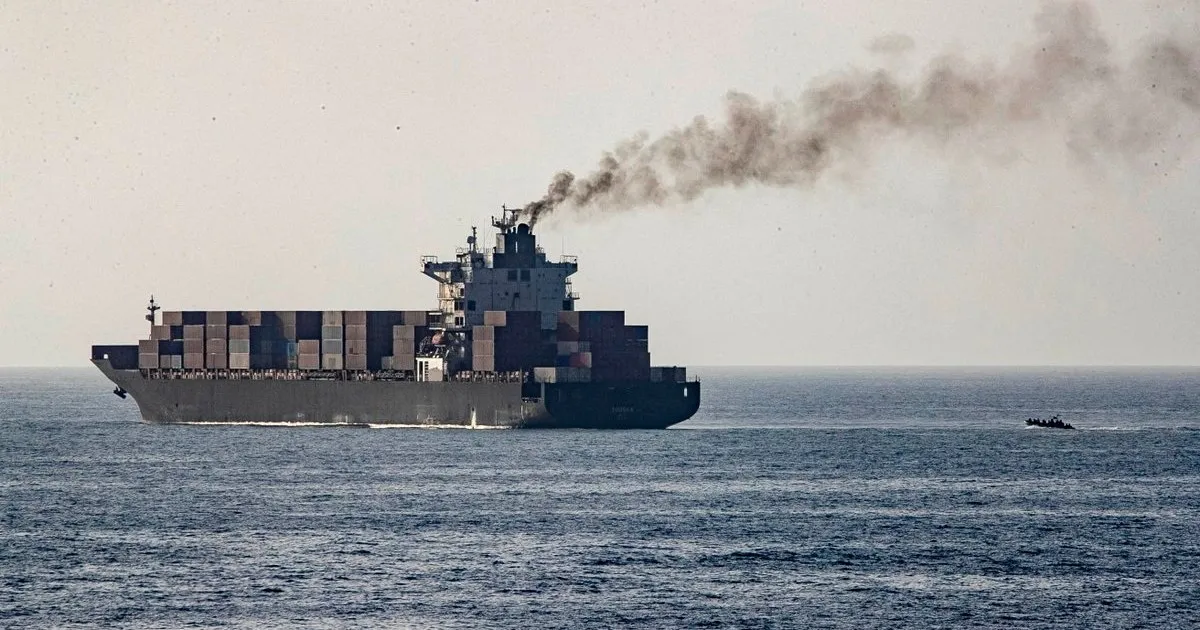
EXPLAINERIran continues to review the proposal as Tehran’s nuclear programme and the Strait of Hormuz remain the main sticking points.US forces patrol near the Iranian-flagged cargo ship MV Touska after capturing it on Sunday in the Arabian Sea [File: Handout/US Central Command on X via Reuters]Published On 10 May 2026The United States continues to wait for Iran’s response to its latest proposal to end the war that spilled into the region, including Lebanon, and triggered a global energy crisis due to Tehran’s de facto blockade of the Strait of Hormuz.The Trump administration expected the Iranian government to respond by Friday, but Tehran says it is still reviewing the offer and insists any agreement must be “fair and comprehensive”.Recommended Stories list of 3 itemslist 1 of 3Iran says seized tanker in Gulf of Oman, as US ‘disables’ two shipslist 2 of 3ASEAN leaders adopt measures to ease economic pain caused by Iran warlist 3 of 3The war on Iran will likely end in American retreatend of listWashington floated a 14-point proposal earlier this week, which requires Iran to end its nuclear programme for at least 12 years and open the Strait of Hormuz, through which a fifth of global crude oil and gas passes. The US proposal includes lifting the decades-long sanctions.The Strait of Hormuz and Iran’s nuclear programme have emerged as the biggest sticking points in the talks initiated after a ceasefire came into effect on April 8.The US decision to impose a naval blockade on Iranian ports has, however, escalated tensions, resulting in sporadic skirmishes near the waterway, which Tehran blocked following the beginning of the US-Israel war on Iran on February 28.Here is what we know so far:What is the latest US proposal, and how has Iran responded?According to US media reports, the latest proposal expects Iran to freeze uranium enrichment for at least 12 years and reopen the Strait of Hormuz within 30 days. Iran would also be required to hand over an estimated 440kg (970lb) stock of uranium, which it has enriched to 60 percent. The US wants to prevent Iran from reaching the 90 percent enrichment level needed to make weapons.In exchange, the US promises to lift some sanctions and release frozen Iranian assets.US President Donald Trump said on Friday that he expected to find out Iran’s answer “very soon”.Secretary of State Marco Rubio also said the US expected a response within hours. “We’ll see what the response entails. The hope is it’s something that can put us into a serious process of negotiation,” he told reporters in Rome, Italy.Trump has repeatedly said progress is being made. Earlier this week, he said the two sides had held “very good talks” and that a deal was “very possible”.Iran’s Ministry of Foreign Affairs spokesperson Esmaeil Baghaei said on Friday that Tehran is still reviewing the US’s latest proposal and considering its response.Why is there a delay in Iran’s response?Al Jazeera correspondent Resul Serdar Atas reported that expectations had been building for Tehran to issue its response on Friday, but “it hasn’t happened”.Atas said one reason for the delay is that the US proposal is “an extremely technical text”, with Iranian negotiators “concerned about every date and word in that text”. He added that multiple Iranian power centres must approve any response before it is sent.Ultimately, he added, Supreme Leader Mojtaba Khamenei “needs to give the green light”.Mohamad Elmasry, a professor at the Doha Institute, said the Iranian delay in responding to the US proposal might be due to several reasons.“One possibility is that the Iranians are trying to sort of give a sense that they are in control of the situation and that they have more leverage,” Elmasry said, noting that the US is not experienced in such diplomatic talks, is impatient, and wants deals done quickly, as seen in Trump’s statements.What are Iran’s conditions?Al Jazeera’s Atas said, according to Iranian sources, officials are pursuing a “three-phase approach”. In the first phase, lasting 30 days, Tehran wants negotiations focused on permanently ending the war “on all fronts”, including involving Hezbollah in Lebanon.“That is something difficult for the Americans to give a guarantee on,” he said. Fighting between the Lebanese group Hezbollah and the Israeli army has persisted despite a ceasefire in effect since April 17, with Israel maintaining control of the border areas.According to the Lebanese Ministry of Public Health, more than 2,700 people have been killed and about 8,500 injured since hostilities began on March 2.According to Atas, Iran is also demanding guarantees that the attacks will not resume. “The Iranians are insisting that this guarantee must come from the United Nations Security Council,” he said, something that could prove difficult for Washington to accept.Iran’s reported demands also include lifting sanctions, releasing frozen assets, ending what Tehran calls the US blockade and reopening the Strait of Hormuz. However, Atas noted, Iran believes “the strategic environment has changed” and is insisting it will maintain influence over the waterway rather than return to the pre-war status quo.“This is also another really difficult thing for the Americans to observe, and for many regional countries to accept,” he said.Rubio has said Washington will not allow Iran to keep control of the Strait of Hormuz.“Every country needs to ask themselves if they are going to normalise a country claiming to control an international waterway. If the answer is no, then they’d better have something more than strongly worded statements to back it up,” he said in a post by the Department of State on Friday.Another key sticking point is Iran’s nuclear programme. “The Iranians are not accepting to dismantle their nuclear facilities and to ship out their already enriched uranium,” Atas said.On Friday, Iran’s Foreign Minister Abbas Araghchi questioned the reliability of US leadership when it came to taking negotiations seriously.“Every time a diplomatic solution is on the table, the US opts for a reckless military adventure,” Araghchi said, referring to previous US attacks on Iran in the middle of negotiations in June 2025, and the current war.
SRCAl Jazeera
LANGEN
LEANCenter
WORDS997
ENT9
SUN · 2026-05-10 · 10:56 GMTBRIEF NSR-2026-0510-75062
NSR-2026-0510-75062News Report·EN·Conflict
Why is Iran taking time to respond to the US proposal to end the war?
Iran is delaying its response to a US proposal aimed at ending a regional war and a global energy crisis caused by Iran's blockade of the Strait of Hormuz. The US proposal, floated earlier this week, requires Iran to halt its nuclear program for at least 12 years and reopen the vital waterway within 30 days, in exchange for sanctions relief and the release of frozen assets.
Al Jazeera StaffAl JazeeraFiled 2026-05-10 · 10:56 GMTLean · CenterRead · 4 min
Al JazeeraFIG 01
Reading time
4min
Word count
997words
Sources cited
3cited
Entities identified
9entities
Quality score
100%
§ 01
Briefing Summary
AI-generatedNEWSAR · AI
Iran is delaying its response to a US proposal aimed at ending a regional war and a global energy crisis caused by Iran's blockade of the Strait of Hormuz. The US proposal, floated earlier this week, requires Iran to halt its nuclear program for at least 12 years and reopen the vital waterway within 30 days, in exchange for sanctions relief and the release of frozen assets. The main sticking points are Iran's nuclear ambitions and control over the Strait of Hormuz. Tensions have escalated due to a US naval blockade of Iranian ports, leading to skirmishes. Iran states it is still reviewing the offer, insisting any agreement must be "fair and comprehensive."
Confidence 0.90Sources 3Claims 5Entities 9
§ 02
Article analysis
Model · rule-basedFraming
Conflict
Diplomatic
Tone
Mixed Tone
AI-assessed
CalmNeutralAlarmist
Factuality
0.70 / 1.00
Factual
LowHigh
Sources cited
3
Well sourced
FewMany
§ 03
Key claims
5 extracted01
US President Donald Trump expected to find out Iran's answer 'very soon'.
quoteDonald Trump
Confidence
1.00
02
The US proposal requires Iran to end its nuclear program for at least 12 years and open the Strait of Hormuz within 30 days.
factual
Confidence
0.90
03
Iran continues to review the US proposal to end the war, with nuclear program and Strait of Hormuz as sticking points.
factual
Confidence
0.90
04
In exchange, the US promises to lift some sanctions and release frozen Iranian assets.
factual
Confidence
0.80
05
The US expects Iran to freeze uranium enrichment for at least 12 years and hand over 440kg of 60% enriched uranium.
factual
Confidence
0.80
§ 04
Full report
4 min read · 997 words§ 05
Entities
9 identifiedKey playerOppositionContextPositiveNeutralNegative
Organizations1
§ 06
Keywords & salience
8 termsstrait of hormuz
1.00
iran nuclear program
1.00
us proposal
0.90
iran sanctions
0.80
uranium enrichment
0.70
global energy crisis
0.60
naval blockade
0.50
ceasefire
0.40
§ 07
Topic connections
Interactive graph Network visualization showing 51 related topics
View Full Graph Person Organization Location Event|Click node to navigate|Edge numbers = shared articles